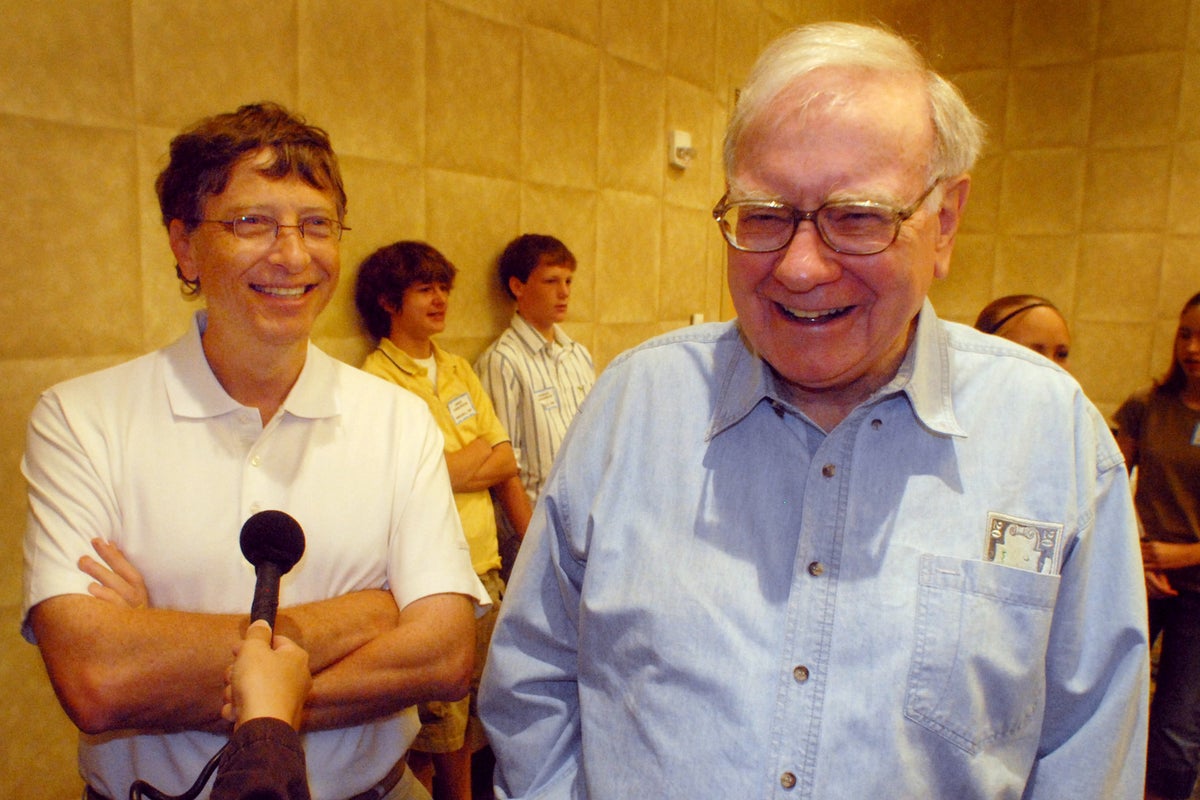
Warren Buffett just did what many thought was impossible. He walked away from his twenty-year, $50 billion philanthropic marriage with Bill Gates.
The Berkshire Hathaway chairman did it in the most public way possible. He stripped the Bill & Melinda Gates Foundation of his annual multi-billion dollar stock donation, redirecting nearly $6 billion in Berkshire Class B shares to foundations run by his own family. The sudden shift has sent shockwaves through both the business and philanthropic worlds, especially because it arrived alongside some incredibly blunt public comments.
When Becky Quick of CNBC asked him about the move, Buffett did not hold back. He openly called Bill Gates’ historical ties to the late, convicted sex offender Jeffrey Epstein "distasteful".
Yet, if you look closely at the math and the timing, this isn't just a classic moral cancellation. It is a highly calculated, pragmatic restructuring of a $140 billion legacy. To understand why the "Oracle of Omaha" finally pulled the plug, we have to look past the sensational headlines and examine the hard corporate and family realities driving his choice.
The Distasteful Truth About Bill Gates and Jeffrey Epstein
The public first got a glimpse of trouble in June 2026, when reports surfaced that Buffett was delaying his usual mid-year donation. He was waiting on the findings of an external review commissioned by the Gates Foundation. Gates Foundation CEO Mark Suzman had launched that investigation in March, attempting to dissect the foundation's past interactions with Epstein.
The pressure had been building for months. In February 2026, the U.S. Department of Justice released a massive cache of files linked to Epstein. The documents painted a damaging picture: emails showed communication between Epstein and Gates Foundation staff, and there were even photographs of Bill Gates alongside Epstein and several unidentified women.
By June, Gates was testifying under oath before the House Oversight and Government Reform Committee. He insisted that his interactions with Epstein between 2011 and 2014 were confined to fundraising efforts for global health initiatives. Gates called the association a "grave error in judgment" but maintained that he never witnessed or participated in any criminal conduct.
Buffett read every single word.
"I read what Congress came up with—I read everything," Buffett told CNBC. While he found the relationship distasteful, he refused to utterly condemn his longtime friend. "No one bats a thousand in the business of choosing people," Buffett shrugged, adding that he had made plenty of mistakes in his own life when choosing partners or hiring employees.
But in the world of high-stakes finance and public trust, saying you forgive a friend’s "error in judgment" is very different from continuing to hand their organization $4 billion a year. Buffett’s patience had run out.
This Separation Is More Than Just Reputational Damage
Do not buy into the narrative that Buffett acted purely out of moral outrage. He is, first and foremost, a risk manager.
The Gates Foundation is currently navigating a chaotic period. Alongside the Epstein external review, the organization has been hit with major restructuring. It plans to eliminate up to 500 jobs—roughly 20% of its global workforce—by 2030 to cut operating expenses. For a donor like Buffett, who values lean, hyper-efficient execution above all else, seeing his chosen vehicle mired in job cuts, public scandals, and internal reviews is a massive red flag.
Furthermore, the personal dynamic between the two men has visibly cooled. They used to be inseparable. They played bridge online, traveled together, and co-founded the Giving Pledge. Gates served on the Berkshire Hathaway board for years, and Buffett sat on the Gates Foundation board.
But that era is over. Buffett revealed that before a three-hour meeting in Omaha a few weeks ago, the two men had barely spoken for months.
By cutting off the Gates Foundation, Buffett is insulating Berkshire Hathaway from the radioactive fallout of the Epstein investigations. He gets to keep his friendship with Gates intact while quietly moving his money to much safer, quieter harbors: his own family.
The Billion Dollar Bet on His Own Children
So, where is the money actually going?
This year, Buffett converted 8,000 of his prized Berkshire Hathaway Class A shares into 12 million Class B shares to fund his mid-year giving. The $6 billion payout was split entirely among four foundations led by his family:
- The Susan Thompson Buffett Foundation: Named after his late first wife, this foundation received the lion's share—9 million Class B shares worth roughly $4.5 billion.
- The Sherwood Foundation: Run by his daughter, Susie Buffett, which received 1 million shares (about $500 million).
- The Howard G. Buffett Foundation: Run by his son, Howard, which received 1 million shares (about $500 million).
- The NoVo Foundation: Run by his son, Peter Buffett, which received 1 million shares (about $500 million).
Since 2006, Buffett has poured over $47 billion of Berkshire stock into the Gates Foundation. Now, that massive pipeline of wealth has been redirected home.
Historically, Buffett did not believe his children were ready to manage such a staggering sum of money. He openly admitted that in the past, he felt his kids weren't prepared to distribute billions of dollars effectively. But over the last two decades, as they managed their respective foundations, his perspective shifted. They proved they could handle the responsibility.
"I tell the three children that it is theirs, and it's their responsibility to get it done well," Buffett said.
The New 2034 Expiration Date for Buffett’s Fortune
The most shocking part of Buffett’s announcement isn’t who gets the money, but when they have to spend it.
Buffett, who turns 96 in August 2026, has dramatically accelerated his giving timeline. Previously, his plan was to have his remaining wealth distributed over the ten years following his death.
He has scrapped that plan. He now wants his entire remaining stake in Berkshire Hathaway—currently worth over $140 billion—completely distributed by December 31, 2034.
His reasoning is simple, human, and remarkably candid. His children are getting older. Susie, his oldest child, will be 81 years old by the end of 2034. If he stuck to his original plan of letting a trust run for a decade after his passing, his children might be too old or frail to oversee it.
"I re-evaluated my whole situation," Buffett admitted on CNBC. "It's not just a question of mortality. It's a question of keeping your marbles."
To meet this self-imposed 2034 deadline, the rate of Buffett’s charitable giving will have to skyrocket. He will need to donate and distribute upwards of $17 billion every single year. That is more than double his current annual giving rate. It is a logistical and philanthropic challenge of unprecedented scale, and he is putting the entire weight of it on his three children, who must agree unanimously on how the funds are spent.
What This Means for Berkshire Hathaway Succession
This massive, accelerated wealth dump is not just a philanthropic story. It is a major corporate governance event for Berkshire Hathaway.
At the start of 2026, Greg Abel officially took the reins as CEO of Berkshire Hathaway, ending Buffett’s historic sixty-year run at the helm of the $1 trillion conglomerate. This was a planned, smooth transition, but Abel now faces a very different corporate landscape than he might have expected.
Because Buffett is forcing the liquidation of his $140 billion stock holding by 2034, Berkshire is going to lose its most stable, passive shareholder far sooner than anticipated.
Historically, Buffett’s massive stake sat silently in the background, protecting the company from activist investors and hostile takeovers. Now, those millions of Class A and Class B shares will have to be converted and steadily sold on the open market over the next eight years to fund the family foundations’ grants. Greg Abel will have to run Berkshire without the protective shield of the Buffett family’s massive, permanent voting power.
It puts intense pressure on Abel to perform. If Berkshire’s operating businesses stumble, the steady, inevitable selling of Buffett’s shares could put downward pressure on the stock price, leaving the company vulnerable in a way it has never been before.
Practical Lessons for Navigating Your Own Legacy
You do not need to be a billionaire to learn from Buffett's dramatic pivot. The way he handled the Gates situation and the restructuring of his will offer three clear, actionable takeaways for managing your own estate and personal brand.
1. Re-evaluate Your Trustees Early and Often
Buffett's original 2006 pledge to the Gates Foundation was written under a completely different set of circumstances. Over twenty years, people change, organizations change, and reputational risks evolve. Never assume your estate plan is set in stone. If a partner, trustee, or organization no longer aligns with your values or introduces unnecessary risk, you must have the courage to cut ties.
2. Match the Timeline to the People, Not the Money
The decision to set a hard deadline of 2034 because his children are aging is a masterclass in realistic legacy planning. Too many people leave vast fortunes to be managed by trusts long after their heirs have passed their prime or lost interest. When designing your will, look at the actual ages and capacities of your beneficiaries. Give them the resources when they have the energy and mental acuity to use them effectively, rather than holding on too long.
3. Build a Transition Plan That Forces Accountability
Buffett is not leaving his children a passive inheritance to sit on; he is giving them a massive, active job. By requiring his three children to agree unanimously on how to distribute $17 billion annually, he is forcing them to collaborate and stay engaged. If you are passing down assets, do not just hand over cash. Give your heirs shared responsibilities or projects that force them to work together and develop their own governance skills.
Step back and look at your own estate plans, your business partnerships, and your long-term goals. If the most successful investor in history can look at a twenty-year plan, tear it up, and rebuild it from scratch at 95 years old to protect his family and his legacy, you can probably afford to review yours this week.