You have probably heard stories about invasive species ruining ecosystems. Few examples match the sheer, unmitigated disaster that unfolded on Laysan Island.
In 1903, a German immigrant named Max Schlemmer managed a guano mining operation on this remote, thousand-acre atoll in the Northwestern Hawaiian chain. Hoping to launch a meat-canning venture and entertain his children, he released a handful of domestic rabbits onto the island. It seemed like an innocent, practical choice at the time. Recently making news lately: Why Finding The Lost Lac La Belle Took 60 Years Of Searching.
It turned into an ecological nightmare.
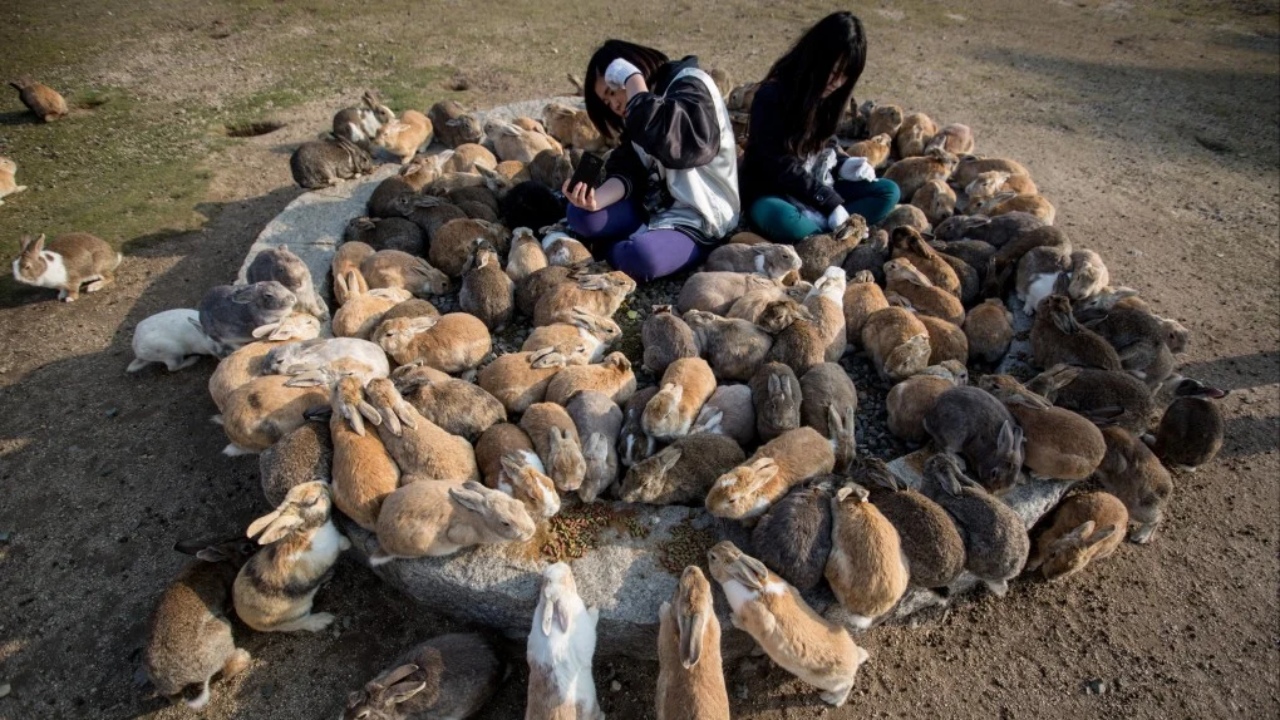
Without natural predators, the rabbit population exploded exponentially. Within a single decade, these small mammals stripped the lush landscape completely bare. They did not just eat the grass. They devoured twenty-six native plant species down to the roots, including the endemic Laysan fan palm and native sandalwood trees. A thriving green sanctuary transformed into a barren wasteland of shifting sand. Further information regarding the matter are detailed by Associated Press.
The Domino Effect on Unique Wildlife
Laysan was once a crowded haven for millions of seabirds and five endemic landbird species found nowhere else on earth. When the plants vanished, the entire food web collapsed. Insects lost their habitats, leaving insect-eating birds with nothing to hunt.
The cost was devastating. Three distinct landbird species were wiped off the face of the planet:
- The Laysan millerbird
- The Laysan rail
- The Laysan honeycreeper
Historical notes from the 1923 Tanager Expedition capture the tragic final moments of these creatures. Ornithologist Alexander Wetmore documented the death of the very last Laysan honeycreepers, which succumbed to a fierce dust storm while scientists watched helplessly. The exposed soil, no longer held together by roots, whipped across the island in blinding gales.
Only two landbirds survived the catastrophe: the Laysan finch and the Laysan duck. They pulled through by adapting their diets, scavenging for brine flies, carrion, and abandoned seabird eggs around the island's hypersaline lagoon. The Laysan duck plummeted to fewer than twenty individuals, narrowly escaping total extinction.
Why Ecosystem Interventions Fail Without Foresight
History is littered with well-intentioned schemes that ignored basic biology. Schlemmer wanted a ready supply of meat, but he failed to account for exponential breeding rates and the fragility of isolated island habitats.
Island species evolve without defenses against fast-breeding herbivores. When humans introduce mammals to these environments, native flora cannot adapt fast enough to regrow what is lost.
Government intervention came too late to save everything. President Theodore Roosevelt established the Hawaiian Islands Bird Reservation in 1909 to protect the region, and authorities eventually removed Schlemmer from the island. Yet, the rabbits remained.
An early eradication effort in 1913 ran out of ammunition after killing five thousand rabbits, leaving the survivors to keep breeding. By 1918, vegetation levels could sustain barely one hundred rabbits, and the starving animals were chewing on dried bird bones to stay alive.
The Long Road Back
The crisis finally ended during the 1923 Tanager Expedition, when field crews arrived with explicit orders to wipe out the remaining rabbit population. With the primary threat gone, conservationists began decades of painstaking habitat restoration.
Today, Laysan Island forms part of the Papahānaumokuākea Marine National Monument. Native bunchgrass and coastal shrubs have slowly reclaimed the dunes. The surviving Laysan ducks and finches have rebounded, proving that nature can heal if given absolute protection.
Still, the story stands as a permanent warning about introducing foreign animals into fragile ecosystems. A single shortcut for fresh meat altered an entire landscape forever.
Check your local conservation guidelines before moving wildlife or plants into new habitats. Support regional groups dedicated to eradicating invasive pests in sensitive environments.