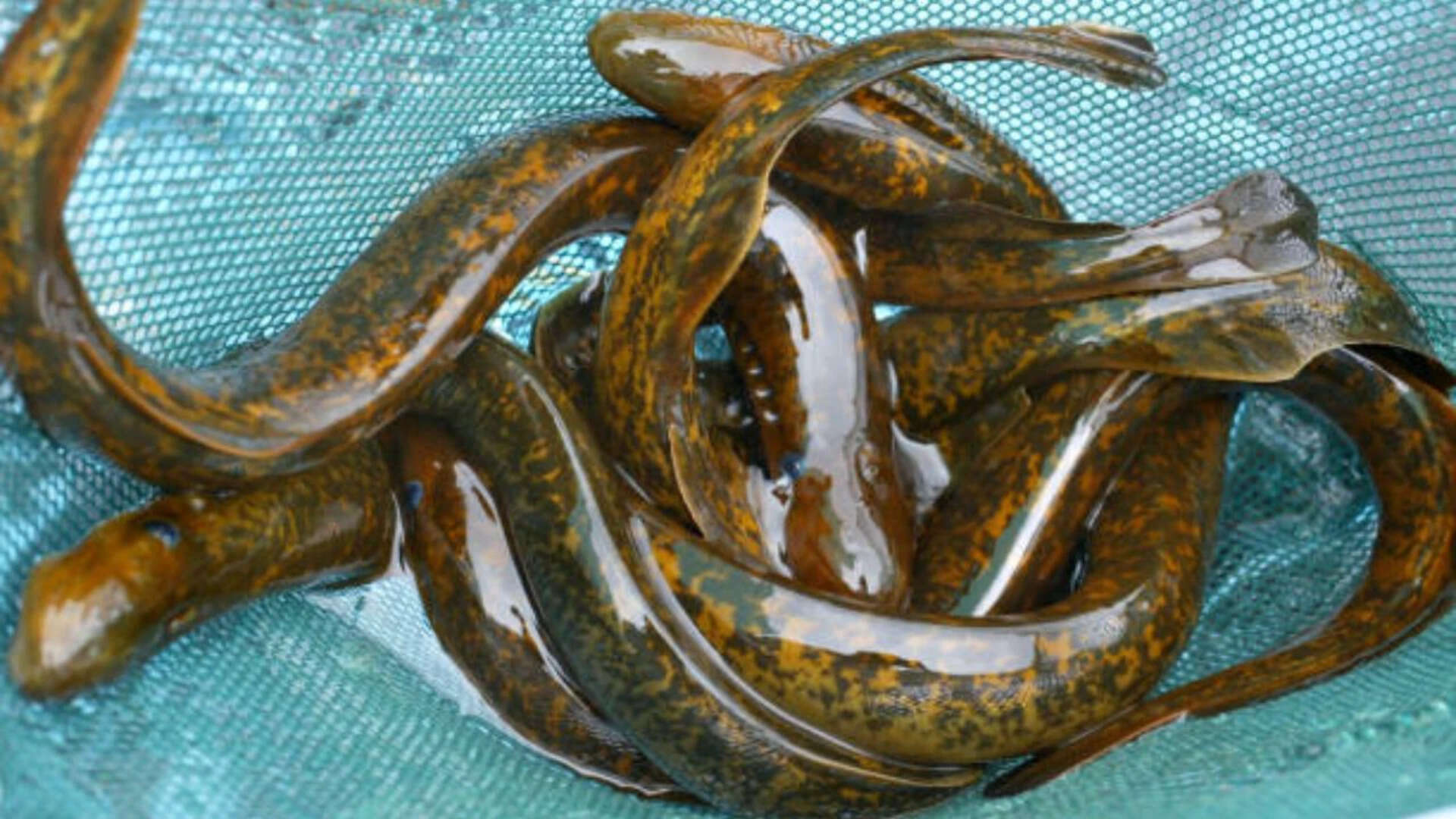
Imagine a creature that has survived four mass extinctions, outlived the dinosaurs, and has a mouth resembling a circular chainsaw. It has no jaw, no bones, and a razor-sharp tongue designed to rasp through scales and flesh to drink blood. This isn't a sci-fi monster. It's the sea lamprey, an ancient parasitic fish that managed to sneak into the Great Lakes and trigger one of the most drastic, long-running wildlife management operations on earth.
Every single year, teams of binational scientists deploy a massive, highly coordinated offensive to eliminate roughly 9 million sea lampreys across the region. To the uninitiated, this targeted mass slaughter might sound extreme, even cruel. But if these scientists take their foot off the gas for even a single season, a multi-billion-dollar freshwater ecosystem collapses.
The stakes are massive. The Great Lakes hold about 20% of the world's surface fresh water, supporting a commercial, recreational, and tribal fishing industry valued at over $5.1 billion annually. Without the regular, calculated execution of millions of lampreys, the fish you buy, the lakes you boat on, and the coastal economies keeping thousands of families afloat would vanish.
The Invasive Threat to Our Freshwater Economy
Sea lampreys don't belong in the Great Lakes. They are native to the Atlantic Ocean, where they co-evolved with large marine hosts like whales, sharks, and massive cod. In the ocean, a lamprey acts as a true parasite. It latches on, feeds for a bit, and usually leaves its host alive to recover. The ocean is huge, the hosts are massive, and nature keeps the balance.
When you drop that same parasite into a closed freshwater system filled with lake trout, whitefish, and salmon, everything changes. The evolutionary buffer disappears. In the Great Lakes, lampreys act less like parasites and more like apex predators. They are opportunistic killers.
A single adult sea lamprey destroys up to 40 pounds of fish during its 12-to-18-month feeding frenzy. They use an oral suction disk lined with curved, horn-shaped teeth to lock onto the side of a fish. Then, their tongue drills a hole through the skin. They inject a special enzyme that stops the host's blood from clotting, keeping the wound flowing until the fish is completely drained of its fluids.
If the fish doesn't die directly from blood loss, it usually succumbs to horrific secondary infections caused by the gaping wound. Only about one in seven attacked fish survives an encounter with a lamprey. The ones that do survive end up severely weakened, losing weight and failing to reproduce. By the mid-20th century, these underwater vampires had completely broken the back of the regional fishing economy, reducing the annual lake trout harvest from 15 million pounds to a pathetic 300,000 pounds. That's a 98% collapse.
How an Engineering Shortcut Brought Vampires to the Lakes
This environmental disaster was entirely man-made. Historically, the roaring, violent waters of Niagara Falls served as a perfect natural barrier. It kept the Atlantic invaders trapped in Lake Ontario and out of the upper Great Lakes.
Humans wanted a shortcut for shipping vessels. In the late 1800s and early 1900s, engineers built and modified the Welland Canal. The canal bypassed Niagara Falls completely, connecting Lake Ontario directly to Lake Erie to boost trade and shipping. Shipping boomed, but it opened the floodgates for ecological ruin.
Lampreys quietly hitched a ride or swam right through the canal canals. They entered Lake Erie by 1921. They infiltrated Lakes Michigan and Huron by the late 1930s and breached Lake Superior shortly after. The upper lakes provided a perfect paradise for them: endless streams with soft gravel beds for laying millions of eggs, zero natural predators, and millions of defenseless, fat lake trout that had no idea how to defend themselves.
The Lethal Numbers Behind the Hunt
To understand why scientists must kill 9 million lampreys a year, you have to look at their terrifying reproductive math. A single female lamprey can lay between 40,000 and 100,000 eggs in a single spawning cycle. They spawn in almost every single river, creek, and stream that feeds into the Great Lakes.
Once the eggs hatch, the young larvae, known as ammocoetes, burrow deep into the soft stream sediments. They stay there for anywhere from three to ten years, acting as harmless filter feeders that eat algae and organic debris. They just sit there, growing, waiting, and transforming.
[Egg Stage: up to 100,000 eggs per female]
                   ↓
[Larval Stage: 3-10 years burrowed in stream beds]
                   ↓
[Metamorphosis: Grow sharp teeth & migrate to open lakes]
                   ↓
[Parasitic Stage: 12-18 months killing 40 lbs of fish each]
When they finally hit maturity, they undergo a radical transformation. They grow their infamous suction mouths, develop eyes, and migrate downstream into the open lakes to hunt. Because their population potential is exponential, traditional hunting, trapping, or physical barriers alone cannot stop them. If left unchecked, their numbers explode so fast that they wipe out the entire food web within a few seasons.
The Poison That Saved an Ecosystem
By the 1950s, the situation was desperate. The governments of the United States and Canada formed the Great Lakes Fishery Commission (GLFC) with one primary objective: find a way to wipe out the lamprey without killing every other fish in the process.
Scientists at the Hammond Bay Biological Station in Michigan tested over 6,000 different chemical compounds looking for a vulnerability. In 1957, they found their magic bullet: a compound called 3-trifluoromethyl-4-nitrophenol, or TFM.
TFM is a highly selective lampricide. It targets the lamprey larvae while they are still trapped in their nursery streams. TFM works by entering the fish's system and completely disrupting its energy metabolism at a cellular level. Most native fish, like trout and salmon, possess highly developed enzymes in their livers that easily break down and eliminate TFM from their bodies. Lampreys lack these enzymes. They absorb the chemical, their cells stop producing energy, and they die quietly in the sediment.
Scientists apply TFM to infected streams using precise automated drip systems. They map the water flow using bright tracer dyes, carefully adjusting the chemical concentration based on the stream's pH, temperature, and water volume to make sure it is lethal to lampreys but perfectly safe for everything else. Today, field teams track around 5,300 tributaries feeding the Great Lakes. They have identified that roughly 10% of these streams are regular lamprey breeding grounds, treating about 180 to 200 high-risk streams on a strict rotating schedule every three to five years.
To save money and reduce chemical usage, scientists frequently pair TFM with a second compound called Bayluscide. Bayluscide is applied as a liquid mixture or as time-release granules that sink to the bottom of deep, slow-moving river beds where traditional TFM can't reach. Both chemicals break down naturally within days and don't build up in the food chain. It sounds like an aggressive chemical intervention because it is. But after nearly 70 years of continuous use, the lampreys have shown absolutely zero signs of developing resistance to it.
The Covid Lockdown Accident That Proved Scientists Right
Some environmental critics argue that keeping an ecosystem on permanent chemical life support is unnatural. They wonder what would actually happen if we just stopped pouring lampricide into the waterways.
We found out during the global pandemic.
When lockdowns hit, field technicians could not travel, gather, or execute their regular stream treatments due to strict social distancing rules. The GLFC had to pull its teams from the field, missing a massive portion of its scheduled stream treatments.
Inside the agency, they jokingly call this period the "forbidden experiment". They had spent decades warning politicians that lampreys are a coiled spring ready to snap back, but they never wanted to prove it by accident.
The results were terrifyingly fast. Within a brief window of missed treatments, the sea lamprey population exploded by over 300% in multiple sectors of the Great Lakes. Dead, scarred fish began washing up on beaches again. The hard-won progress of the last fifty years almost dissolved in a matter of months, proving that the 9 million annual cull is the only thing standing between stability and immediate ecological collapse.
What Happens If We Stop Fighting
If we walked away from the lamprey control program today, the consequences would hit your wallet, your dinner table, and local communities within five years.
Without regular lampricide treatments, the surging lamprey population would decimate the predatory fish stocks. Lake trout, chinook salmon, and steelhead populations would nose-dive. When you eliminate the top predators in a closed lake, it triggers a catastrophic domino effect throughout the entire aquatic food web.
Historically, when the trout vanished, small invasive forage fish like alewives experienced massive population spikes because nothing was eating them. Their numbers grew so large and unsustainable that they suffered massive, systemic die-offs. Millions of rotting, foul-smelling alewives choked the shorelines of Lake Michigan and Lake Huron, ruining tourism, blocking water intake pipes for municipal drinking water, and costing coastal towns millions in cleanup fees.
The economic fallout would ripple across the Midwest. The $5.1 billion charter fishing and tourism industry would dry up, bankrupting local marinas, tackle shops, hotels, and coastal restaurants that rely on seasonal anglers.
Moving Forward to Protect Our Waters
Scientists don't want to rely solely on chemical poisons forever. The GLFC is actively working on diversified tactics to keep these parasites at bay while reducing the reliance on TFM.
- Low-Head Barriers: Engineers build low dams across strategic streams. Native jumping fish like salmon can clear the obstacles, but lampreys lack the skeletal structure to jump, effectively trapping them downstream and blocking them from thousands of miles of prime spawning grounds.
- Trap and Sort Fishways: Modern smart barriers route fish through specialized channels where automated systems or physical sorting traps catch lampreys and remove them while allowing native species to pass safely upstream.
- Pheromone Trapping: Biologists synthesize the exact mating pheromones released by male lampreys to trick females into swimming directly into traps rather than natural spawning beds.
- Alarm Cues: Lampreys are incredibly sensitive to the smell of their own dead. By extracting alarm scents from decaying lampreys, scientists can create invisible chemical fences that scare live lampreys away from clean rivers and force them into small, easily managed creeks where they can be trapped or treated cheaply.
The fight is getting a massive financial boost. Lawmakers pushed forward the bipartisan Save Great Lakes Fish Act, allocating $500 million over a ten-year window to scale up research and deployment strategies against lampreys and other aggressive invaders like quagga mussels.
If you want to support the health of the lakes, you can play a direct role. Anglers should learn to spot the difference between native eel species and invasive lampreys. If you catch a trout or salmon with an active lamprey attached, kill the parasite immediately and report the location and photos of the fish to the Great Lakes Fishery Commission through their online reporting tools. If you operate boats or personal watercraft, always drain, clean, and dry your gear before moving between separate waterways to ensure you aren't accidentally carrying larval hitchhikers into uninfected inland waters. Keeping the Great Lakes alive takes relentless work, and stopping the vampire invasion requires keeping our eyes open every single season.