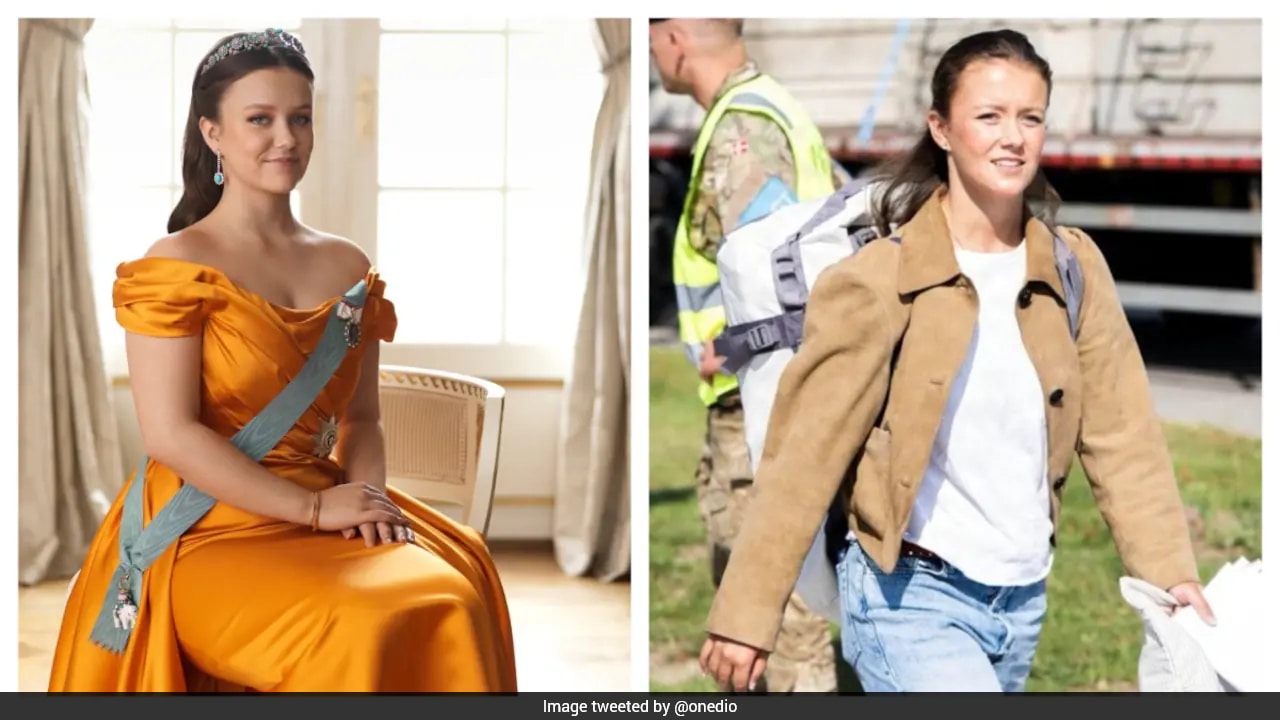
When 19-year-old Princess Isabella pulled up to the Antvorskov Barracks in Slagelse alone in a black Audi Q4, she didn't look like someone about to face special treatment. There was no grand royal motorcade, no red carpet, and no exemption from the hard realities of national defense.
As the second child of King Frederik X and Queen Mary, Isabella just stepped into military history. She is the first female royal in Denmark to enroll in active military service, reporting for an intensive eleven-month stint with the historic Guard Hussar Regiment. Yet what grabbed headlines wasn't just her uniform, but her paycheck—or rather, the total lack of one.
Inside Denmark's Overhauled Conscription Rules
Let's clear up why she's there in the first place. This isn't just a traditional royal photo op. Denmark overhauled its defense framework under the 2024 to 2033 national security agreement, responding directly to shifting geopolitical tensions across Europe.
Starting recently, the rules changed dramatically. Conscription expanded from a brief four-month stint into a rigorous eleven-month program combining five months of intense basic training with six months of operational duty. Crucially, military evaluation became mandatory for all women over 18. Isabella's planned gap year got completely rearranged by national policy. Around 1,600 young Danes reported to bases nationwide on that Monday morning in August 2026, with women making up roughly one in five recruits.
Why Refusing the Army Pay Matters
People get confused about why a royal would turn down free money. The Danish royal court confirmed that Isabella declined both her monthly salary and the tax-free food allowance, a package worth around $29,400 over the course of her service.
She isn't the first to do it. Her older brother, Crown Prince Christian, waived his military salary during his time at the exact same barracks. But the financial reality behind the gesture differs heavily between the siblings. Christian holds an independent institutional allowance as the direct heir to the throne. Isabella, sitting second in line, has no independent income. Her expenses continue to rely entirely on the royal household budget managed by her parents.
Waiving the salary is basically a symbolic equalization. It signals that while she wears the uniform, she isn't draining state coffers for a mandatory civic duty that every other citizen undergoes under equal operational conditions.
What the Guard Hussar Regiment Choice Tells Us
Royal watchers love to read tea leaves about military branch selections. Opting for the Guard Hussar Regiment, rather than pursuing specialized officer tracks in the air force or navy, points to a very specific conclusion.
Historians and analysts note that if Isabella wanted a long-term professional military career, she would likely have gone a different route. Instead, this is standard royal protocol execution. Her father, King Frederik X, trained hard in his youth; her brother followed suit; now she is checking the box of public service. She lives in the barracks, handles the exact same physical demands, and eats the same mess hall food as everyone else.
If you expected a royal title to buy you out of early morning drills or mud-soaked field exercises, Denmark just proved you wrong. Isabella's next eleven months will test her grit just like any other recruit.
Take a look at how European monarchies are modernizing their approach to public duty, and watch how institutional expectations shift when young royals face the exact same conscription laws as ordinary citizens.
Princess Isabella becomes the first female of the Danish Royal Family to enroll on military service
This video provides an on-the-ground look at Princess Isabella arriving at the barracks to begin her historic military conscription.
http://googleusercontent.com/youtube_content/1