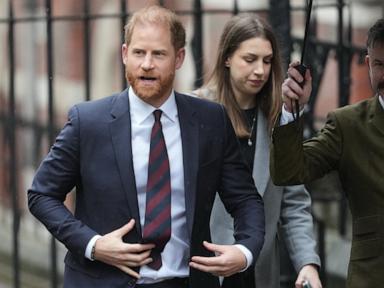
The multi-million dollar legal crusade Prince Harry waged against the British press has officially reached its final destination. A London High Court judge is delivering a remote ruling today on the Duke of Sussex’s massive privacy lawsuit against Associated Newspapers Ltd, the powerhouse publisher behind the Daily Mail and the Mail on Sunday. This decision marks the end of a trio of blockbuster legal battles that have seen Harry break over a century of royal protocol by taking the witness stand to air dirty laundry.
People often look at these royal courtroom dramas as a wealthy man's personal vendetta. They think it's just about a prince who hates the paparazzi. That completely misses the point. This legal war isn't just about hurt feelings or historic gossip. It's about drawing a hard boundary around what major news corporations can and cannot do to secure a scoop. You might also find this similar article insightful: How Sage Elsesser Mastered Both Skateboards And Soulful Rap.
This specific trial lasted 11 grueling weeks and racked up an estimated 40 million pounds in total legal costs. That is roughly 53.5 million dollars spent deciding whether journalists crossed a legal line into full-blown criminal espionage. Harry didn't stand alone in this fight either. He anchor-dropped a coalition of high-profile names including music icon Elton John, his husband David Furnish, actors Elizabeth Hurley and Sadie Frost, anti-racism campaigner Doreen Lawrence, and former politician Simon Hughes.
Inside the Dark Allegations Against the Daily Mail
The core of Harry's case focuses on a dark history of alleged media overreach spanning decades. His legal team, led by attorney David Sherborne, accused the Daily Mail of executing a systematic campaign of unlawful information gathering. They argue that the newspapers didn't just report on the royal family, they actively hunted them using private investigators, phone taps, and wiretaps. As reported in detailed coverage by Reuters, the results are significant.
During his testimony earlier this year, Harry painted a bleak picture of his youth. The constant press intrusions left him intensely paranoid. He spent years doubting his closest friends and wondering which one was selling him out to the Sunday papers. It ruined relationships, poisoned his social life, and severely impacted his mental health.
The details brought forward by his co-claimants are even more shocking. Elizabeth Hurley testified that the Mail went so far as to install microphones outside her home windows and illegally steal her private medical records. She compared the experience to discovering sinister thieves had been living inside her house completely undetected for years.
Associated Newspapers Ltd fiercely denies all of this. They called the claims preposterous and insisted that their articles were built entirely on legitimate journalism. Their defense rests on a very different premise, claiming that Harry’s inner social circle was simply incredibly leaky.
The Leaky Royal Circle Defense
Defense lawyer Antony White argued throughout the trial that Harry is simply prone to seeing voicemail interception everywhere. The defense team maintains that the information used for their articles came from traditional, lawful sources. They pointed toward publicists, friends, and official palace spokespeople who frequently offered tips to hungry reporters.
Journalists actually lined up to testify in defense of their work. Former Mail on Sunday editor Katie Nicholl explicitly rejected Harry's claim that his friends were all tight-lipped. She testified that she possessed excellent sources inside his actual inner circle during those years.
This argument exposes the messy reality of the royal ecosystem. The British royal family has long operated on an unspoken transactional relationship with the press. Courtiers leak information to protect certain royals while throwing others under the bus. Harry's refusal to accept this system is precisely why he found himself estranged from his family and living in California.
The Strange Twist of the Recanting Detective
Every major trial has a wildcard moment, and this one featured a spectacular twist involving a private investigator named Gavin Burrows. Originally, Harry’s legal team relied on Burrows as a crucial pillar of their case. He had previously surfaced in a BBC documentary apologizing for targeting Harry during his teenage years.
The claimants argued that they only discovered the full extent of the Mail's alleged phone hacking when Burrows came forward in 2021 to clear his conscience. But when it came time to face the court, Burrows completely flipped the script.
He testified that he never actually worked for the Mail. Even more damning, he claimed that the legal statement attributed to him was completely fabricated by Harry’s own lawyers and that his signature had been forged. Harry's team rejected this, claiming Burrows changed his story after a bitter disagreement with them. This single piece of messy theater threatened to derail the entire multi-million dollar effort.
A Mission Born From Tragedy
To understand why Harry risked his remaining reputation and millions of dollars on these suits, you have to look back to 1997. He explicitly blames the paparazzi for the Paris car crash that killed his mother, Princess Diana. He views his current battle as a direct continuation of her struggle against a predatory media beast.
His fury only intensified when he met Meghan Markle. He watched the British tabloids subject his wife to relentless, racially charged media attacks. He choked back tears on the witness box during his testimony, explaining how the press made his wife's life an absolute misery.
The institutional response from the palace was always to stay quiet and let it blow over. Harry chose a different path. He decided to break the traditional royal silence, dismantle his own privacy, and weaponize the British legal system against the very publications that fed on his life.
The Scorecard of Harry's Media War
Win or lose today, Harry has already altered the media landscape more than any royal before him. This is the third major publisher he has dragged into battle.
- The Mirror Group Newspapers (2023): Harry scored a definitive victory when a judge ruled that phone hacking at the Daily Mirror was widespread and habitual. He walked away with substantial damages and historical validation.
- News Group Newspapers (The Sun): Rupert Murdoch's flagship UK media wing offered an unprecedented apology and paid out massive damages to settle Harry's privacy suit just before it went to a full trial.
- Associated Newspapers (Daily Mail): Today's decision is the final piece of the puzzle. It represents the toughest nut to crack because the Mail has fought back with immense corporate aggression.
What This Verdict Means Moving Forward
This ruling lands at a incredibly tense moment for the royal family. Harry is currently in London attending various charity events. His visit happens while his father, King Charles III, continues to undergo treatment for an undisclosed form of cancer.
The legal outcome directly shapes how celebrities can protect their data in an age where electronic surveillance is effortless. If Harry wins, it sends a chilling message to tabloid newsrooms that old-school intrusive tactics will eventually cost them tens of millions in court. If he loses, it provides a massive shield to publishers, reinforcing their ability to claim that their reporting relies on legitimate, anonymous sources rather than illegal snooping.
If you want to track the immediate fallout of this decision, look at the British newsstands tomorrow morning. The headlines will tell you exactly who won the narrative war. Watch how the Mail frames the ruling, because their corporate pride is entirely on the line. Keep an eye on whether Harry chooses to appeal if the judgment goes sideways, as he has proven he rarely backs down from a fight once he goes all in.