When law enforcement officers are forced to draw batons and deploy synthetic pepper spray against crowds on the Hampshire coast, it signals a complete breakdown of normal public order management. Masked crowds, blocked roads, and hours of tense standoffs outside Portsmouth harbor didn't happen in a vacuum. They followed a weekend of calculated mobilization across southern ports that left local authorities scrambling to catch up.
If you look at how the events unfolded, a disturbing pattern emerges. Far-right agitators are using grey-zone tactics designed to dance right along the edge of the criminal threshold, testing police intelligence and catching emergency services flat-footed.
The Anatomy of the Portsmouth Clashes
The trouble in Portsmouth erupted following a small-boat arrival carrying roughly 120 people seeking asylum. Instead of landing at typical eastern points, this craft reached British waters further west, near the Isle of Wight, before being directed toward Eastney Marina in the wider Portsmouth area.
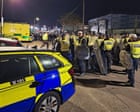
By evening, a crowd of more than 200 people descended on the harbor. Many wore black clothing and concealed their faces with balaclavas. Their immediate goal was simple: block the coaches meant to transport arrivals for processing.
Hampshire and Isle of Wight Constabulary faced immediate chaos. Officers deployed dispersal notices to clear the area, but the crowd's aggression forced police to use batons and PAVA spray to restore order. Some participants even waded into the water to avoid detention during the standoffs.
According to policing officials, the strain on frontline resources was immense. One injured officer was a rookie who had finished training school just three days prior.
Why Traditional Policing Models Are Failing Here
For years, British public order policing has relied on predictable playbooks for protests involving static crowds marching along set routes. What happened in Dover and Portsmouth breaks that mold entirely.
These are no-notice mobilizations coordinated through online networks by groups like Patriot Platform. They rely on rapid deployment, decentralized leadership, and intimidation tactics targeting infrastructure and local communities.
When groups operate this way, traditional intelligence gathering fails. Police often find themselves reacting to social media calls rather than managing organized, registered demonstrations.
- Intelligence Blind Spots: Security specialists admit that authorities missed the warning signs of how quickly these factions could pivot from online rhetoric to physical blockades.
- Resource Strain: Neighboring forces had to rush reinforcements to support local officers, stretching regional budgets and personnel thin.
- Tactical Ambiguity: Treating aggressive, masked agitators with the same kid gloves used for peaceful campaigners creates confusion on the ground and endangers public safety.
The Political Finger-Pointing and Immediate Aftermath
Following the unrest, government officials condemned the thuggish behavior. Policing minister Sarah Jones addressed Parliament, confirming that the government intends to review intelligence-sharing across law enforcement agencies to close these security gaps.
At the same time, local leaders voiced deep frustration. Critics point out that labeling aggressive port blockades as mere "protest activity" minimizes the intimidation faced by residents, emergency workers, and charity staff operating along the south coast.
The RNLI and other local entities have already stepped up security measures at ports and lifeboat stations across Dorset and Hampshire.
What Needs to Change Right Now
Authorities can no longer treat these flashpoints as isolated incidents. If law enforcement agencies want to regain control, specific adjustments are non-negotiable.
First, intelligence sharing between national counter-terrorism units and local constabularies must happen at lightning speed. Waiting for riots to break out before deploying specialized public order units is a failing strategy.
Second, legal frameworks regarding face coverings and disguised identities during aggressive assemblies need immediate tightening. Masks used to shield identity during unlawful blockades should trigger instant dispersal and arrest powers.
Finally, political leaders must stop hiding behind comfortable definitions. Intimidation is not protest. Treating criminal disruption with hesitation only invites copycat actions elsewhere.
Watch how law enforcement handles upcoming weekend assemblies. That will tell you everything you need to know about whether lessons were actually learned.