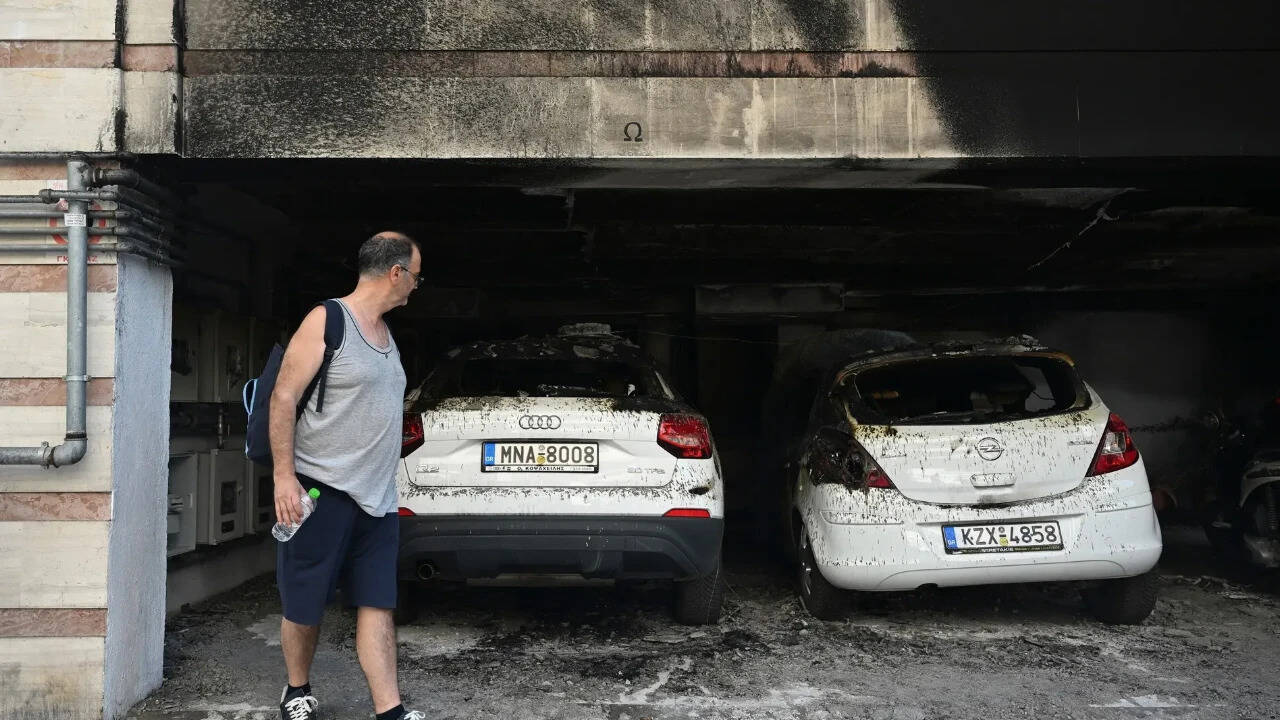
Domestic terrorism in Greece just took a dark, familiar turn. For years, fringe extremist groups have relied on a predictable script. They plant homemade explosives, blow up property, and issue rambling manifestos. They usually avoid casualties. But a coordinated string of predawn firebomb attacks changed that pattern completely, leaving a family shattered and forcing the government to respond with maximum force.
Greek counter-terrorism police arrested three suspects following the July 1 blasts that targeted politicians from the governing New Democracy party. The coordinated attacks ripped through properties in the northern city of Thessaloniki. While two of the firebombings caused only structural damage, the third turned lethal.
A crude device made from camping gas canisters exploded beneath a car parked outside an apartment building. The vehicle belonged to parliamentary candidate Afroditi Nestora. The resulting fireball claimed the life of her 72-year-old mother, Vagia Nestora, who died from severe burns after apparently trying to extinguish the flames. The blast also injured Afroditi Nestora, her father, and two neighbors.
Inside the Investigation
Anti-terror units moved fast to track down the suspects across multiple regions. This wasn't a localized cell operating out of a single basement. The geographic spread of the arrests shows a coordinated network.
- The Thessaloniki Detainment: Police captured a 29-year-old man directly in the city where the bombings took place.
- The Crete Operation: A 26-year-old woman was tracked down and arrested on the southern island of Crete, hundreds of miles away from the crime scene. Investigators believe both individuals were directly involved in planting the fatal device at the Nestora home.
- The Safe House: Officers arrested a third man who allegedly provided shelter to the primary suspects in his apartment.
Prime Minister Kyriakos Mitsotakis didn't hold back when addressing Parliament. Speaking just a day after Vagia Nestora’s funeral, he framed the arrests as a direct defense of the state. He stated that leading the terrorists to justice is democracy's only answer to violence.
This Is Not the First Warning Sign
Many outside observers assume Greece left its domestic terrorism problem behind in the 2000s after authorities dismantled notorious Marxist groups like November 17. That's a massive misconception. The old guard is gone, but a decentralized, highly volatile ecosystem of anarchist and far-left extremists has filled the void.
The data from the past couple of years tells a worrying story. Look at the escalation leading up to this month's tragedy:
- June 2024: Attackers targeted a senior judge's residence in Athens with petrol bombs, injuring the police officer on guard duty.
- April 2025: A newly formed extremist group bombed the central Athens offices of Greece's main railway company. They cited public fury over the 2023 rail disaster that killed 57 people.
- May 2025: A 38-year-old woman died in Thessaloniki when an explosive device detonated prematurely in her hands. Police confirmed she was on her way to bomb a local bank.
- July 2025: A bomb rocked the home of the president of Greece’s prison guards association, injuring two bystanders with flying glass.
Extremists are shifting from symbolic property damage to high-risk operations where human casualties are either explicitly intended or viewed as acceptable collateral damage.
Why Gas Canisters Mean Serious Business
Mainstream media often minimizes these attacks by focusing on the phrase "crude camping gas canisters." Don't let the household terminology fool you. When packed tightly into enclosed spaces, wrapped with accelerants, and detonated under vehicles or next to residential entryways, these improvised devices act as highly destructive fuel-air bombs.
Local reports indicate that the fatal Thessaloniki attack targeted a shared garage and residential entryway. The attackers knew people were sleeping upstairs. They knew the fire would spread rapidly through the building. The choice of targets—local executive committee chairman Zisis Ioakimovic, former MP Savvas Anastasiades, and candidate Afroditi Nestora—proves the cell aimed to paralyze the local political infrastructure through pure terror.
What Happens Next
Security forces are expanding their focus far beyond these initial three suspects. If you want to understand where this investigation goes from here, keep an eye on these specific developments:
- Forensic Tech Extraction: Analysts are currently ripping data from the mobile phones and digital drives seized during the Crete and Thessaloniki raids to identify who financed the logistics.
- Increased Political Protection: Expect the Citizens' Protection Ministry to scale up static police guards for mid-level regional politicians, who have suddenly become soft targets.
- Searing Link Investigations: Hours after these three arrests, Greek police detained two more individuals tied to a notorious 2010 bank firebombing that killed three workers. Watch for prosecutors attempting to tie this current generation of radicals back to older, dormant extremist networks.