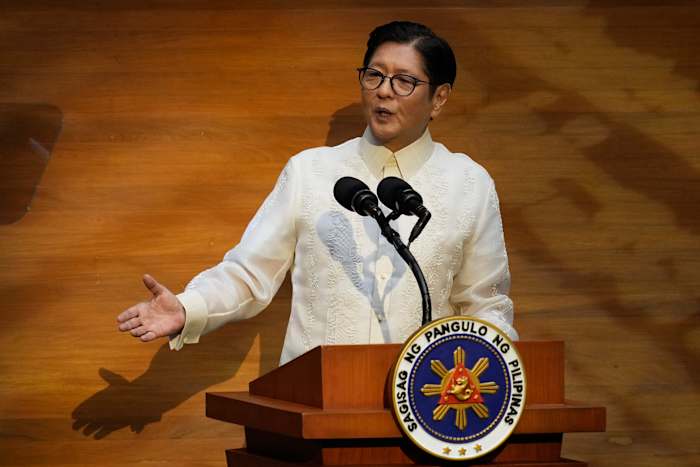
When a state-backed media outlet crosses the line from political posturing to crude, racist caricature, diplomacy usually takes a backseat. Philippine President Ferdinand Marcos Jr didn't mention Beijing by name during his latest State of the Nation Address, but nobody in the room missed the target. He stood at the podium and delivered a sharp, direct message: Filipinos do not yield.
If you think this was just standard political theater, look closer at what sparked it. Days before the speech, the Chinese state-owned outlet China Daily published an AI-generated video and accompanying cartoons depicting Filipinos as monkeys. The backlash was immediate and fierce. Marcos summoned Chinese Ambassador Jing Quan directly to his office in Manila to demand accountability. During his address, Marcos turned the insult right back around, defending national dignity with a simple declaration: Filipinos are a noble and a great race. We are not greedy. We are not racists. We are not liars.
The 2016 Arbitral Ruling Remains the Flashpoint
The root of this escalating friction isn't just cartoons. It’s about a decade-old legal victory that Beijing refuses to acknowledge. July marked ten years since the international arbitral tribunal in The Hague issued its landmark ruling invalidating China's sweeping maritime claims in the South China Sea.
Marcos doubled down on that milestone during his speech. He called the ruling a definitive benchmark for interpreting the 1982 United Nations Convention on the Law of the Sea. While Chinese Foreign Ministry spokesperson Lin Jian dismissed the award yet again as an illegal political farce, Manila's stance has hardened.
"Your government will do all that is necessary to continue upholding this award, utilizing every peaceful and legal means available against any attempt to undermine this achievement."
The domestic reaction inside the congressional hall was electric. Lawmakers stood and applauded, signaling rare bipartisan backing for a foreign policy stance that refuses to back down in the West Philippine Sea.
Why This Shift Matters Right Now
Territorial confrontations in the region have turned increasingly tense. Constant standoffs involving water cannons from the Chinese Coast Guard targeting Philippine supply boats have turned routine patrols into high-stakes endurance tests.
Marcos made a point to credit the Armed Forces, the Philippine Coast Guard, and local fisherfolk for holding the line. By tying national pride directly to maritime sovereignty, he is shifting the political conversation away from quiet appeasement toward active deterrence.
Beijing wants the disputes treated as a purely Asian issue without external interference, particularly from United States allies. Yet Manila continues to pull in international partners, reinforcing joint rejections of China's expansive historic rights arguments.
Cleaning House at Home
Foreign policy wasn't the only tough pill Marcos handed out during his address. He also pivoted sharply to domestic corruption, targeting accountability within his own political circle.
Without naming his cousin and key political ally, former House Speaker Martin Romualdez, Marcos addressed upcoming corruption charges linked to multi-billion-peso flood control projects. He admitted the move was personally painful, but necessary.
"I'm not a president for my family," Marcos stated plainly.
The administration reported that nearly 25 billion pesos in cash and properties tied to various suspects have already been frozen or recovered. Skeptics note that prosecuting these officials ultimately falls to the independent Office of the Ombudsman rather than the executive branch, but the political messaging was unmistakable.
The Road Ahead for Philippine Sovereignty
Navigating twin pressures from foreign maritime aggression and internal corruption scandals requires a tightrope walk. Marcos chose to drop the balance beam and run across. By tying human dignity, legal arbitration, and domestic cleanup into one address, the administration is betting that ordinary citizens want confrontation over compromise.
The strategy carries massive risks. Escalating tensions in strategic waterways leave little room for error. But standing at the podium, looking out at a packed legislature, Marcos made his choice clear. The rhetoric is done. The pushback is loud. And the policy has changed.