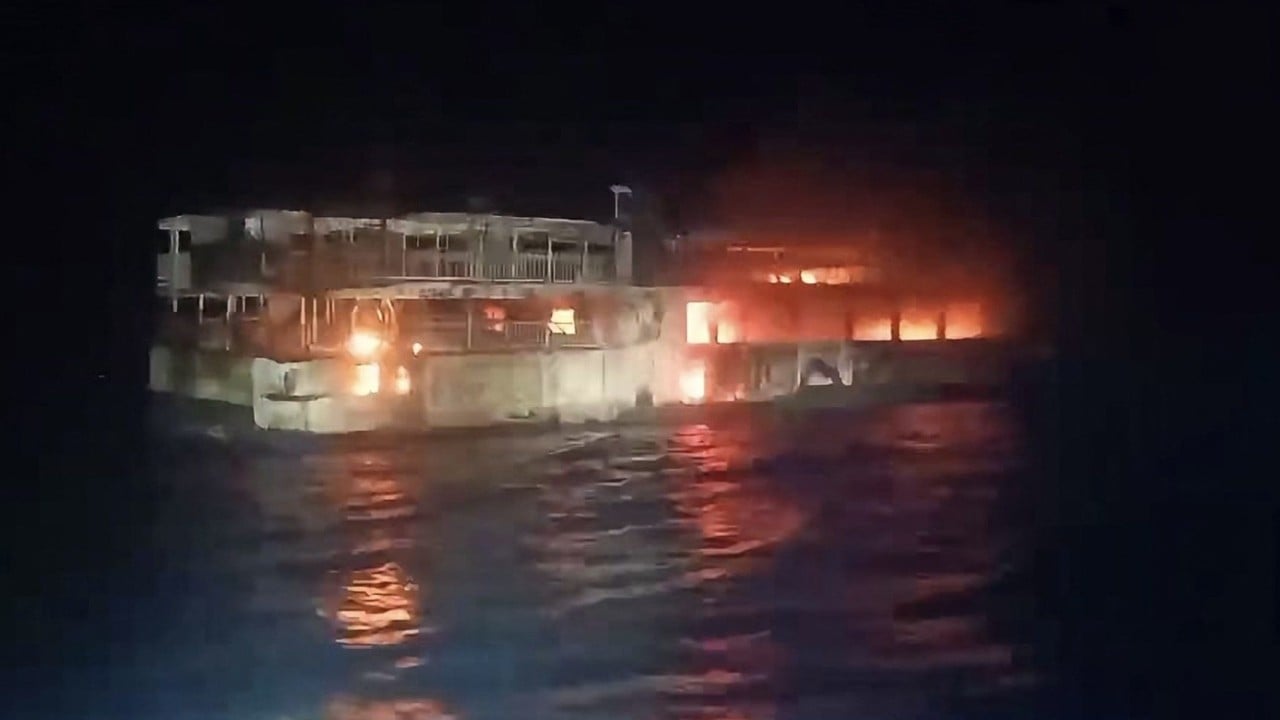
Tragedy struck the waters near Coron, Palawan, when a sudden fire engulfed the passenger-and-cargo vessel MV June Aster, leaving at least five dead and 86 people missing. It is a terrifying scenario that feels entirely too familiar in an archipelago heavily dependent on sea travel.
When you look at the numbers, the reality is stark. The ship carried a manifest total of 134 people on board when the blaze broke out roughly 2.2 kilometers offshore on a Wednesday evening. Coast guard teams and military vessels managed to pull 42 survivors from the water, but dozens remain unaccounted for as rescue boats battle severe weather and rough marine currents. Don't miss our previous post on this related article.
What Actually Happened on the Water
The fire erupted shortly before the vessel was scheduled to reach port. Initial reports from the Philippine Coast Guard note that intense smoke and structural hazards delayed immediate boarding and thorough interior sweeps of the smoldering hull. Coast Guard Captain Noemi Cayabyab confirmed that search-and-cargo recovery units deployed immediate radio broadcasts to nearby shipping traffic while coordinating with coastal villages to spot any drifted passengers.
The immediate aftermath reveals the chaotic nature of maritime accidents in remote tourist sectors. Survivors included both local travelers and foreign nationals, such as two Chilean citizens who were rescued safely. Yet, the high discrepancy between the total passenger manifest and the number of rescued individuals highlights a systemic vulnerability in regional transit tracking. If you want more about the history of this, The New York Times provides an in-depth breakdown.
The Persistent Safety Crisis in Island Transit
Why do these disasters keep recurring? The Philippines relies on thousands of ferries every single day to connect its 7,000-plus islands. Ferries are the lifeblood of commerce and tourism. However, enforcement of rigorous fire suppression standards, overcrowding checks, and rapid evacuation protocols remains inconsistent across domestic operators.
When an emergency happens at sea, minutes dictate survival. Passengers often find themselves trapped by locked exits, insufficient life vests, or inadequate crew-led safety drills. MV June Aster joins a long, painful history of maritime tragedies in Southeast Asian waters that expose institutional blind spots in fleet maintenance and regulatory oversight.
Navigating the Aftermath and Moving Forward
For families searching for missing loved ones, the immediate days bring agonizing uncertainty. Coast guard assets remain on high alert around Palawan, tracking drifting debris and scanning for survivors amidst choppy swells.
If you or someone you know is tracking travel advisories or emergency response lines in the region, rely strictly on official updates issued directly by the Philippine Coast Guard or local disaster management bureaus rather than unverified social media speculation. Maritime authorities continue to investigate the root technical causes of the blaze while rescue teams push through hostile weather conditions to find answers for the missing.