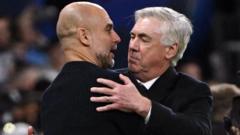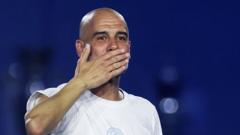
Italian football federation executives threw everything including a custom financial package at Pep Guardiola. They wanted him to fix a broken national team. He said no.
The news hit the football world hard this week when Italian officials admitted that face-to-face discussions had taken place with the former Manchester City boss. FIGC president Giovanni Malagò went on record confirming that special financial exceptions were created to lure the Spaniard to Rome. Italy wanted the ultimate tactical mastermind to save them from historic obscurity. Guardiola chose his family and his peace of mind instead.
If you followed his ten years at Manchester City, this shouldn't come as a surprise. The guy looked spent by May 2026. Managing at the absolute elite level for a decade straight without a breather takes a brutal toll on a human being. Italy offered prestige and a chance to write another legendary story, but Guardiola had already made up his mind before the first offer even landed on his table.
The Real Reason Guardiola Walked Away From the Azzurri
People love to talk about tacticians like they are emotionless chess players. They aren't. They get exhausted, burned out, and homesick just like everyone else.
Guardiola spent ten relentless years in Manchester. He picked up twenty trophies, six Premier League titles, and a Champions League crown. He redefined tactical standards across the entire league. But that success required total obsession. He was spending every waking hour watching film, adjusting pressing structures, and obsessing over half-space overlaps.
When he stepped down from Manchester City at the end of last season, he made his motives clear. He wanted to spend time with his 95-year-old father. He wanted to be a real dad to his children. He wanted to wake up on a Tuesday morning without having to worry about a low block or an inverted full-back.
Italy tried to sell him on a lighter schedule. National team management means working in bursts rather than daily training ground sessions. On paper, it sounded like a perfect middle ground for a guy who wants a break from club football.
That logic completely misses who Pep Guardiola is as a person.
He doesn't do things half-heartedly. If he takes a job, he dives in headfirst. He knows he can't coach a national team casually. He would spend his weeks watching hundreds of Serie A matches, worrying about squad depth, and obsessing over build-up patterns from the back. Taking the Italy job wouldn't have been a relaxing side project for him. It would have consumed him all over again.
Italian Football Is Facing Its Darkest Hour
To understand why Italy pursued Guardiola so aggressively, you have to look at the state of Italian football right now. It isn't pretty.
The Azzurri missed out on three World Cups in a row. Let that sink in for a moment. Four-time World Cup winners, a country built on tactical discipline and football royalty, will sit at home once again.
Gennaro Gattuso resigned back in April after another painful qualification collapse. Italian club teams suffered early exits across European competitions last season. The entire system is stalling. The country is producing fewer world-class attacking players than it used to, and the domestic league lacks the financial firepower of England or Spain.
The Italian Football Federation thought hiring Pep Guardiola would solve all of those fundamental issues overnight. It was an ambitious longshot.
They hoped his reputation alone would revitalize Italian football. They believed his presence would attract top talents back to the national setup and modernise their tactical approach overnight. They were even willing to break their established salary rules to pay him.
Putting all your hopes on a single manager to fix structural flaws in a nation's youth academies and league system was always wishful thinking. Italy's problems run far deeper than whoever sits in the dugout.
The Fallacy of the Megastar International Manager
This entire situation highlights a major flaw in modern international football. Federations keep believing that dropping a legendary club manager into an international setup is a quick fix.
It rarely works out that way.
Club managers thrive on daily repetition. Pep Guardiola built his modern dynasty at Manchester City because he had six days a week on the training ground to drill automated movements into his players. He could spent hours teaching his players how to position their body angles when receiving a pass under pressure.
International managers get their players for five days every two months. You can't implement complex positional play in forty-eight hours of tactical walk-throughs before a Thursday night qualifier.
Look at what happened when other top tactical minds tried managing international sides. The transition is notoriously bumpy. Fabio Capello struggled with England because he couldn't replicate his daily club routines. Louis van Gaal had to strip down his passing principles with the Netherlands to make things work in tournament football.
Guardiola knows this better than anyone. He understands that his style of football requires obsessive daily work. Trying to teach complex positional mechanics during a three-day international window would have driven him mad.
Where Italy Goes From Here
Now that the Guardiola dream is officially dead, the Italian federation needs to pivot fast. They don't have time to mourn what could have been.
The candidate list isn't exactly stacked with options, but there are solid football minds available.
Roberto Mancini remains a name thrown around in the media. He led Italy to European Championship glory in 2021 before his sudden departure. Bringing him back would be a safe, familiar choice, though it might feel like a step backward to fans wanting a fresh start.
Andrea Pirlo is another name on the shortlist. He brings unmatched credibility inside the Italian dressing room, but his managerial track record remains shaky at best. Taking over a national team in crisis might be too big a burden for someone still finding his footing as a head coach.
Italy doesn't need a tactical guru right now. They need a pragmatic builder. They need someone who can construct a solid defensive structure, maximize limited attacking resources, and instill actual confidence in a group of players currently carrying a massive psychological burden.
Pep's Sabbatical and What Comes Next
What about Guardiola? Where does he go from here?
Don't expect to see him on a bench anywhere anytime soon. He did the exact same thing when he left Barcelona in 2012. He moved to New York, turned off his phone, and disconnected completely from the daily noise of world football.
He stayed away for a full year before taking the Bayern Munich job. He came back refreshed, full of new ideas, and ready to dominate again.
At 56, he has plenty of coaching years left ahead of him. He explicitly stated that he will only return when he wakes up one morning and actually misses the game. Right now, he doesn't miss it. He's spending time with his aging father, traveling with his family, and enjoying a life that doesn't revolve around goal differentials and press conferences.
When he does decide to return to management in a year or two, every top club and country on the planet will be lined up at his door again.
Maybe he eventually takes an international job when the time is right. A South American power or a team heading into a World Cup cycle with low pressure might appeal to him down the road. Italy in 2026 was just the wrong job at the wrong time.
Immediate Action Steps for Italian Football Leadership
If the Italian Football Federation wants to avoid missing out on yet another major tournament, they need to abandon their fantasy hunting and take practical steps right now.
- Stop chasing high-profile club managers who want full-time daily training setups. Focus on proven international builders who know how to maximize limited camp time.
- Standardize tactical frameworks across the Under-17, Under-19, and Under-21 national teams so young players fit immediately into the senior squad.
- Fix youth player pathways in Serie A by working directly with clubs to grant domestic talent real first-team minutes.
- Appoint a manager before the next international window closes to give the squad clear leadership heading into the next qualification cycle.
Italy lost out on the biggest managerial name in world football, but it might turn out to be a blessing in disguise if it forces them to fix their actual problems instead of hiding behind a superstar manager.