You’ve heard of box office bombs. Usually, a studio spends millions on marketing to convince you their latest project isn’t a disaster. But what happens when a film becomes a hit specifically because it’s a total train wreck?
Enter Niu Lai—or The Arrival of the Ox.
It’s an animated Chinese film that essentially redefined the "so bad it's good" category. For its first nine days in theaters, it pulled in a pathetic 7,169 yuan. That’s barely $1,000. It had 236 viewers in total. For a country with over a billion people, that’s not just a flop. It’s invisibility. Then, the internet got a hold of it.
The anatomy of an accidental hit
The strategy here wasn't a masterclass in advertising. In fact, there wasn't a strategy at all. The film, directed by Xin Yumeng and written by Sun Lifang, was a two-person operation. The production company? They were interior designers. They pivoted into film in 2021, and this was their output after five years of work.
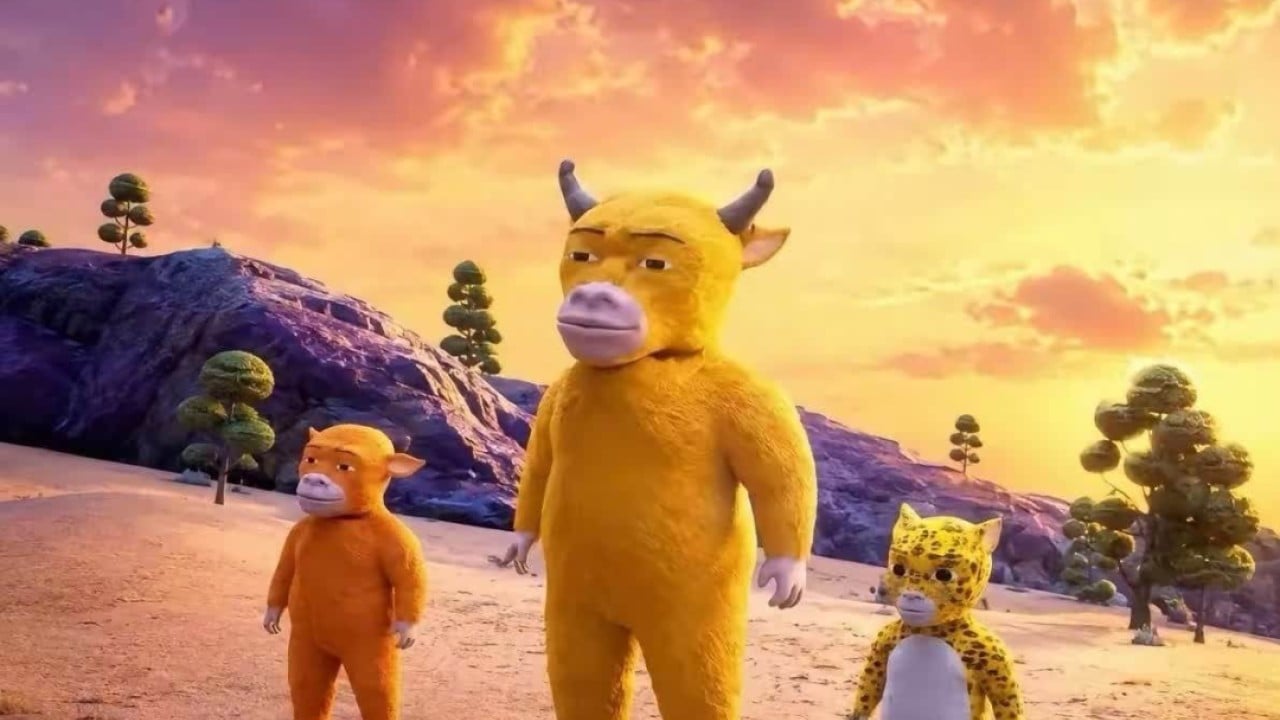
The marketing consisted of a single, deceptive poster featuring beautiful, traditional ink-wash art. When people walked into the theater, they weren't met with elegant brushstrokes. They saw clunky, glitchy 3D models. They saw animation that looked like a tech demo from 1998.
Critics tore it to shreds. They called the plot confusing and the voice acting jarring. But social media saw something else: a digital curiosity. People started sharing clips of the animation, comparing it—not favorably—to cheap AI-generated content. Instead of staying away, audiences began flocking to cinemas.
Why the morbid curiosity pays off
You’re probably wondering why anyone would pay money to sit through a "disaster." It’s the same reason people slow down to look at a car wreck.
This isn't about quality. It’s about being part of a shared experience. In an industry where everything is polished, high-budget, and focus-grouped to death, Niu Lai is a raw, unvarnished failure. It’s "authentic" in the most accidental way possible.
By August 15, 2026, the film’s momentum shifted violently. It was pulling in thousands of yuan in presales daily. It hit 5.26 million yuan in total revenue. People weren't buying tickets because they expected a story. They were buying tickets to check in, take a photo in the theater, and say they survived the experience.
The unintended consequence
This story is a wake-up call for the entertainment industry. Marketing isn't just about controlling the narrative anymore. If your product is "bad" in a unique, meme-able way, the audience might just take the wheel and drive it to profitability for you.
It’s also a fascinating case study in the power of digital word-of-mouth. Traditional advertising costs millions. A couple of viral clips on a social feed cost nothing and can reach more people than a national campaign.
If you're a filmmaker, don't try to replicate this. You can't force "badness." It has to be genuine. The creators of Niu Lai didn't intend to make a meme; they intended to make a movie. That sincerity—even in their complete lack of technical proficiency—is what makes the audience laugh with them, rather than just at them.
What this means for the future
We’re moving into a time where "perfection" is becoming the baseline. AI can generate smooth, high-resolution visuals in seconds. When everything looks perfect, everything starts to look the same.
That’s why something like Niu Lai lands. It’s the human element. Even if that human element is a total technical failure, it’s still human. It’s a reminder that audiences crave something real. They’d rather engage with a disaster that feels personal than a sterile, corporate-approved masterpiece.
If you’re tracking the market, watch the fringe. Don't look at the massive blockbusters. Watch the projects that seem like they shouldn't exist. That’s where the next big cultural phenomenon is hiding.
Stop worrying about having the highest production value. Start worrying about being interesting. Whether you’re making content or a feature film, the audience doesn’t care about your budget. They care about your presence.
If you want to understand where the culture is heading, stop looking for quality and start looking for the conversations that are actually happening on the ground. The next "hit" might be right in front of you, masked as a total failure.