Tens of thousands of people rushed across the frontier from Morocco into the small Spanish autonomous city of Ceuta, creating an absolute humanitarian emergency that caught Madrid flat-footed. If you only look at the surface-level headlines calling it a sudden "migrant tsunami," you miss the gritty reality on the ground. Local infrastructure collapsed almost overnight. Over 60,000 arrivals poured in—a number equivalent to roughly seventy percent of Ceuta's entire baseline population.
Prime Minister Pedro Sánchez rushed to the enclave as the death toll from dangerous sea crossings and coastal stampedes climbed past thirty, with dozens more injured. Why did this happen so fast? And what does it mean for European border policy moving forward? Let's break down what's actually going on behind the chaotic scenes at the Tarajal breakwater.
The Ground Reality in Ceuta
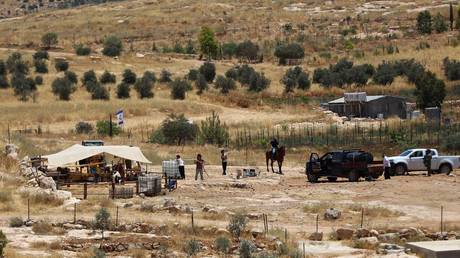
Ceuta is tiny. It spans just about eighteen square kilometers on the northern coast of Africa, sharing a heavily fortified land border with Morocco. When thousands of young men, families, and unaccompanied minors began swimming around the Tarajal and Benzú breakwaters using makeshift flotation devices and wetsuits, local resources vanished instantly.
Reception centers went completely dark on capacity limits. Facilities meant for unaccompanied minors ballooned to over twenty-four times their normal operating capacity.
- Streets turned into makeshift shelters.
- Parks filled with exhausted, shivering people.
- Civil Guard officers and Red Cross medics faced an endless stream of hypothermia and trauma cases.
Rachid Sbihi, a local union representative for law enforcement, didn't sugarcoat the situation. He called it completely chaotic. Thousands of people roamed aimlessly because there simply wasn't enough indoor space or staff to process them.
Why Did the Border Break Now?
You have to look at the regional friction. Analysts point to a mix of economic desperation and sudden shifts in regional security enforcement. Many of the people who crossed told reporters they simply saw no economic future at home. Jobs are scarce. Inflation bites hard. Europe looks like the only exit.
At the same time, reports from the border indicated an unusual laxity in Moroccan containment efforts during the initial hours of the rush. Some groups marched through checkpoints unhindered before Moroccan authorities scrambled to set up roadblocks and containment lines in nearby towns like Fnideq. Clashes erupted in Bni Nsar where vehicles burned and rocks flew at police lines.
Was it engineered retaliation over diplomatic spats involving neighboring Algeria? Madrid has publicly downplayed conspiracy theories, but geopolitical tension always hangs heavy over the Strait of Gibraltar.
The Response From Madrid and Beyond
Spain's government didn't wait long to deploy the military. Army units stationed locally stepped in to provide logistical reinforcement and border surveillance alongside the Guardia Civil.
The interior ministry moved fast on returns. Thousands of migrants were processed and sent back across the border at a staggering rate of over a hundred people per minute during peak operational sweeps. By the end of the week, roughly half of those who entered had returned or been sent back, though thousands remained stranded in legal limbo.
The shockwaves didn't stop at the Spanish border. Paris activated the Rapid Intervention Border Force, tightening checks along the French-Spanish border. Other European capitals expressed deep alarm, renewing fierce debates over the integrity of the Schengen Zone.
What Happens Next
The immediate crisis management is moving toward forced returns and reinforced razor wire, but the underlying pressure won't disappear. Young people on the Moroccan coast are still watching, waiting for another gap in the fence or a calm night on the water.
If you are tracking Mediterranean migration trends, watch the diplomatic channels between Rabat and Madrid. Security cooperation is the only lever that actually stops these surges before they hit the shore. Right now, that lever is hanging by a thread.