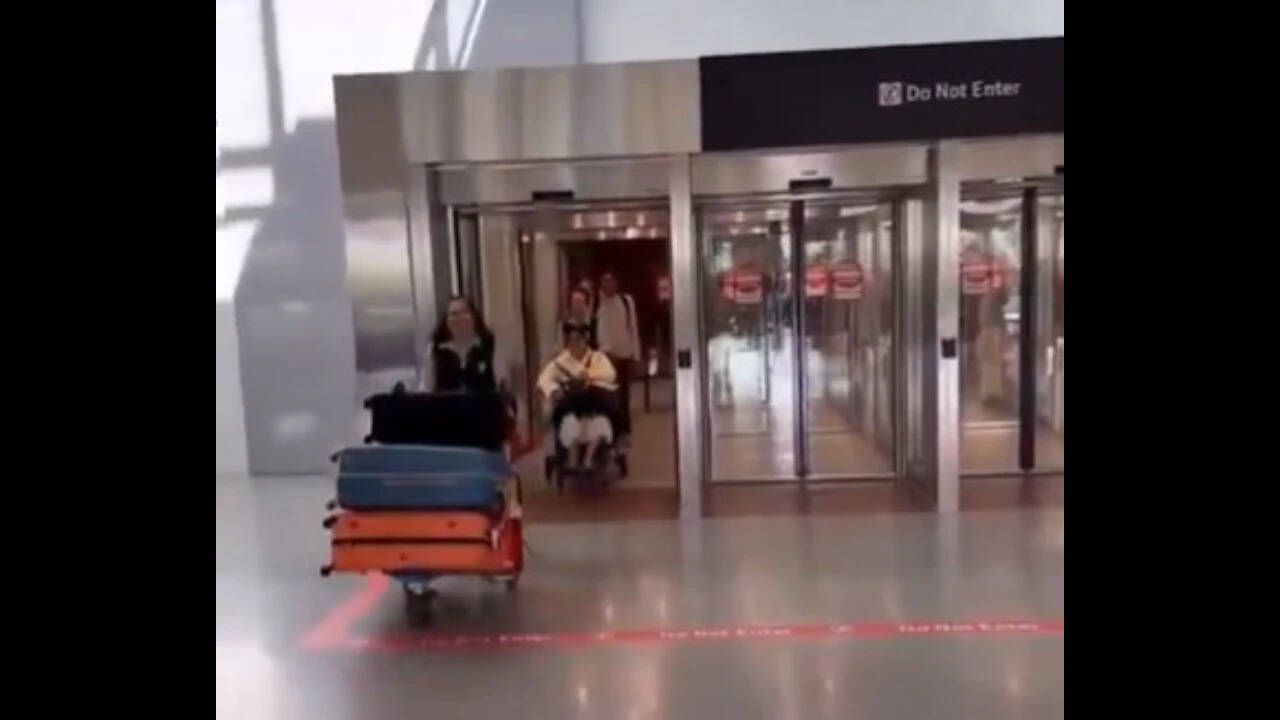
Another day, another viral video exposing how a certain segment of travelers treats international airport infrastructure like a personal cheat code. A clip showing an elderly woman arriving at Dallas-Fort Worth Airport seated in a wheelchair—only to stand up completely fine moments later while her family managed heavy luggage—ignited a massive online firestorm.
Instead of hiding the shortcut, the family proudly published the footage themselves. That lack of internal filter is exactly what drew sharp criticism from Indian-origin professor Gaurav Sabnis. He didn't hold back, pointing out that posting the video displays an alarming absence of self-awareness regarding systemic queue-jumping.
The Normalization of Shortcut Culture
When exploiting accessibility services becomes a badge of cleverness rather than a source of embarrassment, culture has shifted the wrong way. Professor Sabnis noted that the individual uploading the clip didn't even realize they were broadcasting proof of a system being gamed.
Airports provide wheelchairs for travelers with genuine mobility constraints, physical injuries, or severe medical limitations. Yet, international travel hubs, particularly on long-haul routes connecting South Asia to North America and Europe, have seen an exponential surge in wheelchair bookings.
Airlines and ground handlers now face a strange logistical puzzle. Planes land with dozens of passengers requesting chair assistance, but a suspiciously high percentage of those passengers walk briskly out of the terminal once baggage is cleared.
Excuses Versus Reality
Defenders of the practice usually point to standard travel anxiety, massive terminals, confusing connection layouts, and aging parents who get overwhelmed by foreign customs procedures. Those are real factors. Long walks between gates at major hub airports like Newark, London Heathrow, or Dallas can test anyone's stamina.
However, travel fatigue affects people of all nationalities. Older adults from every corner of the globe board flights daily without co-opting medical equipment meant for disabled travelers. Treating a medical accommodation as a priority boarding pass creates a ripple effect of friction.
When hundreds of able-bodied travelers request assistance just to skip customs lines or secure faster exit times, the actual infrastructure strains. Staff members get stretched thin. Truly disabled passengers end up waiting longer for help because limited equipment and personnel are tied up managing convenience requests.
The Real Cost of Looking Clever
This phenomenon goes beyond a harmless life hack. It highlights a wider tolerance for bending rules whenever enforcement is lax. Industry leaders, including corporate figures like Biocon founder Kiran Mazumdar-Shaw, have previously suggested imposing heavy administrative fees on wheelchair requests to filter out unnecessary bookings. While extra fees risk burdening genuine users, the fact that people are openly discussing financial deterrents shows how out of hand the situation has become.
Recording the exploit and posting it online as wholesome family content takes the issue to another level. It normalizes behavior that crowds out vulnerable travelers who rely on these services to navigate massive concrete labyrinths.
If you're flying with elderly relatives who genuinely need physical support, use the services built for them. If they can walk fine and just want a shorter line, walking is the right choice. Stop filming the workaround.