Headlines blare about historic breakthroughs, but the actual mechanics of Donald Trump's freshly announced Gaza disarmament deal are messy, contested, and far from a done deal. When the White House declared that the newly formed Board of Peace secured an agreement for the complete disarmament of Hamas and other armed groups, social media lit up.
Let's look past the political spin.
The agreement itself is tied directly to Trump's broader 20-Point Plan, backed internationally by UN Security Council Resolution 2803. It envisions a phased transition: Hamas gives up its weapons, Israeli forces pull back step-by-step, and an International Stabilization Force moves in alongside a new local Palestinian police force. Sounds clean on paper. Reality on the ground operates differently.
The Conditions Behind the Disarmament
Hamas didn't just surrender its arsenal out of goodwill. Senior negotiators made their compliance strictly conditional on Israeli actions. Ghazi Hamad, a senior Hamas official, made it clear that if Israel fails to fulfill its obligations—including complete military withdrawals from specific zones and allowing immediate reconstruction—the deal falls apart.
At the same time, Prime Minister Benjamin Netanyahu's office pushed back immediately. Israeli leadership stated that the current 15-point disarmament framework falls short of total demilitarization demands.
You have two sides holding completely contradictory expectations of what happens next. Washington is coordinating closely with regional mediators like Egypt, Qatar, and Turkey, but trust between the primary belligerents remains practically non-existent.
Inside the Board of Peace Mechanics
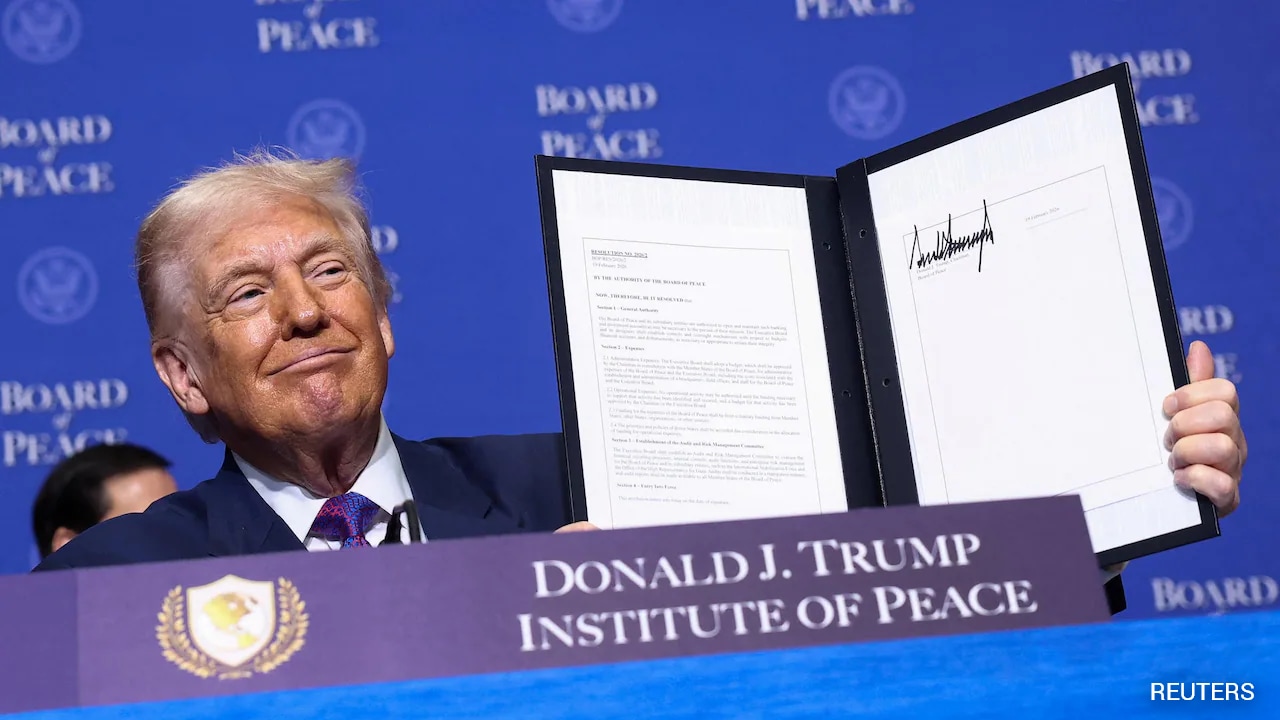
The body driving this initiative is just as controversial as the deal itself. Formed on the sidelines of the World Economic Forum, the Board of Peace operates outside traditional United Nations structures, featuring Trump as chairman for life alongside heavy-hitting international figures and diplomats like Nikolay Mladenov, who serves as the high representative for Gaza.
Participating member states are expected to contribute substantial financial backing—often up to one billion dollars for full membership tiers—to fund the National Committee for the Administration of Gaza (NCAG).
Critics point out drafting issues in the board's charter, warning of sweeping immunities and broad land-use powers that bypass standard oversight. Supporters counter that traditional multilateral diplomacy failed for years, making a results-oriented, transactional framework necessary to break the deadlock.
What Happens Next on the Ground
Implementation is where international grand strategies usually crash into reality.
- Verification Checkpoints: An independent body must verify demilitarized zones before any subsequent phase begins.
- Security Handover: Troops pledged from nations like Indonesia, Morocco, and Kazakhstan are slated to form the backbone of the stabilization force, working alongside newly trained Palestinian police units.
- Governance Shift: Power is theoretically shifting toward a technocratic local administration rather than returning to pre-war authorities.
If either side decides the political cost of compliance is too high, the entire architecture engineered by the Board of Peace stalls out. Watch the border zones and the daily verification reports, not the press releases. That is where the success or failure of this agreement will actually be decided.