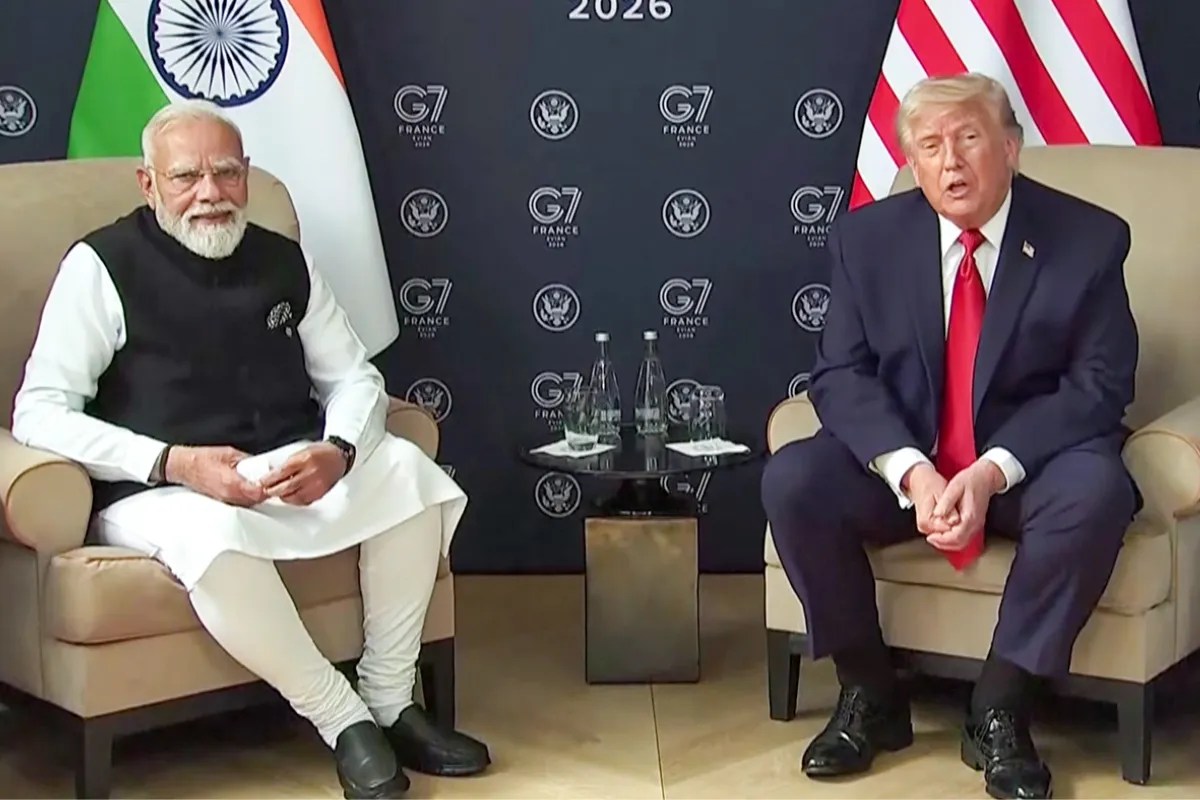
If you watched the recent G7 summit in France, you probably saw the headlines. Headlines screaming about awkward questions, trade tensions, and dramatic quotes. A journalist looked Donald Trump in the eye and essentially asked when he stopped making life miserable for India. Trump didn't blink. He turned the question right back around, demanding to know exactly when he had ever created trouble for New Delhi.
It was classic political theater. But if you're only looking at the theater, you're missing the actual story.
The media loves focusing on the bizarre vocabulary. Trump calling Indian Prime Minister Narendra Modi an angel who is secretly a killer makes for great social media bait. Beneath that bizarre rhetorical veneer lies a complicated web of defense guarantees, intense tariff battles, and a raw personal dynamic between two of the most powerful leaders on earth. This wasn't just a friendly chat over coffee. It was a calculated exercise in damage control and geopolitical alignment.
The Real Story Behind the Killer and Angel Comments
Let's talk about that press conference. Trump sat next to Modi and threw out a stream of compliments that left seasoned diplomats scratching their heads. He called Modi calm, cool, and a total killer. Then he shifted gears, calling him a beautiful-looking man who looks like an angel.
People laugh at this stuff. Don't.
When Trump uses words like killer in a negotiation context, it's his highest form of praise. He's acknowledging that Modi doesn't back down. The corporate media tried to paint this exchange as a sign of deep friction, or worse, a total joke. It wasn't. It was an explicit acknowledgment that India is no longer a junior partner in the Washington-New Delhi dynamic.
For the last 16 months, relations between the two countries have been cold. This G7 meeting was their first face-to-face interaction in nearly a year and a half. The silence before this meeting speaks volumes. Trump put steep 50% tariffs on Indian exports last year. New Delhi didn't just take it sitting down. They retaliated, targeted American goods, and made it clear that a trade war would cut both ways.
When that journalist asked Trump about creating difficulties for India, the president's defensive reaction was telling. He wants the world to see his relationship with Modi as unbreakable. He needs that narrative because the strategic reality behind the scenes is getting incredibly messy.
The Defense Guarantee That Shocked Diplomats
The biggest moment of the meeting didn't even involve trade numbers. It was Trump’s spontaneous defense commitment.
He explicitly stated that if India were attacked under Modi’s leadership, the United States would step in to help. He literally said that without a formal contract, the US would be there. Then he added a bizarre caveat. He said if there's a new leader in India, he's not so sure, but as long as Modi is at the helm, the American military has India's back.
Think about how wild that statement is.
Why this defense promise matters
- It bypasses traditional treaties entirely.
- It bases superpowers' geopolitical alignment on personal affection.
- It sends an unmistakable warning to regional adversaries without involving Congress.
Diplomats in Washington are probably losing their minds over this. You can't just throw out military guarantees during a casual media availability. But Trump thrives on this exact brand of personalized diplomacy. He pointed to recent American military actions in Venezuela and Iran as proof of capability, basically telling New Delhi that the US is the only security partner that matters.
This isn't just about being nice to India. Washington is watching Beijing very closely. With the US trying to rebalance its position in Asia, keeping India firmly in its orbit is essential. Trump knows he can't afford a distant or angry New Delhi. The defense promise was a massive carrot thrown on the table to smooth over some very real grievances.
The Seafarer Crisis in the Gulf of Oman
You can't understand this G7 meeting without looking at what happened just a week before the summit. Three Indian sailors died in a military strike on a tanker in the Gulf of Oman. The tragedy occurred right in the middle of a US blockade targeting oil shipments passing through the critical Strait of Hormuz.
New Delhi was furious. The Indian Foreign Ministry issued a formal protest.
While the cameras were flashing at the G7, Modi brought this up directly. He didn't hide behind diplomatic niceties. He reminded everyone that hundreds of thousands of Indian nationals work on commercial ships globally, and their safety isn't negotiable.
Trump's response was surprisingly somber for him, calling it a rough profession and offering condolences. But notice what he didn't do. He didn't offer a policy change. He didn't apologize for the aggressive blockade strategies that created the volatile environment in the first place. Instead, he pivoted right back to praising the talent of the Indian people. It’s a classic distraction technique, and it shows where the true leverage lies.
What is Actually Happening With the Trade Deal
Everyone keeps saying a trade deal is very close. We've heard that line for months now. The reality is that an interim agreement was reached back in February 2025, but the comprehensive deal is stuck in the mud.
India is playing a very smart, very aggressive game here. They aren't relying solely on government-to-government negotiations. Instead, Indian corporations are flooding the US market with private capital. Recent data shows Indian companies planning to invest over 20.5 billion dollars across US sectors like technology, pharmaceuticals, and manufacturing.
This is brilliant economic strategy. By pouring billions into American states, Indian businesses create local jobs. When Indian companies create jobs in Ohio or Pennsylvania, it becomes politically impossible for any US president to completely cut off trade ties. Modi knows this. Trump knows this too, which is why he spent so much time during the press conference bragging about how much money India is spending inside the United States.
How to Read Between the Diplomatic Lines
If you want to understand international politics, stop reading the official joint statements. Look at what happens right before and right after the meetings.
Take the recent claims about Pakistan. Trump previously tried to take credit for brokering a ceasefire after Operation Sindoor. India repeatedly denied that he had anything to do with it. New Delhi hates third-party mediation on its regional security issues. Yet, at the G7, Trump still tried to position himself as the ultimate global dealmaker, asserting that India can do anything they want with us because the relationship has never been closer.
It’s an elaborate dance. Trump plays the role of the generous protector, while Modi plays the role of the stoic, independent leader who accepts the praise but gives up absolutely nothing on sovereign policy.
So, what are the next steps you should take to track where this relationship is actually going over the next few months? Forget the viral videos and look for these concrete indicators instead.
Watch the specific tariff rates on agricultural and tech goods over the next six weeks. If Washington drops the duties on Indian steel and aluminum, the trade deal is real. If they don't, the angel and killer talk was just hot air. Track the joint naval exercises in the Indo-Pacific. Real military cooperation shows up in the water, not in brief press conferences in France. Finally, monitor the official announcements regarding Trump's teased future visit to India. A confirmed travel date will tell you exactly how stable this partnership really is.