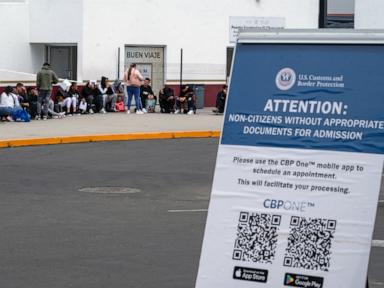
Standing on the Mexican side of the international boundary line isn't the same as being in America. That sounds like a simple geographical fact, but it just became the legal fulcrum for the biggest reshaping of American immigration law in a generation.
The Supreme Court handed the Trump administration a massive victory by ruling that federal border agents can physically turn away asylum seekers before they set foot on U.S. soil. If you think this is just a minor administrative tweak, you're missing the bigger picture. This decision, Mullin v. Al Otro Lado, fundamentally alters who gets to ask for protection in the United States and gives the executive branch an incredibly powerful tool to control the physical border.
For years, human rights groups argued that anyone reaching an official port of entry had a right to be processed. The high court just threw that argument out the window.
Here is what the ruling actually means, how it works, and why the ground beneath the southern border just shifted permanently.
The Semantic Battle Ground Over Arriving In America
At its core, this entire multi-year legal war came down to two simple words in the Immigration and Nationality Act: "arrives in".
Federal law mandates that the U.S. government must offer an asylum interview to any noncitizen who "arrives in" the country. For decades, the assumption was that if you showed up at an official international bridge or port of entry, you were making a legal claim that required processing.
The conservative majority disagreed. Writing for the 6-3 majority, Justice Samuel Alito looked at standard dictionary definitions rather than complex legal theories. He wrote that in ordinary speech, nobody says a person arrives in a place before they actually enter it. Alito didn't hold back with his analogies. He noted that a running back doesn't arrive in the end zone when he hits the 1-yard line, and a letter doesn't arrive in a mailbox while it stays in the mail carrier's hand.
Basically, if your boots are on Mexican dirt, you haven't arrived.
[Mexican Side of Border] ---> [The Threshold Line] ---> [U.S. Soil]
   (No Asylum Rights)            (The New Wall)         (Asylum Rights Apply)
The three liberal justices were furious. Justice Sonia Sotomayor took the rare step of reading her dissent from the bench to show how deeply she opposed the ruling. She argued that the majority is letting the executive branch completely dodge mandatory procedures passed by Congress. By simply stationing agents at the exact physical boundary line to block people, the government can avoid its legal duties entirely. Sotomayor warned that the consequences will be predictable and deadly, forcing desperate families into more dangerous, illegal crossings through deserts and rivers.
From Metering to Total Blocking
To understand how we got here, you have to look back at a practice called "metering". It didn't actually start with Donald Trump. The Obama administration used it sparingly, but it became a central strategy during Trump's first term.
Whenever a port of entry claimed it was at capacity, border agents stood at the international boundary line and told migrants to wait. This created a bizarre, informal system. Migrants in Mexican border towns like Tijuana and Juárez started keeping names in physical notebooks or digital apps just to secure a spot in line.
Humanitarian groups sued in 2017, arguing that this artificial delay was an illegal bottleneck designed to deny rights. Lower courts agreed with them. A federal judge in California and the Ninth Circuit Court of Appeals both ruled that officers had to process people trying to enter, not just those who had successfully crossed.
While the Biden administration dropped the policy in 2021, the current Trump administration fought to get it back, calling it a critical tool for handling massive border surges. Now that the Supreme Court has cleared the legal path, Department of Homeland Security Secretary Markwayne Mullin has the green light to deploy this strategy whenever the administration feels border conditions justify it.
Why the Asylum System Just Changed Forever
This isn't just about managing long lines at the border. It changes the legal mechanics of how human beings flee persecution.
Under international and domestic framework agreements established after World War II, nations promised not to return refugees to countries where they face severe danger. By shifting the legal boundary to the exact physical line of U.S. soil, the court has effectively allowed the government to create a human wall.
Consider what this means in practice:
- No Capacity Checks Required: An agent can turn someone away even if the port of entry is completely empty and trained asylum officers are sitting inside with nothing to do.
- The Asylum Transit Rule Trap: Migrants who are forced to wait on the Mexican side often hit another legal wall later. Under existing rules, if you travel through a third country (like Mexico) and don't apply for asylum there first, you lose your eligibility for U.S. protection. Waiting in Mexico makes it even harder to qualify later.
- Executive Dominance: The presidency just gained immense power to bypass congressional mandates simply by changing where federal agents stand.
What Happens at the Southern Border Now
Don't expect the border to change overnight, but the structural foundations are set. The administration has been trying to curb migration using a different legal argument—declaring the border situation an "invasion" to justify broad bans. An appeals court recently struck that down as illegal.
Because of that legal setback, this Supreme Court ruling gives the White House the exact leverage it needs. It can now pivot back to physical blocking at ports of entry without worrying about lower court injunctions.
If you are tracking immigration policy or working with advocacy groups, the immediate next steps are clear. Watch for DHS to issue new operational directives to Customs and Border Protection officers at major crossings like San Ysidro and El Paso. Legal teams are already shifting their strategies from broad statutory challenges to individual, case-by-case interventions, though their options have shrunk dramatically. The legal avenues for challenging border turn-backs have officially run out. The physical line is now the law.