The brutal shooting of a dissident on European soil always follows a predictable script. Media outlets rush to paint the victim as a monumental threat to the Kremlin, security experts warn of escalating hybrid warfare, and intelligence agencies pledge a deep investigation.
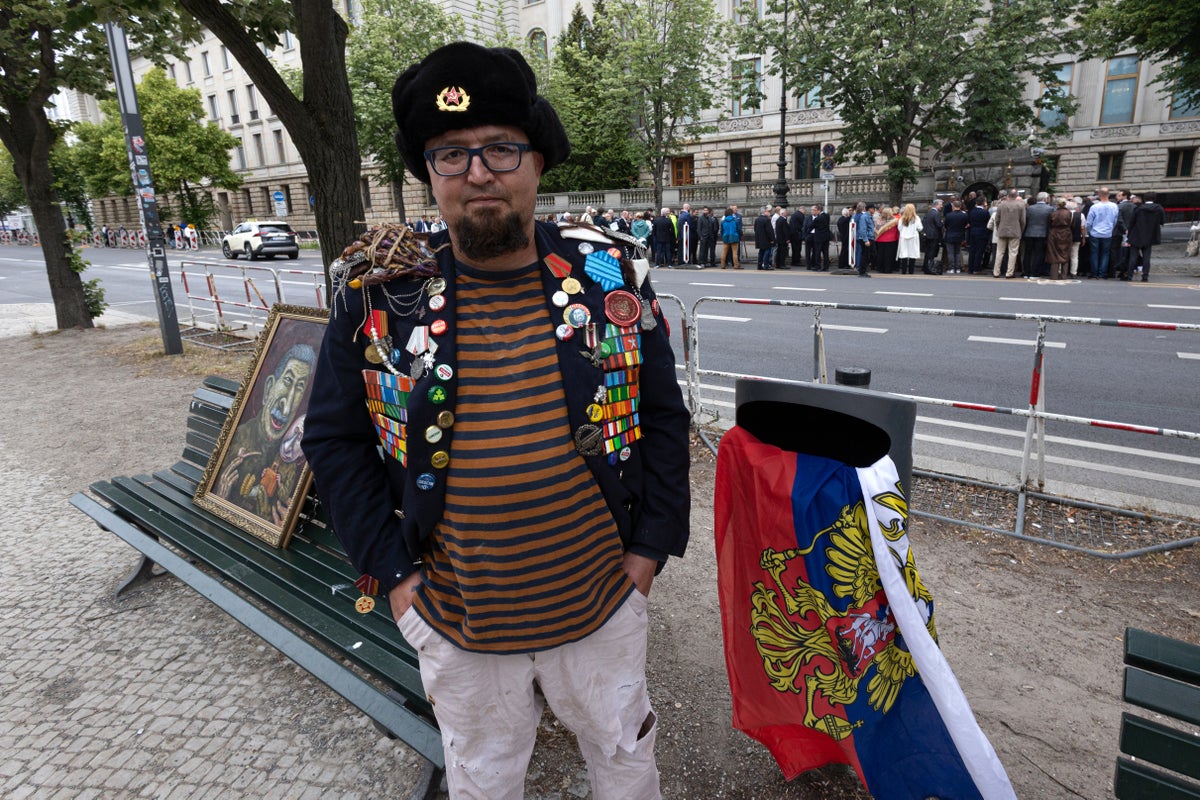
But when a gunman approached 44-year-old Russian artist Robert Kuzovkov—better known by his pseudonym Semyon Skrepetsky—in a parking lot in Biała Podlaska, Poland, and fired five bullets into his chest and head, the standard narrative fell apart. For an alternative look, read: this related article.
This wasn’t a high-profile oligarch with state secrets or a political mastermind leading a revolution. Skrepetsky was a blunt, often isolated satirist from the Altai region who painted grotesque, psychedelic caricatures of political leaders. He lived in a quiet town just 25 miles from the Belarusian border.
The Western media focus has heavily pinned this as a direct, top-down execution ordered by Vladimir Putin. Yet, looking closely at the details of the investigation and Skrepetsky’s final days reveals a chaotic, multi-layered reality that points to a completely different, equally terrifying shadow network operating inside the European Union. Related analysis on this matter has been provided by Associated Press.
The Brutal Geometry of a Targeted Hit
Let's clear up the facts of what happened on Monday, June 15, 2026. This wasn’t a random robbery or a border town dispute gone wrong. Polish prosecutors in Lublin confirmed the attack was planned with clinical intent.
An unidentified gunman walked up to Skrepetsky near his home. The shooter pulled out a handgun and fired two shots, dropping the artist to the pavement. Instead of running, the assassin stepped closer, stood over Skrepetsky’s fallen body, and fired three more rounds directly into his head and chest. He died right there on the asphalt.
Polish police immediately locked down the area, sealing exits from the city and placing local schools under guard because Skrepetsky's children were inside. Within hours, authorities detained two Belarusian nationals, aged 33 and 37, near the Belarusian consulate in Biała Podlaska.
While Western headlines scream about Putin's long arm, the actual mechanics of this hit point to a proxy network. Poland’s National Security Bureau head, Bartosz Grodecki, stated that if a political motive is confirmed, it represents a grave escalation of foreign operations on Polish soil. But the question we need to ask is simple: who actually ordered the hit?
The Chechen Connection Everyone Is Missing
Mainstream coverage loves a simple villain. Putin is the easy answer. But Skrepetsky’s most dangerous enemies weren’t sitting in the Kremlin; they were likely based in Grozny.
Days before his death, Skrepetsky posted on social media that he was receiving explicit death threats from supporters of Chechen warlord Ramzan Kadyrov. These weren't generic internet trolls. The callers told Skrepetsky they had tracked his IP address and uncovered his physical home address in Poland. They gave him a 48-hour ultimatum: issue a public apology to Kadyrov or face the consequences.
Skrepetsky didn't back down. Two days before he was executed, he defiantly reposted a satirical painting he had made depicting Ramzan Kadyrov and his son, Adam, as pigs.
Kadyrov has a well-documented history of running independent hit squads across Europe to eliminate anyone who damages his fragile ego. From the 2019 assassination of Zelimkhan Khangoshvili in Berlin to the hunting of Chechen bloggers in France and Austria, Grozny routinely executes critics abroad without needing a direct sign-off from Moscow's central intelligence apparatus. Skrepetsky’s hyper-offensive, psychedelic artwork targeted Kadyrov ruthlessly, making him a prime target for a Chechen honor hit.
An Equal Opportunity Offender in Exile
To understand why Skrepetsky lacked a massive institutional shield in the West, you have to look at his politics. He wasn’t a darling of the mainstream Russian opposition.
He left Russia for Poland in 2021 to escape political persecution, but once in exile, he alienated almost everyone. He regularly attended opposition rallies but openly mocked the late Alexei Navalny, claiming Navalny's strategy had effectively dismantled the real Russian opposition.
Worse, his vitriol didn't stop at the Russian border. He drew caricatures mocking Ukrainian leadership, landed himself on Ukraine’s Myrotvorets database—a public blacklist of individuals deemed threats to Ukrainian national security—and burned bridges with fellow émigrés. Just three days before his execution, he staged a solo protest outside the Russian embassy in Berlin for Russia Day, holding up an icon-style painting of Joseph Stalin cradling a baby Vladimir Putin.
He was entirely alone. The Polish government actually offered him state protection prior to the shooting. He turned it down. He chose to live exposed in a border town heavily exposed to cross-border espionage.
The Reality of Central Europe’s Shadow War
The execution of Semyon Skrepetsky happened in a highly volatile region. Biała Podlaska sits right on the frontline of Europe's covert security crisis. Poland is currently the primary focus of a coordinated sabotage campaign in Europe, dealing with arson, cyberattacks, and border provocations managed by Russian and Belarusian intelligence.
The detention of two Belarusian nationals near their own consulate suggests the killers utilized the porous, highly active local human smuggling and intelligence pipelines running through Belarus. Whether hired as local muscle by Chechen elements or acting on behalf of Belarusian state security helping a Russian ally, the killers knew exactly where to find an unprotected target.
What Dissidents and Security Teams Must Do Next
If you are a political dissident, journalist, or activist living in exile in Central or Eastern Europe, the Skrepetsky murder completely changes the security landscape. You cannot rely on geographical distance or a low public profile to keep you safe.
- Accept State Protection: If host country intelligence or police offer protective details, security sweeps, or safehouses, take them. Refusing state aid out of a desire for independence is a fatal mistake.
- Audit Your Digital Footprint: The threats against Skrepetsky began after his IP and physical address were compromised. Use dedicated, hardened hardware for dissident work, route all traffic through multi-layered VPN systems, and never post real-time locations or landmarks near your residence.
- Relocate Away from Border Zones: Living within an hour's drive of a hostile border (like the Polish-Belarusian frontier) gives hit teams an immediate, easy escape route before local police can establish blockades. Move deeper into the host country's interior where law enforcement response times and surveillance networks are tighter.