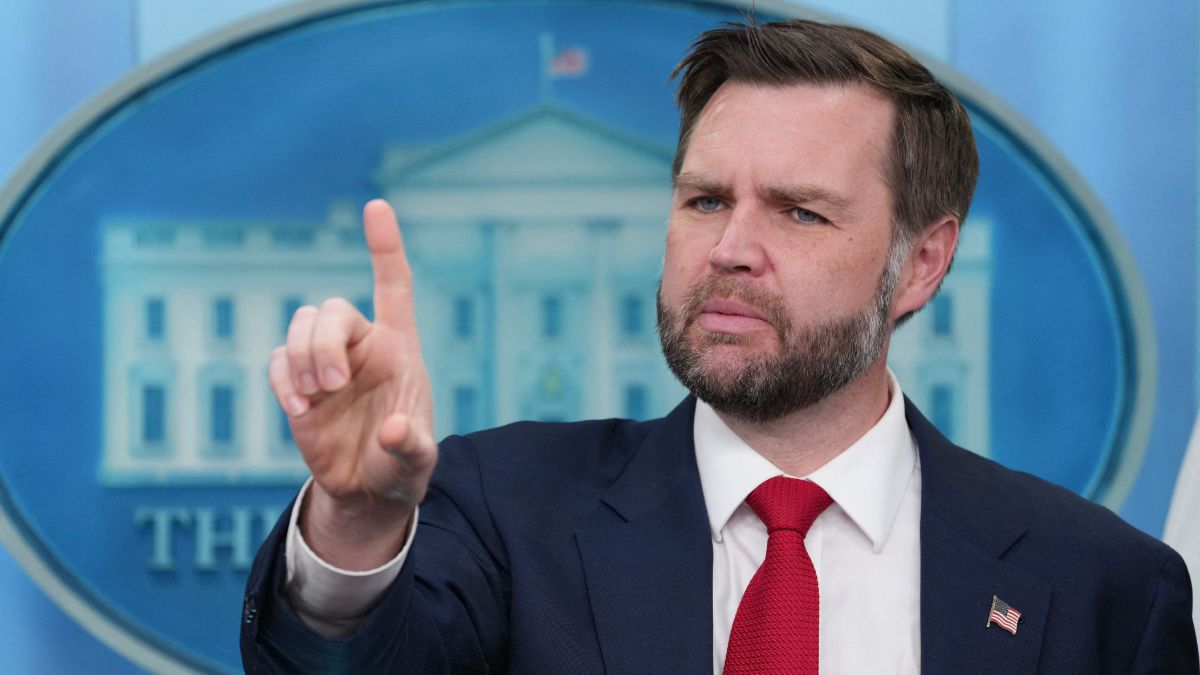
The global diplomatic stage rarely lacks drama, but the fallout from the newly minted Islamabad Memorandum of Understanding has managed to spin a brand new web of confusion. When the news finally broke that the United States and Iran had digitally signed an interim framework to halt over 100 days of intense warfare in West Asia, everyone expected a clean victory lap. Instead, the public got days of radio silence, backpedaling from foreign leaders, and intense speculation. When pushed on why the American public was left in the dark about the exact text, US Vice President JD Vance didn't mince words. He took a direct swipe at the very intermediaries who helped set up the table. In a high-profile media appearance on The New York Times podcast with Ross Douthat, JD Vance blames Pakistan's poor press freedom for delay in publishing Iran peace MoU, citing a massive misalignment in political cultures.
It's a bold claim. It's also an incredibly revealing look at how the Trump administration views international diplomacy, domestic transparency, and its foreign partners in 2026. For days, critics and political opponents had hammered the White House, accusing officials of secretly burying the text because they had given away the store to Tehran. By shifting the blame onto the lack of First Amendment protections in Islamabad and Doha, the vice president sought to quiet domestic critics while subtly putting America's diplomatic helpers in their place. In similar developments, read about: Why Trump Pushed Israel Into The Hezbollah Ceasefire.
But if you look past the initial headlines, you find a story that isn't just about press freedoms. It's a messy tale of botched photo ops, digital signatures that caught mediators off guard, and a complex 14-point agreement that is already facing massive hurdles on the ground.
The Core Reason JD Vance Blames Pakistans Poor Press Freedom For Delay In Publishing Iran Peace MoU
The issue started when Pakistani Prime Minister Shehbaz Sharif prematurely took to social media to announce that a final agreement had been hammered out to end the devastating conflict. He spoke of an official, high-profile signing ceremony scheduled to take place in Switzerland on June 19. Yet, almost immediately after, the White House announced that President Donald Trump and Iranian President Masoud Pezeshkian had already signed the agreement remotely using digital signatures. The Swiss ceremony was effectively dead before it even began, leaving Pakistani officials red-faced and frantically editing their public statements. The New York Times has analyzed this important subject in extensive detail.
When asked why the full 14-point framework remained a secret for days after this digital signing, Vance pointed the finger squarely at the internal systems of Pakistan and Qatar.
"We actually really want to get this out because it's hard to have the conversation without the full text," Vance stated during the interview. "And I think part of the misalignment here is that in the Pakistani and Qatari systems, they don't quite have the First Amendment and freedom of the press. And so there isn't this expectation that the text is going to be out there for the American people to actually interrogate and look at and analyze and understand for themselves."
To put it plainly, Vance argued that America's democratic expectations clashed violently with the administrative habits of its partners. In the US, a major peace deal cannot remain a secret without triggering absolute chaos in Congress and the media. In Islamabad and Doha, the standard operating procedure involves keeping sensitive documents under lock and key until the political dust settles completely. This culture clash, according to the White House, is what choked the information pipeline.
A Public Relations Disaster for Islamabad
For Pakistan, the vice president's comments hit right where it hurts. The country had spent weeks positioning itself as the central broker of the 2026 peace process. Securing a ceasefire between Washington and Tehran was supposed to be a crowning achievement for Prime Minister Shehbaz Sharif's administration. Instead, they got a public lecture on their domestic human rights record from the second highest official in the United States government.
The timing couldn't be worse for Pakistan's global image. The country currently sits at a dismal 153 out of 180 nations on the World Press Freedom Index. For decades, local and international watchdogs have raised alarms over the systemic targeting of independent journalists, forced broadcasting blackouts, and heavy-handed internet restrictions.
Worse still, the passage of the controversial 27th Constitutional Amendment in late 2025 severely stripped the country's Supreme Court of its ability to independently review fundamental human rights violations. When Vance threw shade at Pakistan's lack of press protections, he wasn't just making an excuse for a delayed document. He was dropping a heavy anchor on an open wound.
The embarrassment deepened when Pakistan's Deputy Prime Minister and Foreign Minister, Ishaq Dar, had to officially confirm that the planned Switzerland trip was completely shelved because the deal was already active via remote signatures. Meanwhile, Interior Minister Mohsin Naqvi was spotted flying out to Tehran in what looked like a desperate bid to keep up appearances and manage the optics of a mediation process that had clearly outgrown its handlers.
What the Secret 14-Point Document Actually Says
The delay in releasing the text naturally led people to assume the worst. Rumors swirled that the US had agreed to massive, unconditional financial payouts just to get Iran to stop choking global trade. Now that the text is out, we can see exactly what both sides committed to over this 60-day preliminary window.
The agreement is a temporary framework designed to stabilize a highly volatile region after three and a half months of punishing military actions. The terms call for an immediate and permanent termination of military operations across all active fronts. This means the immediate lifting of the United States naval blockade on Iranian ports, which had completely choked the country's economy since April.
In return, Iran must instantly reopen the vital Strait of Hormuz to commercial shipping, entirely toll-free, for the duration of the 60 days. This particular clause is what the Trump administration is selling as a massive victory for regular Americans, betting that the sudden restoration of global shipping routes will quickly drive down skyrocketing global oil and gas prices.
The nuclear component of the document is where things get incredibly tense. Under the agreed terms, Tehran must reaffirm that it will not develop or procure nuclear weapons. Crucially, the text requires Iran to work directly under International Atomic Energy Agency supervision to handle, dilute, and eliminate its current stockpile of highly enriched uranium.
The Battle Over the 300 Billion Dollar Reconstruction Plan
The biggest flashpoint in the domestic debate surrounds a clause detailing a massive $300 billion reconstruction and economic development plan for Iran. As soon as this number leaked, opposition lawmakers in Washington went on the warpath, claiming the White House was funding a state sponsor of terrorism.
Vance has spent the last 48 hours aggressively pushing back against this narrative. He insists that the critics are intentionally misrepresenting how the deal works to keep the war going.
According to the administration, not a single penny of American taxpayer money is going into this fund. The money is intended to come from international investments and the release of frozen Iranian assets, but it's entirely contingent on a complete transformation of Iranian behavior.
Vance's argument is straightforward: the US military successfully dismantled billions of dollars of Iran's nuclear and military infrastructure during the 100-day war. Tehran is currently trapped in an economic vice. If they want access to the global financial system or their own frozen funds to rebuild their civilian economy, they have to permanently dismantle their enrichment capabilities and submit to an intrusive verification regime. It's a performance-based arrangement. If they don't comply, the sanctions snap back, and the blockade returns.
Why Israel is Furious and the Ceasefire is Already Cracking
While Washington and Islamabad argue over press freedoms and document drops, the situation on the ground in the Middle East is rapidly deteriorating. The Islamabad Memorandum explicitly demands a total cessation of hostilities on all fronts, which includes the ongoing war between Israel and Hezbollah in southern Lebanon.
The Israeli cabinet did not take this news well. Several high-ranking officials openly blasted the American directive to halt strikes in Lebanon, calling the administration's unilateral move a resounding slap in the face. Israel argues that stopping the military pressure now allows Hezbollah to regroup and rearm right on its northern border.
Vance fired back with some incredibly harsh words for Israeli critics during a recent White House press briefing. He reminded them that the United States provides the vast majority of Israel's defensive weapons and noted that President Trump is virtually the only global head of state currently sympathetic to their nation. His message was clear: stop biting the hand that feeds you.
Despite the tough talk, the reality on the ground doesn't care about diplomatic agreements. Hours after the ceasefire was supposed to take effect, fresh Israeli airstrikes and retaliatory Hezbollah rocket salvos were reported across southern Lebanon. Iranian negotiators in Switzerland have already threatened to walk away from the technical talks before they even start, insisting that the violence in Lebanon must halt completely before any further discussions can take place.
How to Track the Next Steps of this Developing Story
The next few weeks will decide whether the Islamabad Memorandum is a historic breakthrough or a total waste of paper. If you want to keep tabs on whether this deal actually holds together, look past the political grandstanding and watch these specific indicators:
- Monitor the Strait of Hormuz shipping logs: The absolute first test of Iranian compliance is whether commercial oil tankers can pass through the strait without harassment or extra fees. If shipping data shows a smooth return to regular traffic, global oil prices should start cooling off immediately.
- Watch for the IAEA inspection reports: The core of the American argument is that Iran's enriched uranium stockpile is being actively diluted. Keep an eye out for official updates from the International Atomic Energy Agency confirming that their inspectors have been granted full, unhindered access to Iranian nuclear sites.
- Track Congressional briefing schedule: The White House has openly stated it intends to temporarily lift certain sanctions on Tehran without seeking formal congressional approval. Watch how leadership in both parties responds to these upcoming closed-door briefings, as domestic political pushback could severely complicate the administration's long-term strategy.