Live television exposes raw, unfiltered thoughts in seconds. When ABC7 Los Angeles reporter Abigail Velez stood in front of a camera at a World Cup viewing party in Long Beach, California, she probably thought she was just delivering spicy sports banter. The United States men’s national soccer team had just dropped a tough 3-2 match against Turkey. Fans were anxious, looking ahead to the knockout stage of the 2026 tournament. Velez tried to drum up some classic American bravado. Instead, she triggered an international incident that exposed a deep, recurring issue in American sports journalism.
"The next round, Team USA will play Bosnia next Wednesday and one thing about Bosnia, I could not point out where it is on a map," Velez said casually to her viewers. She didn't stop there. "I don’t know the first thing about Bosnia and I don’t want to know because Team USA, we’re back, we’re better than ever." She capped the segment by looking directly at the camera and warning the European nation to prepare for a beating. Also making headlines lately: Why American Chess History Is Messier Than You Think.
The reaction was instant. By Saturday night, the clip had gone viral globally, forcing a massive public apology from Velez. It wasn't just a minor slip. It was a masterclass in how casual ignorance can alienate millions of football fans worldwide.
Why the Bosnia World Cup Map Incident Triggered a Global Backlash
When an American reporter forced to apologize after saying she couldn’t find Bosnia on a map makes the rounds online, critics often dismiss the outrage as internet sensitivity. You see it in the comments sections already. People claim it was just lighthearted trash talk meant to spark some competitive fire before a massive Round of 32 clash. Additional details into this topic are explored by Yahoo Sports.
That view misses the entire point.
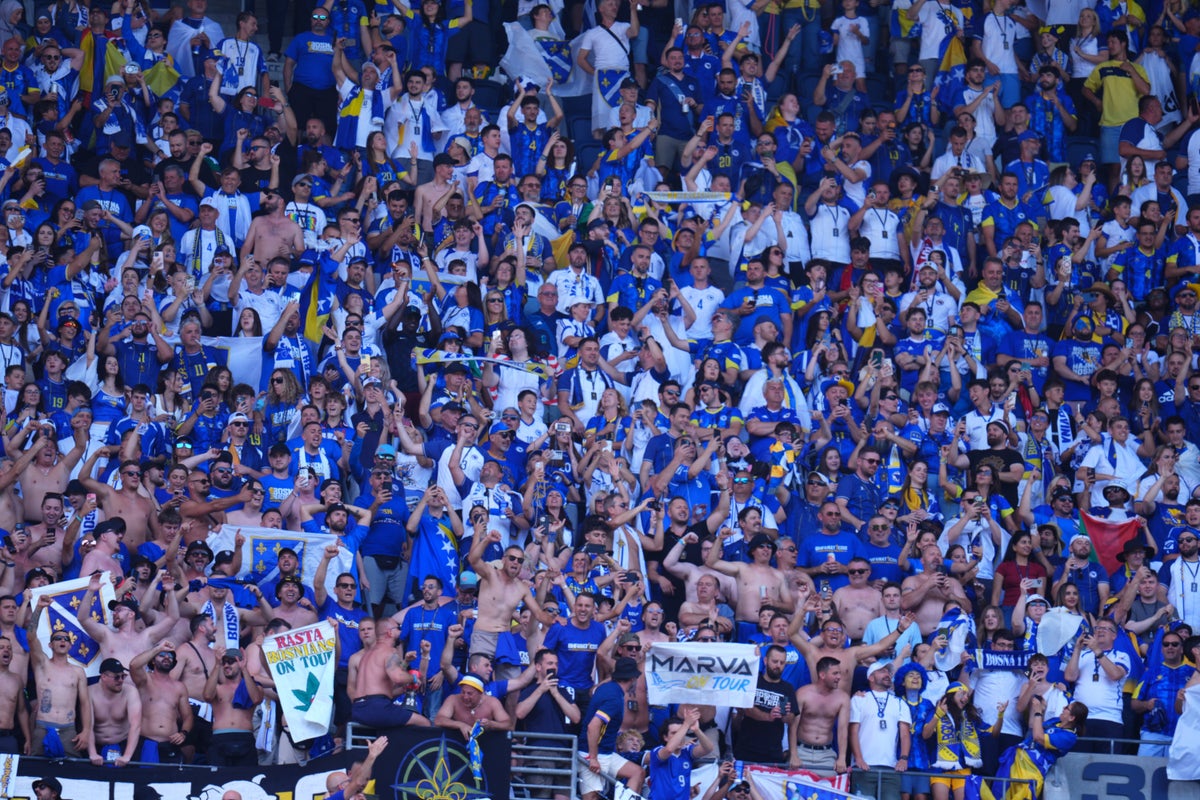
Trash talk works when you base it on sporting merit, player rivalries, or historic matches. Telling an entire country that you can't find them on a map, and explicitly stating you have zero desire to learn anything about their existence, isn't sports banter. It's proud insularity. For fans of Bosnia and Herzegovina, a nation that fought through unspeakable tragedy to exist independently, hearing a major network journalist treat their country like an irrelevant speck wasn't funny.
The official Bosnian Football social media account took notice quickly, sharing the clip with a dry, biting caption: "My goodness, the stereotypes write themselves". Football fans from every corner of the globe joined the chorus. Suddenly, neutrals who had no skin in the game were actively rooting against the United States.
The Disrespect Behind the Map Comment
To understand why this hit such a raw nerve, you have to look at how Bosnia and Herzegovina reached this point in the 2026 World Cup. They didn't get a free pass into the Round of 32. They clawed their way through a brutally competitive Group B.
After securing a hard-fought 1-1 draw against Canada, they suffered a heavy 4-1 defeat at the hands of a disciplined Swiss side. Most pundits wrote them off right then. But the Dragons showed their characteristic resilience, pulling off an emphatic 3-1 victory over Qatar in Seattle. Kerim Alajbegović and Ermin Mahmić found the back of the net, capitalizing on defensive errors to secure the crucial points needed to advance as one of the best third-placed teams.
This is only the second time Bosnia and Herzegovina has reached the World Cup as an independent nation, following their memorable debut in Brazil back in 2014. For a country that survived a devastating war in the 1990s, football is never just a game. It is a vehicle for national pride, recognition, and unity on the global stage.
When a journalist dismissed that entire journey with a smirk, it didn't look like confident patriotism. It looked like lazy journalism.
The Anatomy of an On-Air Apology
By Saturday, June 27, the pressure was too immense to ignore. Velez took to her personal social media accounts to issue a formal apology to the people of Bosnia and the national football team.
"In a poor effort to have a little fun with World Cup competition, I took it too far and made a thoughtless comment on air that was insensitive and inappropriate," Velez wrote. "The World Cup is supposed to be about uniting communities around the world, and my comment didn't reflect that spirit."
The apology was necessary, but the damage was already done. ABC7 did not release an immediate corporate statement, leaving their reporter to take the brunt of the heat alone.
This pattern happens constantly. A local news station assigns a reporter to cover a global sporting event without providing the necessary cultural background. The reporter relies on old, tired tropes of American exceptionalism to get a quick laugh from a hometown crowd. Then, the internet catches wind of it, the clip crosses borders, and a local news segment becomes an international embarrassment.
The Motivation Factor on the Pitch
If you think professional athletes don't pay attention to media disrespect, you don't know sports. Bulletins and viral clips provide the absolute best motivation for an underdog squad.
The United States and Bosnia and Herzegovina are scheduled to face off at San Francisco Bay Area Stadium. Before this comment, the US team had the clear upper hand in terms of depth, home-field advantage, and overall tournament expectations. Now, they have to walk onto the pitch knowing their opponents have a massive chips on their shoulders.
Imagine being Edin Džeko or Sead Kolašinac, veteran leaders who have played at the absolute highest levels of European club football, listening to a local news reporter from Los Angeles claim she doesn't know your country exists. The Bosnian squad is going to enter that stadium with an intense desire to make sure every single American sports fan remembers exactly where Bosnia is located by the final whistle.
How Sports Journalism Can Do Better
Global tournaments require global awareness. You don't need a doctorate in Eastern European history to report on a soccer match, but you do need basic respect for the teams involved.
We live in an interconnected era where a broadcast in Southern California can be viewed in Sarajevo within minutes. If you are a journalist tasked with covering the World Cup, you should follow a few non-negotiable rules to avoid destroying your credibility.
- Do five minutes of homework. Learn how to pronounce the names of the opposing players and understand how they qualified for the tournament.
- Ditch the insular jokes. Saying you don't know where a country is on a map isn't a badge of honor. It makes you look unqualified for the assignment.
- Focus on the sporting narrative. Bosnia's bounce-back win against Qatar is a fantastic story. Talk about that instead of relying on cheap punchlines.
The upcoming knockout match is no longer just about advancing to the next round. It is a direct clash between a footballing nation fighting for respect and an American sports culture that occasionally forgets the rest of the world is watching. Velez learned her lesson the hard way, but her mistake serves as a loud warning for anyone holding a microphone during a global tournament.
If you are following the tournament, keep your eyes on the pre-game coverage for the match this Wednesday. Pay attention to how the broadcast teams handle the introductions. The era of getting away with lazy, dismissive commentary on local television is officially over. Check the tournament brackets, look up the kickoff times for your local time zone, and watch how the underdogs respond when the whistle blows.