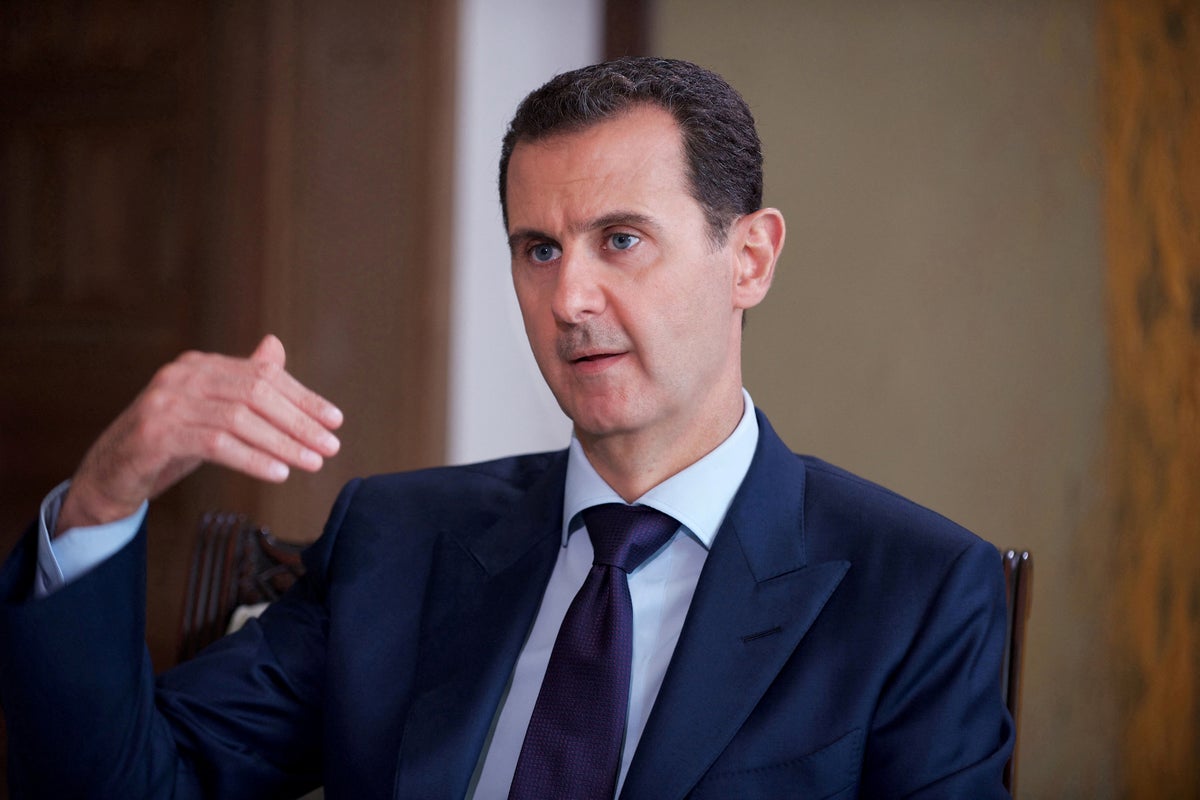
Bashar al-Assad just got sentenced to death. But if you think he is sitting in a damp Syrian cell awaiting the hangman, you haven't been paying attention. A Damascus court handed down the capital punishment in absentia, targetting the ousted dictator for premeditated murder, torture, and crimes against humanity.
He isn't coming back to face it. Assad is thousands of miles away in Moscow, shielded by Russian political asylum since his regime collapsed in December 2024. This trial marks a dramatic milestone for Syria's transitional authorities, yet it lays bare the bitter friction between raw public justice and international legal realities.
Inside the Damascus Courtroom
Judge Fakhareddine al-Aryan didn't mince words during the live television broadcast. He stated plainly that Assad used state agencies to commit wholesale war crimes. Alongside the former president, his younger brother Maher al-Assad—who commanded the notorious 4th Armored Division—received the exact same sentence.
The legal reckoning also caught up with Atef Najib, Assad’s maternal cousin and the former head of political security in Daraa. Unlike the Assad brothers safely tucked away in Russia, Najib stood inside a metal courtroom cage wearing a prisoner uniform. Najib earned his spot in history as the man who oversaw the brutal torture of teenage boys who dared scrawl anti-government graffiti on a school wall back in 2011. That single act of cruelty ignited the spark that turned local protests into a fourteen-year civil war.
For survivors packed into the courtroom, the moment carried profound emotional weight. Mouawiya Sayasneh, detained at age thirteen in those early days of the uprising, watched Najib learn his fate. The blood wasn't entirely wasted, survivors muttered, though true closure remains elusive while the primary architects stay out of reach.
The Problem With Absentee Justice
Let's look at the mechanics of this ruling. Trials in absentia offer potent symbolism. They create an official public record of atrocities, validate decades of pain, and give victims a microphone. But they possess zero physical enforcement power.
Moscow holds all the cards regarding extradition. Russia offered the Assad family refuge the moment opposition fighters surged into Damascus, and Russian officials have consistently rejected handover requests for their former allies. A piece of paper from a Damascus criminal court doesn't bypass Kremlin protection.
Human rights organizations point out another uncomfortable layer. Groups like Human Rights Watch oppose the death penalty categorically, arguing that capital punishment is cruel and irreversible—particularly when systems are scrambling to build stable judiciary frameworks after a horrific conflict. Real accountability requires trials meeting strict international fair-trial standards, something fragile transitional states struggle to guarantee.
Why This Verdict Still Shakes the Region
You might ask why Damascus bothered with a trial where the primary defendant isn't present. The answer lies in domestic survival. Syria’s new leadership faces deep sectarian fractures, sporadic violence, and a desperate hunger for transitional justice.
When the state collapses after fifty years of dynastic rule, healing requires structural public acknowledgment of who pulled the triggers. Putting figures like Najib in a cage while broadcasting Assad's condemnation provides a cathartic release for a traumatized population. It tells the families of the half-million dead that their suffering is officially recognized by the state.
Yet, the shadow of the past looms large over Syria's future. Revenge killings and local sectarian flare-ups continue to threaten fragile stability. A court sentence in Damascus feels righteous, but rebuilding a country shattered by a generation of mechanized slaughter takes much more than a gavel.
Check local human rights monitors for ongoing updates on Syria's transitional courts, or follow regional legal developments as investigators track remaining regime officials across international borders.