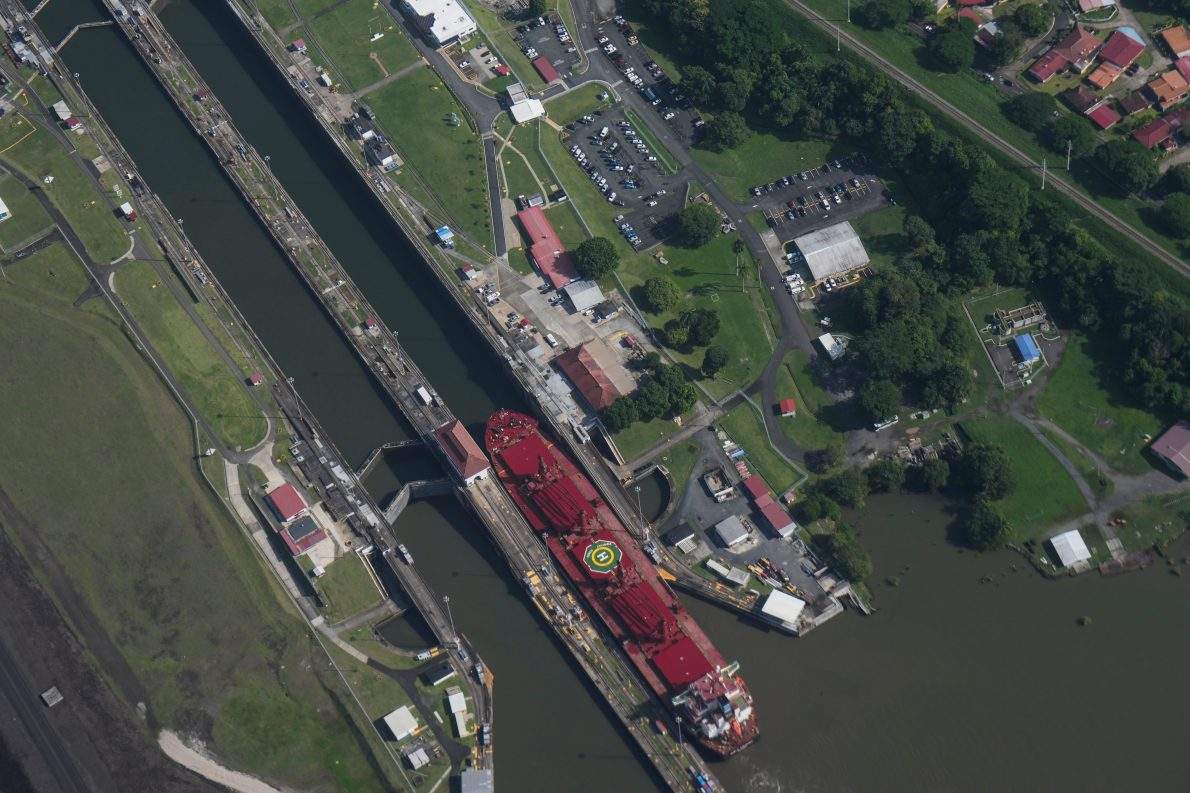
The Panama Canal is the nervous system of global trade. When it starts to cough, the entire world catches a cold. Right now, it’s not just coughing; it’s dehydrated. As the Panama Canal Authority prepares to throttle daily transit slots due to the intensifying El Niño, global supply chains are once again staring down a familiar, uncomfortable reality.
If you think this is a one-off event that will blow over by next season, you're missing the bigger picture. This isn't just about weather; it's about the inherent tension between engineering marvels and a changing climate. You might also find this related story interesting: The Real Cost Of The New Iran Sanctions Strategy.
The Reality Of The Transit Cap
Starting in September 2026, the canal will shrink its daily transit capacity. We are looking at a drop to 34 vessels a day, followed by a further reduction to 32 shortly after. For those of you who track maritime logistics, this is a massive shift. In a normal operating environment, the canal can handle roughly 40 crossings daily.
Basically, the waterway is forcing a bottleneck. The authority is splitting these slots between their older Panamax locks and the newer, larger Neopanamax locks. If your cargo is on a ship scheduled for the latter, you’re dealing with a hard cap of nine slots per day. As discussed in recent reports by Bloomberg, the results are significant.
Why El Niño Is The Usual Suspect
You've heard about El Niño for years, but here is what most people don't get about its relationship with the canal. The Panama Canal relies entirely on freshwater to function. Every time a ship passes through, it displaces millions of gallons of water from Gatun Lake into the ocean.
When rainfall in the watershed drops—and it's currently down 34% below historical averages—the lake levels dip. Without enough water to fill the locks, the ships simply cannot float through. It’s that basic. We aren't looking at a lack of technology here; we are looking at a lack of the one resource that makes the entire mechanism possible.
The authority is reporting that watershed inflows have plummeted 44% below normal. That is a staggering figure. It explains why they’ve had to backtrack on their earlier promises to maintain full capacity. They didn't lie back in May; the math simply changed beneath their feet.
Understanding The Draft Limitations
It isn't just the number of ships that matters. It’s how heavy they are. Draft limits are the most common source of frustration for carriers. The draft is the depth a ship needs to float safely without hitting the bottom of the channel. When water levels fall, the maximum allowable draft must also fall.
This creates a brutal catch-22 for logistics managers. A ship with a restricted draft can't be loaded to its full capacity. If a vessel has to carry less cargo to shed weight, the cost per unit of that cargo skyrockets. You’re paying for the same transit, but moving significantly less product.
The authority has been forced to push back their planned adjustments to these limits. They were set to move to 14.63 meters, but they've delayed that. They've also delayed the deeper 14.48-meter restriction. This indicates they are trying to balance the needs of the shipping industry against the absolute necessity of keeping enough water in the lake to ensure any ships can pass at all.
Lessons From 2023 And 2024
If you’ve been in this game a while, you know this isn't the first time. The drought in 2023 and 2024 was a wake-up call for every major retailer and manufacturer. Many companies were caught flat-footed, scrambling to find alternative routes or paying astronomical premiums to secure transit slots at auction.
Ricaurte Vasquez, the canal administrator, has been very clear about this: the canal is no longer improvising. They are operating on a discipline forged by those recent crises. They have learned that El Niño events are becoming more severe and, more importantly, more persistent.
What This Means For Your Operations
If your business relies on trans-Pacific or Atlantic-to-Pacific shipping, don't wait for the next update to plan your contingencies.
- Revisit your inventory buffers. If your supply chain depends on just-in-time delivery through the canal, you are gambling. Increase your safety stock now.
- Audit your shipping routes. Are there alternative ports or intermodal routes that bypass the canal? They might be slower, but they are predictable. In this climate, predictability is worth more than raw speed.
- Monitor the draft advisory closely. Don't rely on general news reports. Keep an eye on the official Panama Canal Authority website for real-time draft changes. That is where the real costs are hidden.
- Communicate with your carriers. Ask them specifically how these restrictions are impacting their capacity allocation. If they are holding a reserved slot, you're in better shape than if they are bidding in the spot market.
The era of assuming the Panama Canal will always be open at full capacity is over. We are entering a phase where water scarcity is a structural part of the global trade equation. The quicker you internalize that, the better off your margins will be.