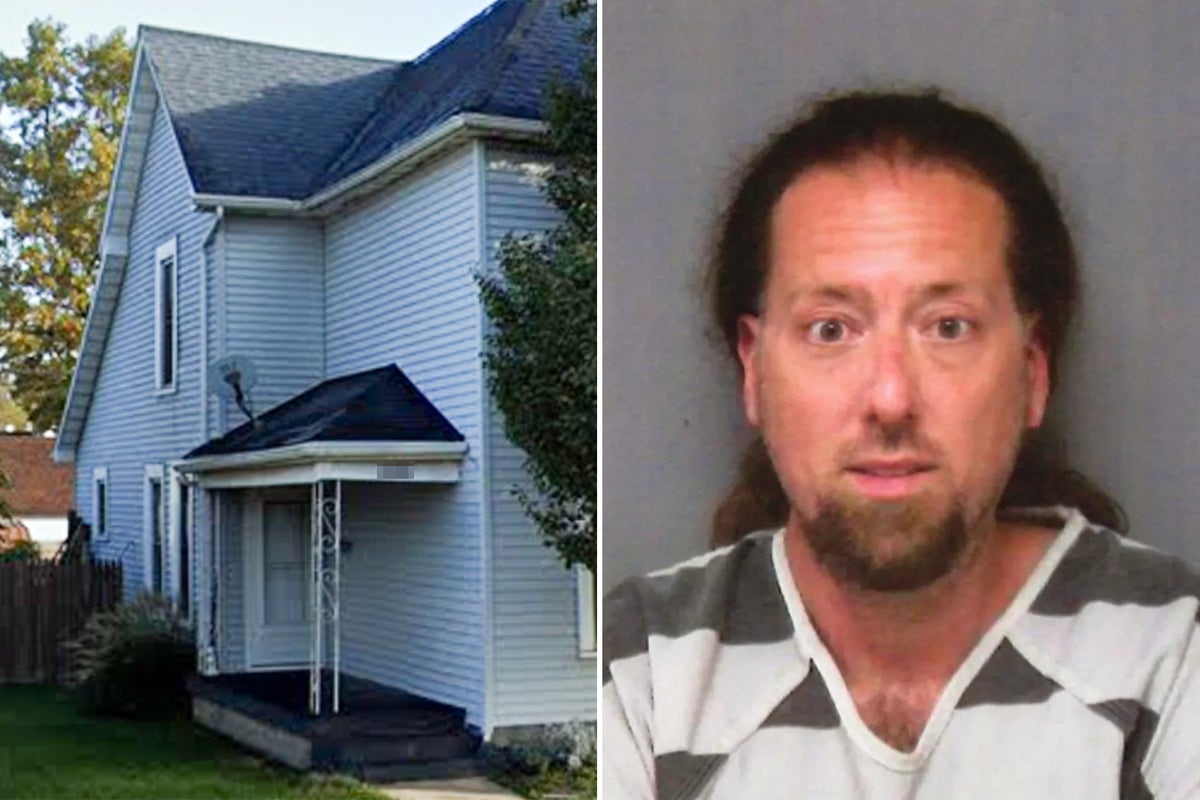
Two hundred and sixty-three days. Think about that span of time. It covers an entire academic year, the transition from winter coats to summer heat, and months of agonizing uncertainty for a family whose child had simply vanished off the face of the earth. When an Ohio teenager missing for 263 days was finally recovered, she wasn't found miles away in another state or lost on the streets. She was sitting inside the home of Jobe Binkley, a former local educator who had already raised red flags with school administrators long before the disappearance.
Cases like this force uncomfortable questions about community safety, institutional blind spots, and how adults in positions of trust manage to slip past the net. If you've followed this story or similar headlines, you know the basic facts. A juvenile vanished in December 2025. Law enforcement tracked her down to a residence in Springfield, Clark County, in late August. Binkley now faces an initial charge of interference with custody, pleading not guilty while investigators dig deeper. But looking past the surface charge reveals a much darker blueprint of missed opportunities and warning signs that should have been caught much earlier. Meanwhile, you can explore related events here: Why Trump Thinks A High Iq President Beats Ai Guardrails Every Time.
The Timeline That Raises Red Flags
Let's look closely at how the chronology unfolds. Binkley wasn't just some random stranger living down the street. He was a 48-year-old property owner with a direct professional history inside the Springfield City School District. Personnel files tell a troubling story of administrative half-measures. Back in November 2024, school officials placed him on administrative leave following complaints about his professional boundaries with students.
While district records claim those initial allegations couldn't be fully substantiated at the time, the smoke was already thick. By January 2025, he was sidelined again. The district ultimately fired him in February 2025 for violating policies tied to technology usage. Yet, despite these terminations and the obvious behavioral red flags, the institutional response stopped at the school district's perimeter. There was no proactive tracking or broader protective monitoring of an adult whose professional career imploded over boundary violations with minors. To explore the complete picture, we recommend the recent analysis by The New York Times.
When a teenager disappears on December 2, 2025, the investigation eventually points toward Binkley's doorstep. According to court records, authorities visited his home twice prior to the raid, explicitly asking about the missing girl. Both times, Binkley denied she was there. Both times, officers walked away, accepting a denial instead of forcing a breakthrough. It wasn't until a U.S. Marshal's Office agent stepped in that the search finally penetrated the property, discovering the girl inside and forcing Binkley to call her out.
Why Initial Charges Rarely Tell the Whole Story
Legal analysts point out a frustrating reality in cases involving exploited minors. When law enforcement first moves in, they often have to work with whatever immediate charge sticks best. Former Franklin County Prosecutor Ron O'Brien noted publicly that investigators frequently have to rely on charges like interference with custody at the very beginning. Building a comprehensive criminal case takes time, digital forensic analysis of cell phones and computers, and crucially, the cooperation of the minor involved.
That cooperation isn't always easy to secure. Groomed or manipulated teenagers often struggle to process their reality immediately after being pulled out of an abusive or controlling environment. Adults who target minors rely heavily on this psychological dynamic. They build isolation cocoons. They convince young people that the outside world is hostile and that only the adult understands them. When authorities finally break down the door, undoing that psychological damage takes months of specialized trauma-informed care.
Neighbors like Danielle Flint expressed the collective horror of the community, noting that local speculation and social media whispers had swirled around the property, with residents trying to catch a glimpse of the missing girl without knowing how close the danger really was. That helplessness highlights a glaring gap in neighborhood awareness versus active intervention.
What Communities and Parents Must Do Now
You can't rely entirely on institutions to protect vulnerable kids. Schools miss things. Bureaucracies move slowly. Investigations get bogged down by procedural rules. Protecting children requires a radical shift in how we handle red flags among adults working in youth-adjacent fields.
If an educator is fired for boundary violations or digital misconduct regarding minors, that information shouldn't stay locked inside a single school district's filing cabinet. It needs immediate cross-jurisdiction visibility. State-level licensing boards must fast-track credential revocations and share data instantly with local law enforcement databases.
Furthermore, when police receive credible tips placing a missing child inside a specific private residence, accepting a homeowner's verbal denial at the front door needs to face much higher procedural hurdles. Search warrants and protective custody checks must be executed with zero hesitation when a child's life hangs in the balance for over eight months.
The legal process for Binkley will play out in Clark County courtrooms over the coming weeks, with pre-trial hearings scheduled and potential additional charges looming as digital evidence gets unsealed. But the real failure happened long before the final raid in Springfield. Paying attention to early behavioral warnings, tightening school district accountability, and refusing to give suspicious adults the benefit of the doubt are the only ways to ensure other teenagers don't lose nearly a year of their lives in secret captivity.