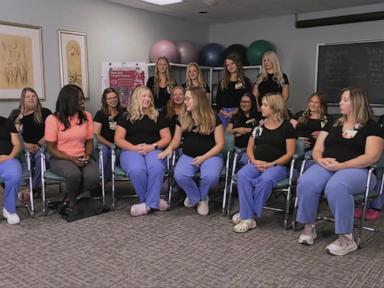
Imagine walking into your shift at a major hospital, looking around the breakroom, and realizing nearly twenty of your immediate coworkers are all preparing for maternity leave at the exact same time. It sounds like the plot of a network sitcom. For the labor and delivery unit at Miami Valley Hospital in Dayton, Ohio, it became a literal reality.
Seventeen nurses in a single department found themselves expecting simultaneously. The story quickly went viral, capturing internet attention with images of matching scrubs and a collective sea of baby bumps. People joked about the hospital water supply. They wondered if there was something airborne in the maternity ward.
Beneath the heartwarming headlines and viral social media posts lies a much more fascinating look at how modern healthcare systems manage sudden, massive shifts in personnel without letting patient care slip for a second.
The Shocking Math of the Dayton Baby Boom
When you look at the raw numbers, the situation at Miami Valley Hospital sounds like a manager’s absolute worst nightmare. Seventeen pregnant nurses in one department breaks the facility's previous record of eleven back in 2019. These expectant mothers aren't all due on the exact same weekend, but their timelines overlap aggressively. The pregnancies range from 12 weeks all the way to 35 weeks along.
That means for a continuous stretch of months, a steady procession of experienced medical professionals will be stepping away from the bedside to welcome their own children.
The public reacts to stories like this with a mix of awe and anxiety. If you are a patient planning to give birth at that exact hospital over the next few months, your first thought might be sheer panic. Who is going to deliver my baby if all the labor nurses are in the recovery rooms themselves?
Amberly Saner, the nurse manager for the Miami Valley labor and delivery unit, wasn't sweating it when the news broke. The department doesn't run on a skeleton crew. It employs nearly 200 nurses and support staff members. While seventeen is a massive, eye-catching number, it represents less than ten percent of the total workforce in that specific unit.
The hospital relies on a deep bench of part-time employees who are eager to pick up extra shifts. They have pool nurses and per diem staffers who can fill gaps dynamically. Healthcare scheduling is already an intricate puzzle of rotating shifts, weekends, and on-call mandates. Factoring in a wave of planned family medical leaves is just another day at the office for a veteran scheduler.
What It is Actually Like to Care for Pregnant Women While Pregnant
There is a unique psychological dynamic at play when the person monitoring your contractions is breathing through her own back pain. Maddie and Rileigh, two nurses who have worked at Miami Valley Hospital for five years, are living this experience side by side. They are best friends, they are both expecting their second child, and their due dates are just a few weeks apart. Maddie is 26 weeks along; Rileigh is at 31 weeks.
Rileigh openly admitted that she wants Maddie to be the one to deliver her baby when the time comes.
That level of trust isn't built overnight. It comes from working twelve-hour shifts together in high-stress environments where split-second decisions matter. Labor and delivery units are unpredictable. A routine delivery can turn into an emergency situation in seconds. Knowing that your colleague at the bedside understands exactly what your body is going through adds an extra layer of empathy to patient care.
Working on your feet for half a day while third-trimester pregnancy changes your center of gravity is brutal. Nurses don't get to sit at a desk. They are lifting patients, adjusting heavy equipment, bending over monitors, and running down hallways during emergencies. The physical toll is immense.
In a unit where seventeen people are sharing that physical reality, the culture shifts. Coworkers don't need to explain why they need a quick five-minute sit-down or an extra bottle of water. Someone is always ready to step in and help with a heavy lift. The workplace transforms into a massive, built-in support system where advice, complaints, and baby gear recommendations flow freely during chart checks.
Breaking Down the Viral Don't Drink the Water Myth
Every single time a school, a police department, or a hospital unit experiences a clustered baby boom, the internet cracks the exact same joke. Someone writes a comment telling people to avoid the water fountains in the building. It is a harmless bit of humor, but it highlights a human tendency to look for patterns where none exist.
Clustering is a well-documented phenomenon in statistics and psychology. When you gather a large group of people who are in the exact same demographic, phase of life, and socioeconomic situation, their major life milestones frequently align.
Consider the average profile of a floor nurse in a labor and delivery unit. The profession attracts a high concentration of women, many of whom enter the field in their twenties or early thirties. This is the prime demographic for starting or expanding families. When you put 200 people from that specific demographic into the same building for forty hours a week, the laws of probability dictate that overlapping pregnancies will happen eventually.
It is a statistical certainty given enough time and a large enough sample size.
There is also a social component that researchers call fertility contagion. When close friends or immediate coworkers start having children, it often influences the timeline of others in their social circle. Seeing a close peer successfully navigate pregnancy while maintaining her career removes a lot of the anxiety for those who are on the fence about starting a family. It normalizes the transition. It makes the idea of balancing a demanding healthcare job with a newborn feel achievable because you see your peers doing it right in front of you every day.
The Reality of Healthcare Burnout and Workplace Support
We cannot talk about hospital working conditions without addressing the broader context of the American nursing industry. The past few years have tested the healthcare system to its absolute limits. Staffing shortages, long hours, and emotional exhaustion have caused thousands of bedside nurses to leave the profession entirely.
Against that backdrop, a story about seventeen nurses staying at the same hospital, feeling secure enough to expand their families, and planning their return to the bedside is a massive win for workplace culture.
It shows that the environment at Miami Valley Hospital is one where employees feel supported enough to take parental leave without fearing retribution or unmanageable workloads when they return. That matters. A hospital that retains staff for five plus years, like Maddie and Rileigh, is a hospital that is doing something right with its cultural health.
When nurses feel valued, they stay. When they stay, patient outcomes improve because the floors are staffed by experienced clinicians who know the protocols inside and out. The viral photo of fifteen of those pregnant nurses standing together in their matching blue scrubs isn't just a cute human-interest piece. It is visual proof of a stable, supportive workplace community thriving during a challenging era for healthcare workers.
Next Steps for Managing Your Own Workplace Parental Leave
If you find yourself inspired by the supportive environment these Ohio nurses share, you might want to evaluate your own career setup. Preparing for a major life transition while maintaining your professional life requires clear communication and a firm understanding of your rights. You can take immediate action to protect your peace of mind before your baby arrives.
First, request a formal copy of your company’s parental leave policy directly from human resources. Do not rely on office gossip or casual conversations with coworkers. You need to know the precise breakdown of paid leave, short-term disability coverage, and how your health insurance premiums will be handled while you are away from the office.
Second, map out a clear transition plan for your core responsibilities. Sit down with your direct supervisor at least two months before your due date to discuss who will cover your daily tasks. Documenting your routines and cross-training your teammates ensures that your departure will not cause chaos, allowing you to completely disconnect and focus on your family without feeling guilty.