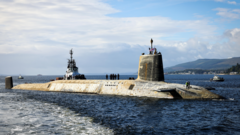
National security gets billed as an abstract concept. Politicians love standing in front of flags talking about global threats. But down in Barrow-in-Furness, defense spending looks like factory floors, welding torches, and local paychecks. Prime Minister Andy Burnham just tied the renewal of Britain's Trident nuclear deterrent directly to his vision of a reindustrialized nation.
You might wonder why a domestic-focused leader is putting billions into underwater missiles. The answer is simple. Defense procurement is the secret weapon of regional economic policy.
The Real Economics Behind the Dreadnought Programme
Let's look at the numbers because they reveal the true scale of this operation. The ongoing Dreadnought-class submarine project carries a massive £31bn price tag. A fresh wave of contracts worth £8.4bn has just dropped to keep things moving.
People often think defense money vanishes into thin air or foreign bank accounts. It doesn't. BAE Systems secures the lion's share of this funding to build these massive vessels in Cumbria. Rolls-Royce pulls in billions to design and construct nuclear reactors up in Derby. Atomic Weapons Establishment sites in Berkshire soak up resources for warhead manufacturing.
Money flows straight into local economies. It builds supply chains stretching from Scotland down to Somerset.
Why Burnham is Embracing Trident Now
Politics makes strange bedfellows, and defense policy is no exception. Years ago, the Labour party tore itself apart over nuclear weapons. Past leaders opposed the platform entirely.
Burnham took a different path back in 2016 by voting to back the new submarines. Now that he is in Downing Street, he isn't backing down. He knows his working-class base relies on these heavy industrial contracts.
Security isn't just about what sits in the water. It's about who builds it. When you pump billions into domestic manufacturing, you solve two problems at once. You upgrade military capabilities against rising geopolitical threats, and you hand secure employment to towns that desperately need an economic anchor.
The Apprenticeship Pipeline Nobody Talks About
Big defense projects fail if nobody knows how to weld a nuclear reactor pressure hull. It's high-precision engineering. You can't just hire off the street.
The government's latest commitment aims to support 18,000 extra jobs in nuclear defense by 2030. Even more ambitious is the training target. Officials expect to bring in thousands of additional apprentices over the next decade.
Critics argue that pouring cash into military hardware starves public services. That's a fair debate. But in towns like Barrow, traditional career paths vanished decades ago. This program offers young people a clear route into high-paying technical careers without needing a university degree.
What Happens Next for British Shipyards
The pressure is on to deliver these vessels on schedule. The ageing Vanguard-class submarines need replacement before they age out of service, ensuring the continuous at-sea deterrent never drops its guard.
Expect manufacturing hubs to expand rapidly over the next few years. Supply chain companies should audit their capacity now to secure sub-contracts before the major yards lock in their long-term partners.
UK PM Andy Burnham pledges to 'bring back hope' | BBC News
This video provides context on Andy Burnham's broader political agenda and initial framing as prime minister.
http://googleusercontent.com/youtube_content/1