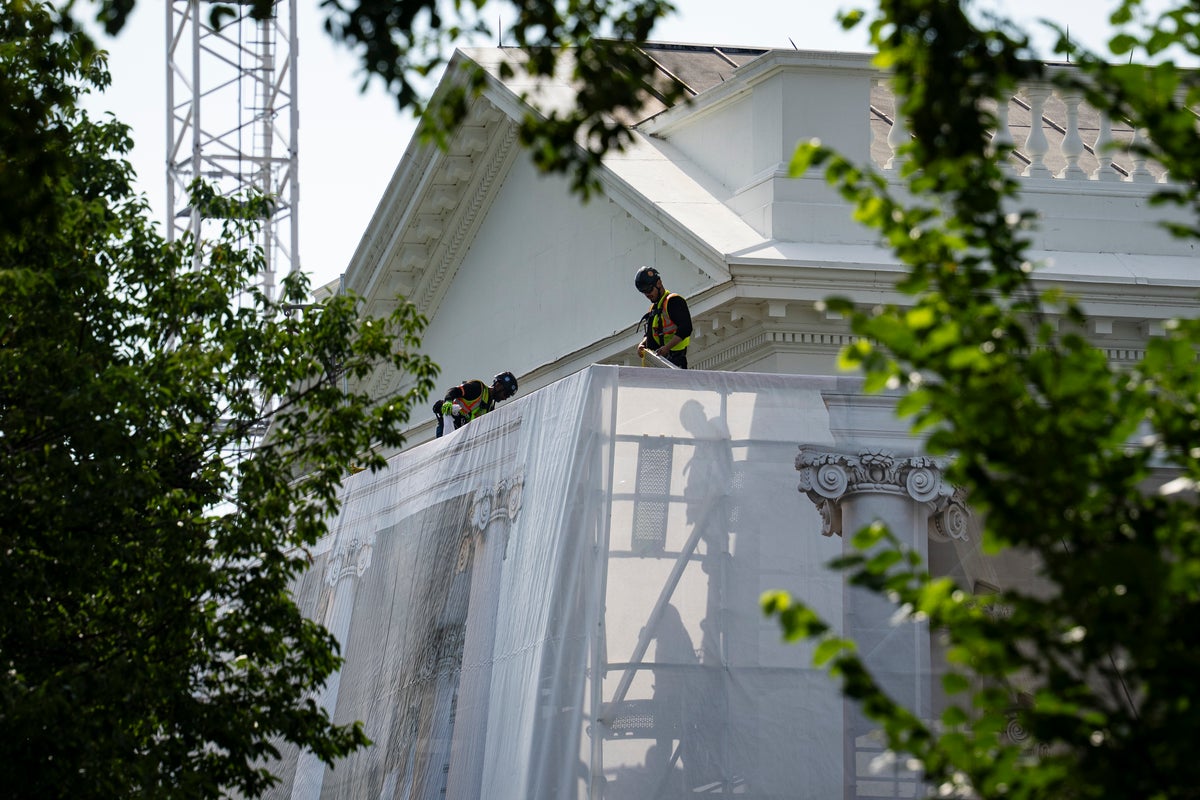
Walk past Pennsylvania Avenue right now, and you won’t see the iconic white columns of the North Portico. Instead, you'll see a massive, custom-printed tarp draped over heavy scaffolding. The printed image on the tarp shows what the columns should look like, but behind that decorative shroud, heavy-duty construction is underway.
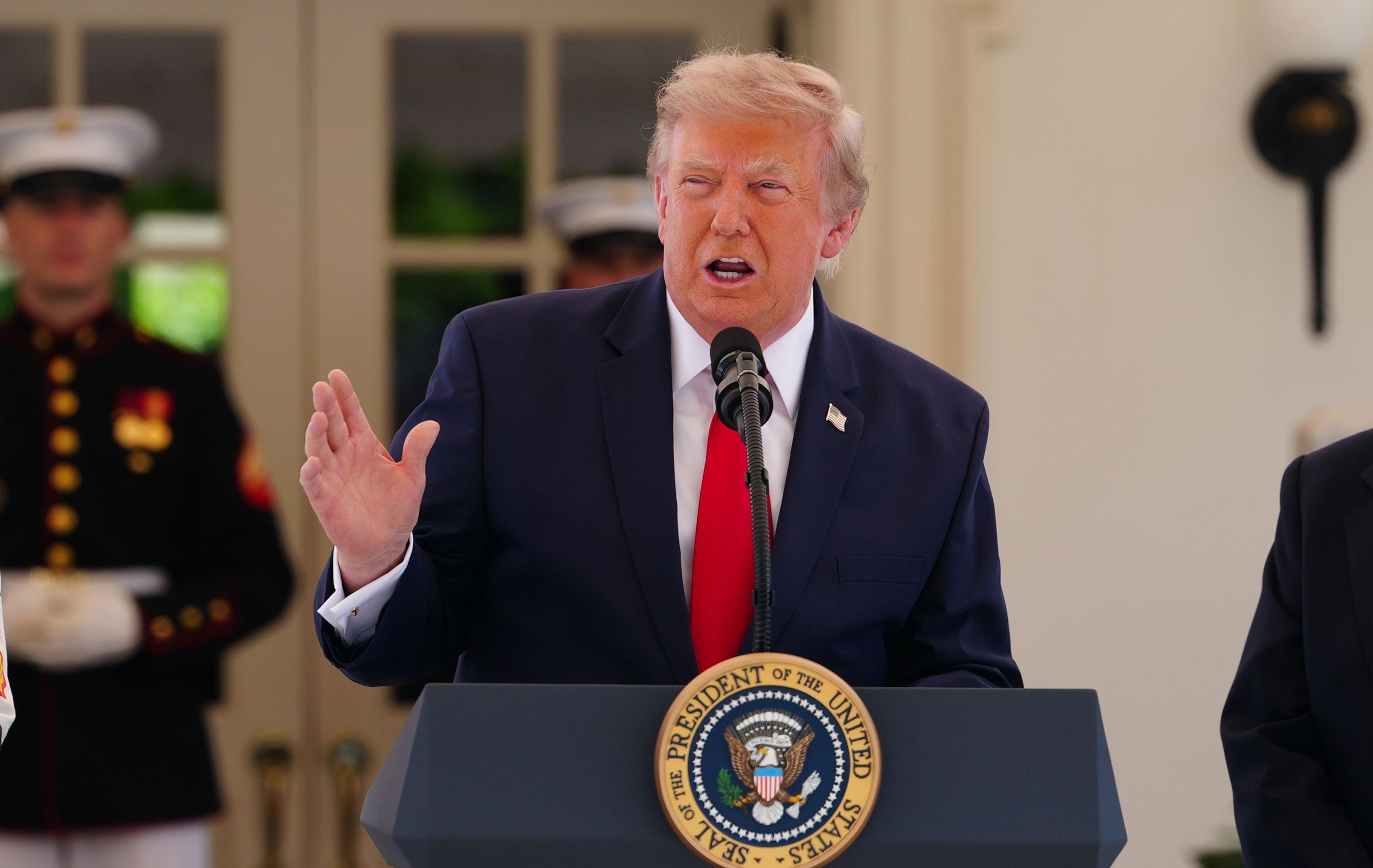
Administration officials initially played this off as a quick aesthetic tune-up. Interior Secretary Doug Burgum joked on a podcast that Donald Trump simply stepped outside, noticed "door dings" on the historic pillars, and ordered a crew to fix them. Trump himself boasted in the Rose Garden about stripping away "150 years of paint" that previous administrations ignored.
But don't buy the "paint and plaster" cover story.
While the cosmetic repairs to the 19th-century Ionic columns are real, the real action is happening at the front door itself. The Secret Service and White House officials have quietly acknowledged that this project, slated to wrap up around mid-September, is actually a major security overhaul designed to fortify the building’s most vulnerable public entrance.
The Secret Service Finally Gets Its Way
If you think reinforcing the front door of the most famous house in America sounds a bit extreme, you haven't been paying attention to the security failures of the last decade.
For years, the Secret Service has practically begged for permanent, structural upgrades to the North Portico. This is the public-facing side of the executive mansion, directly exposed to pedestrian traffic on Pennsylvania Avenue and Lafayette Square.
Back in 2014, a man hopped the perimeter fence, ran across the lawn, bypassed the North Portico doors, and made it deep into the East Room before anyone tackled him. That incident exposed a gaping vulnerability: the front door was surprisingly easy to breach.
The current work aims to fix that permanently. While the official line from the White House is that the doors are undergoing "security enhancements and upgrades," the reality is a complete fortification. We're talking about structural reinforcement that will turn the historic entryway into a high-security barrier capable of repelling forced entry, all while maintaining the historic appearance of the mansion.
The Bigger Plan to Wall Off Lafayette Square
The front door project isn't happening in a vacuum. It's the first phase of a much broader, highly controversial plan to fundamentally change how the public interacts with the White House.
The administration, alongside the Secret Service and the Department of the Interior, has submitted a proposal to the US Commission of Fine Arts. The goal? Replace the current eyesore of movable metal barricades along Pennsylvania Avenue and Lafayette Square with a permanent, sophisticated fencing system.
- The Design: An adaptable, permanent barrier stretching near 15th and 17th Streets.
- The Function: It allows security teams to scale threat levels instantly, shutting down surrounding roads and blocking pedestrian access with the flip of a switch.
- The Timeline: If approved by federal agencies, construction could begin as early as 2027.
For tourists who love taking photos right up against the North Lawn fence, the open-access era of the White House is rapidly drawing to a close.
Aesthetics as a Security Shield
It is classic Trump to frame a high-security fortification as a beautification project. Since returning to office, his obsession with real estate development has reshaped the federal enclave. From adding a multimillion-dollar granite helipad on the South Lawn to proposing a massive 90,000-square-foot state ballroom (complete with its own underground bunker and drone port), the White House is currently a massive construction zone.
But by focusing the public's attention on the "deplorable condition" of the historic columns, the administration successfully keeps the conversation on paint and plaster rather than the grim reality of modern security threats.
Multiple high-profile security threats over the last year have forced the Secret Service’s hand. With the North Portico upgrades scheduled to finish by mid-September, the physical line between the presidency and the public is getting thicker, heavier, and far more permanent.
If you want to see the White House before it gets further locked down behind high-tech gates and reinforced doors, plan a trip to Washington before the mid-September deadline. Once those tarps come down, the view might look the same, but the building itself will be a fortress.