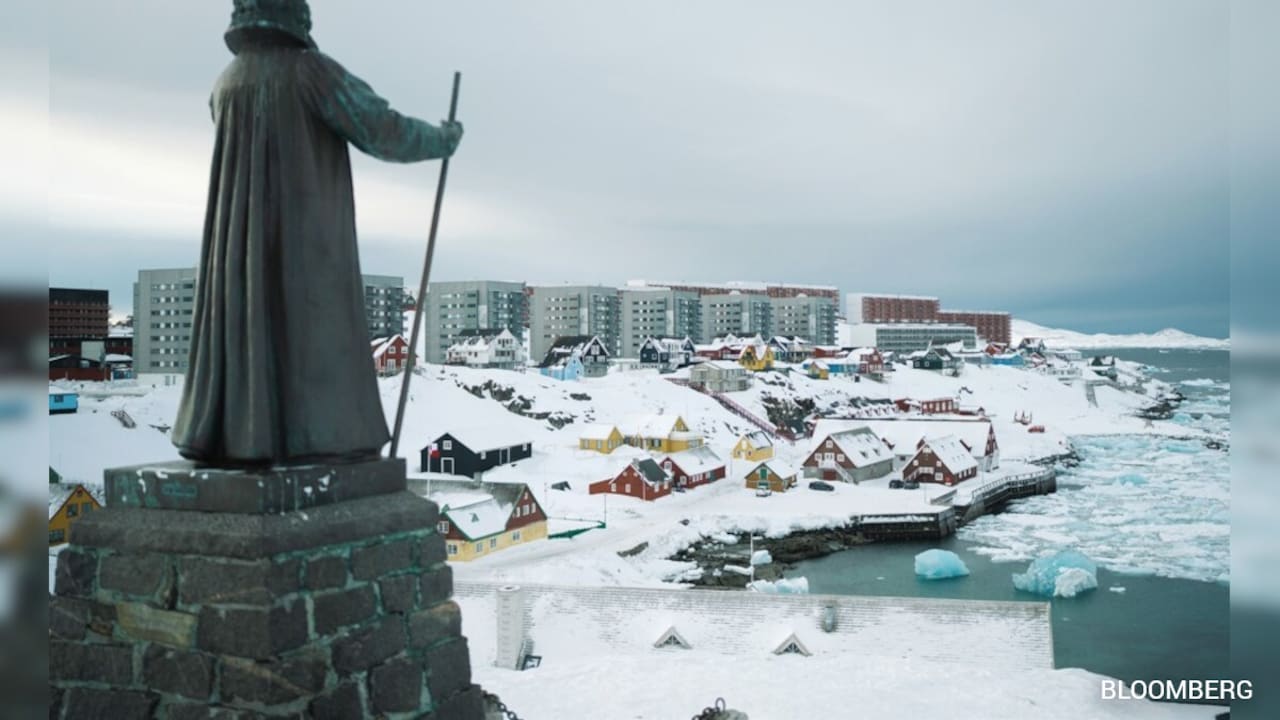
The Arctic is heating up, and Washington is staking its claim.
Quiet diplomacy behind closed doors has resulted in a high-stakes agreement between the United States, Denmark, and Greenland. This deal changes the geopolitical map of the far north. Under the agreement, the US military is set to establish a presence at two strategic locations in Greenland: Narsarsuaq in the south and Mestersvig on the east coast.
If you think this is just standard defense planning, you're missing the bigger picture. This pact marks a dramatic shift in how the West guards its northern flank against rising global tensions involving Russia and China.
Understanding the New Greenland Military Deal
For decades, the American military footprint in Greenland was virtually isolated to a single installation. Pituffik Space Base, formerly known as Thule Air Base, stood as the lone remnant of a massive Cold War network. During the peak of the 20th-century standoff with the Soviet Union, Washington maintained seventeen separate military installations across the island, stationing over ten thousand personnel on the ice.
That footprint shrank dramatically over the decades. Pituffik currently houses roughly 150 US military personnel.
Now, the pendulum is swinging back. The new accord brings two historic sites back into active military calculations:
- Narsarsuaq: Located in southern Greenland, this site was once the home of the US Bluie West One military base during World War II and the early Cold War. Today, the surrounding town's population has dwindled to just a few dozen residents.
- Mestersvig: Situated on the rugged east coast, this remote outpost is currently utilized by the Sirius Dog Sled Patrol, an elite Danish special forces unit known for patrolling the unforgiving Arctic wilderness.
The signing ceremony at the United Nations General Assembly in New York formalizes this expansion. But getting here wasn't simple.
The Pressure Behind the Pact
Let's be honest about why this deal happened now. Months of intense political and diplomatic pressure from Washington forced Copenhagen and Nuuk back to the negotiating table. Previous threats from the White House regarding the future status and defense of the semi-autonomous Danish territory created severe anxiety inside NATO.
Denmark faced a hard reality. Greenland is an autonomous territory within the Danish Realm, but its vast resources and critical geographic positioning make it a prime prize in modern great-power competition. By framing the new security arrangement under the umbrella of NATO rather than bilateral dominance, Danish officials carved out a way to satisfy American strategic demands while maintaining local sovereignty.
Still, local leaders in Greenland and citizens in towns like Narsarsuaq are watching closely. An influx of foreign military personnel brings logistical challenges, infrastructure demands, and complex questions about self-determination.
Why Arctic Geography Matters Right Now
Ice is melting. Shipping lanes are opening. Natural resources previously locked beneath thick glaciers are becoming accessible. That is why everyone from Moscow to Beijing has their eyes locked on the Arctic.
Russia has steadily rebuilt its own Soviet-era northern installations, deploying advanced radar systems and icebreakers along its vast polar coastline. Meanwhile, China has labeled itself a "near-Arctic state," investing heavily in scientific research stations and trying to secure mining concessions across Greenland.
Washington realized it could not afford to stay on the sidelines. Controlling the Greenlandic approach to the North Atlantic is non-negotiable for North American defense. The restored facilities at Narsarsuaq and Mestersvig give the US and NATO crucial real estate for surveillance, power projection, and rapid response.
What Happens Next in the North
The ink is drying on the UN General Assembly agreement, but the real work starts now. Engineers, logistics experts, and defense planners will soon begin assessing what it takes to upgrade runways, communications arrays, and housing at these remote sites.
Expect friction. Environmental groups will scrutinize construction impacts. Local politicians will demand economic benefits that actually trickle down to Greenlandic communities rather than turning their island into a permanent foreign staging ground.
Keep a close eye on northern Europe over the coming months. The militarization of the Arctic is no longer a distant theoretical threat. It is happening right now, one base at a time.