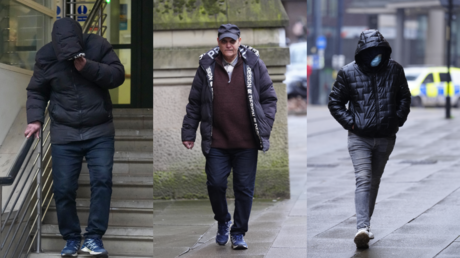
Transparency is supposed to be the bedrock of the British justice system, yet major legal proceedings frequently unfold in quiet isolation. Right now, a high-stakes retrial involving the Rochdale grooming network is underway at Manchester Minshull Street Crown Court, and you’d barely know it happened if you relied solely on mainstream daily broadcasts. Six men stand accused of multiple counts of rape and sexual assault against young teenage girls between the early 2000s.
Why are these proceedings drawing so little public attention compared to the massive headlines of the original 2012 convictions? The reality points to a mix of court fatigue, procedural stumbles, and an institutional reluctance to drag past failures back into the spotlight.
The Collapse That Reset the Case
To understand where this trial stands today, you have to look back at how it derailed the first time. The original court hearings began in late 2025, only to collapse in chaos. Court officials discovered that members of the jury had formed a private WhatsApp group to chat about the case. Worse, despite explicit judicial warnings, some jurors admitted they planned to watch external documentaries detailing grooming networks.
When the breach came to light, the defense argued the panel had been irremediably compromised by outside media and unvetted discussions. The judge agreed, stating that no corrective instruction could cure the multi-layered difficulties that had emerged. Reporting restrictions hid those reasons from the public for weeks until local media successfully challenged the gag order. Now, the legal teams are back in court trying the exact same defendants all over again.
Digging Into Operation Lytton
The current legal battle isn't a random event. It stems directly from Operation Lytton, an ongoing Greater Manchester Police initiative launched back in 2015 to hunt down suspects who slipped through the net during earlier investigations. Police forces across the north of England face persistent criticism for how they handled widespread child sexual exploitation decades ago.
The defendants in the current dock—Tahrir Rashid, Mohammed Saleem, Sucklane Shah, Itfaq Hussain, Arshad Mohammed, and Amjad Mahmood—face dozens of serious charges relating to victims who suffered systematic abuse. Prosecutors maintain these girls were exceptionally vulnerable, trapped by chaotic home lives that made them prime targets for predatory networks. All six men maintain their innocence and plead not guilty.
Institutional Shadows and Public Skepticism
Public trust in how the UK handles these cases remains deeply fractured. Independent reviews and subsequent investigative reports have shown that local authorities and police forces repeatedly ignored warnings out of fear of sparking racial tensions or appearing politically incorrect.
When high-profile figures like original ringleader Shabir Ahmed are released from prison only to trigger fierce deportation gridlocks, public anger boils over anew. Citizens notice when institutional accountability moves at a glacial pace. The silence surrounding current courtrooms often feels less like an accident and more like an institutional sigh of relief whenever a hearing manages to stay out of prime-time news slots.
Justice requires both scrutiny and endurance. If these courtrooms expect public confidence, the proceedings need sunlight, not quiet corners.
Check out Rochdale grooming gang legal update to understand more about the political and legal fallout surrounding these ongoing UK cases.