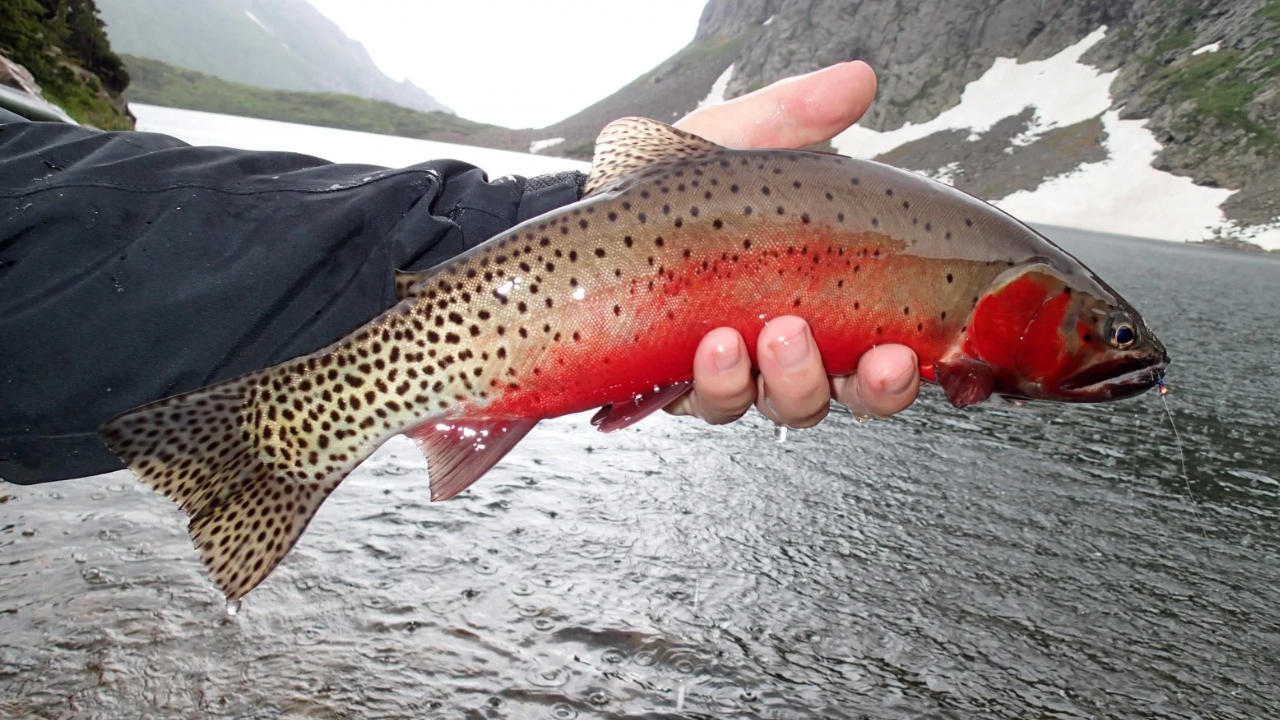
The Rio Grande cutthroat trout is tougher than you think. For years, people assumed this fish was headed for the history books, pushed out by invasive species and habitat loss. But they were wrong. Since 2002, a massive, multi-agency effort in New Mexico has proven that with enough grit and smart planning, you can actually turn back the clock on environmental degradation.
This wasn't just a small-scale experiment. It became one of the largest native fish restoration projects in American history. Over two decades later, the results are on the board: 120 miles of connected mountain streams and 18 high-mountain lakes are once again teeming with genetically pure Rio Grande cutthroat.
The problem was never just the fish
If you look at the decline of the Rio Grande cutthroat, it’s easy to blame the usual suspects like drought or wildfires. Those definitely played a part. But the real culprit was the 19th-century habit of dumping non-native species into every stream that looked fishy. Rainbow, brown, and brook trout were introduced for sport, and they didn’t play fair.
The rainbow trout, in particular, was a genetic disaster waiting to happen. They hybridized with the native cutthroat, essentially diluting the species into oblivion. Brown and brook trout were just as bad, outcompeting the natives for food and spawning space. By the turn of the millennium, biologists estimated these native fish occupied only 10 percent of their original range.
Most people think you can just dump fish into a stream and call it a day. That’s how you fail. The team behind this project understood that you have to clear the stage before you bring in the main act.
How they actually fixed the watershed
Restoring a 190-square-mile watershed in the Sangre de Cristo Mountains isn't a job for the faint of heart. It required a surgical approach. The core strategy involved using rotenone to remove invasive populations.
Rotenone is controversial, but it works because it breaks down rapidly in sunlight. It targets the gills of fish, effectively removing the non-natives without leaving long-term toxins in the water. Once a section of the stream was cleared, it had to stay clear. That’s where the engineering came in.
They built concrete and rock barriers at strategic points. These aren't just random walls. They are designed to allow water to flow freely downstream while creating a vertical drop that invasive trout physically cannot leap over. This keeps the restored habitats secure from re-colonization. It’s an elegant solution to a messy biological problem.
Why connectivity is the secret weapon
A big mistake in early conservation was creating small, "island" populations. If a single wildfire or bad drought hit one of those small zones, the fish were toast.
The New Mexico project flipped the script. They focused on connectivity. By linking high-altitude spawning streams with main river channels, they allowed the trout to move where they need to be. During the summer heat, the fish head to deeper, cooler pools. When winter hits, they shift again. This mobility is their primary defense against extreme weather events.
Managing this meant working across a complicated map of public, private, and tribal lands. It’s a logistical nightmare that they managed to navigate for over 20 years.
Lessons learned for future projects
In 2014, the US Fish and Wildlife Service looked at the progress in the Rio Costilla basin and made a rare call: the Rio Grande cutthroat did not need to be listed under the Endangered Species Act. That decision was based entirely on the success of this restoration model.
If you’re involved in or interested in conservation, take notes. This project didn't rely on federal mandates; it worked because of cooperation. State agencies partnered with private landowners and federal services to create a system that basically manages itself.
Today, you can go to some of these restored sections and fish. The state allows limited catch-and-release and controlled harvests. It brings the public back into the loop, turning a restoration project into a sustainable resource that people actually value.
What you should do next
If you want to understand how this type of work impacts your local waters, stop looking at the map and start looking at the management.
- Check your state’s wildlife department reports. Most states publish summaries of their native fish management. They are often dull, but they hide the blueprints for how your local environment is being protected.
- Support local watershed groups. These projects only succeed when there is consistent, local pressure to maintain barriers and monitor stream health.
- Get involved in citizen science. Many restoration efforts rely on volunteer data to track fish health and water quality. It’s the easiest way to see the work firsthand.
The Rio Grande cutthroat didn't need a miracle to return. It needed people to stop treating the ecosystem like a trophy case and start treating it like a functioning machine. Keep that in mind the next time you hear someone say a species is too far gone. They’re usually just not trying hard enough.