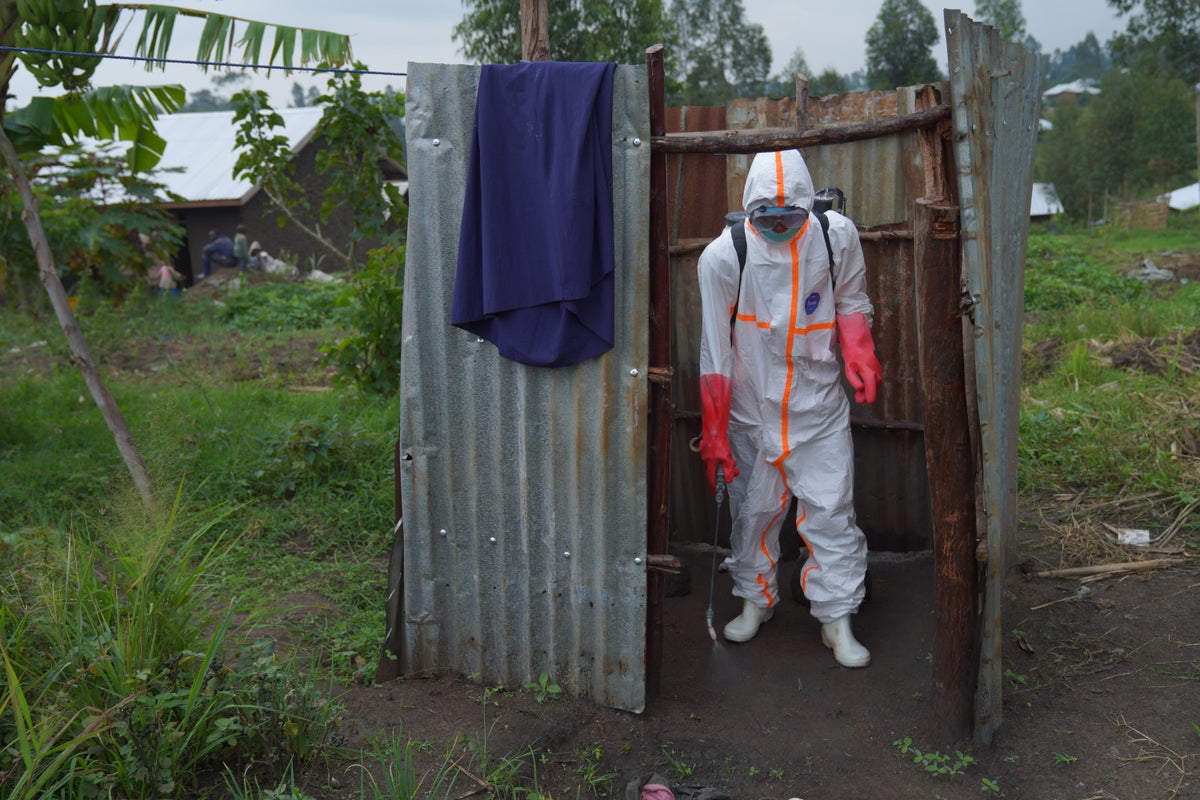
The numbers are terrifying, and they are climbing every single day. In the Democratic Republic of Congo, the ongoing Ebola outbreak has officially become the deadliest in the nation's history, claiming 2,325 lives and shattering previous grim records.
If you are wondering how an epidemic can spiral this fast, you aren't alone. Public health officials are sounding alarms because this specific surge isn't just severe—it is operating at an unprecedented speed, outpacing response teams and testing the limits of local health infrastructure.
Inside the Deadliest Crisis in Congo's History
Government figures confirm that total cases have surged to 4,945 across six distinct provinces. This eclipses the 2,299 deaths recorded during the 2018-2020 epidemic, which was previously the country's worst recorded national health emergency.
What makes this iteration so destructive? Speed.
United Nations humanitarian data points to a horrifying metric: the virus is claiming a life roughly every thirty minutes. While the infamous 2014-2016 West African epidemic remains the largest overall in history, Congo's current crisis hit the 2,000-death milestone in less than three months. By comparison, the West African response took nearly five months just to reach 1,000 deaths.
The epicenter remains rooted in Ituri province, alongside transmissions hitting North Kivu, South Kivu, Haut-Uele, Bas-Uele, and Tshopo.
Why This Strain Is Catching Response Teams Off Guard
Not all Ebola strains behave the same way, and that distinction is central to why medical interventions are struggling right now.
This outbreak is driven by the Bundibugyo virus strain. Unlike other strains that have benefited from widely deployed, highly effective vaccines and specific therapeutic treatments, the Bundibugyo strain has no approved vaccines or specific treatments ready for mass deployment. Clinical trials for potential therapies only recently started in Ituri, leaving doctors to rely primarily on supportive care while racing against time.
The case fatality ratio tells a grim story. Early in June, about 20 percent of confirmed infections resulted in death. Today, that figure sits at 46 percent—meaning nearly one in every two confirmed patients is dying.
Public health experts emphasize that this spike doesn't mean the virus itself mutated to become biologically more lethal. Instead, it exposes a breakdown in the pipeline of care. People are showing up at treatment centers far too late, often only after passing away within their local communities.
The Hurdles of Treating Ebola in Conflict Zones
Treating an infectious disease requires stability, trust, and infrastructure. Congo's eastern provinces have none of those things in abundance.
Decades of armed conflict, a fragile state presence, and deep-seated community mistrust create a hostile environment for medical workers. When local populations distrust outsiders or fear institutional isolation, they hide sick family members. By the time response units trace a contact or locate a patient, the window for successful intervention has slammed shut.
Logistical nightmares compound the issue. Delivering hot meals, personal protective equipment, and safe burial teams across vast, insecure regions requires massive funding and coordination. While the UN recently injected millions from emergency response funds, containing a virus that moves this rapidly demands an unprecedented level of ground-level solidarity and speed.
What Needs to Happen Now
Stopping an epidemic of this magnitude requires a complete shift in how resources are deployed.
- Shift to community-led tracking: Traditional top-down mandates fail when trust is low. Local leaders and community health workers must lead the charge in identifying symptoms early.
- Accelerate trial access: Expanding experimental treatments safely and swiftly in hot zones like Bunia is non-negotiable for bringing down that 46 percent mortality rate.
- Secure transit corridors: Health personnel cannot operate effectively if supply chains and treatment centers are vulnerable to ongoing regional instability.
The margin for error is gone. If international aid organizations and local authorities don't outpace the transmission vectors right now, this regional health crisis risks spilling much further across central Africa.