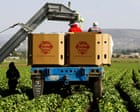
A microscopic parasite has brought the American fast-food and grocery supply chain to its knees. If you bought bagged shredded lettuce or ate a taco recently, you might already be part of a massive health crisis sweeping across 27 states.
This isn't just another minor recall. It's a systemic failure.
Produce giant Taylor Farms de Mexico has voluntarily pulled all iceberg lettuce sourced from central Mexico from the US market. This came after federal health authorities tracked a severe outbreak of Cyclospora cayetanensis directly back to shredded lettuce served at major chains and sold on supermarket shelves. We are talking about thousands of confirmed illnesses, a frantic scramble by multi-billion-dollar corporations, and a public health infrastructure struggling to keep up.
You need to know what's actually happening to your food, why standard safety measures are failing, and how to protect your family when the labels on the bags don't tell the full story.
The Microscopic Invader Hiding in Plain Sight
Most people hear about food recalls and immediately think of E. coli or Salmonella. Those are bacteria. Cyclospora is a completely different beast. It's a single-celled parasite that hitches a ride on fresh produce, usually through water contaminated with human feces. When you ingest it, the parasite embeds itself into the lining of your small intestine.
The results are brutal.
The primary symptom is watery, sometimes explosive diarrhea. It doesn't hit you right away like typical food poisoning. It waits. The incubation period lasts anywhere from a few days to two weeks. By the time you start feeling sick, you've probably forgotten all about that side salad or fast-food taco you ate days ago. Along with the relentless diarrhea, victims experience severe bloating, stomach cramps, profound fatigue, nausea, and rapid weight loss.
If left untreated, cyclosporiasis can drag on for weeks or even months. It can disappear for a few days, tricking you into thinking you're healthy, only to return with a vengeance.
The scale of this specific 2026 outbreak is staggering. To put it in perspective, the entire country saw just 249 confirmed cases during the same period last summer. Right now, federal officials have confirmed over 1,600 cases linked directly to this specific lettuce batch. Michigan alone is dealing with a separate explosion of more than 5,000 reported illnesses. The numbers are climbing fast.
Why Washing Bagged Lettuce Won't Save You
There is a dangerous myth that you can just wash away any foodborne pathogen. People think a vigorous rinse under the kitchen tap makes raw greens perfectly safe. That's flat-out wrong when it comes to Cyclospora.
This parasite is incredibly resilient. The oocysts—the egg-like stage of the parasite shed in feces—have a thick, protective outer wall. They laugh at standard chemical washes, chlorine rinses, and organic fruit sprays. Studies show that these organisms cling tightly to the rough, microscopic crevices of leafy greens. Once shredded lettuce is packed into a plastic bag with a bit of moisture, it becomes a perfect transport vehicle.
Washing a pre-cut, bagged salad at home does almost nothing to dislodge an embedded parasite. In fact, if you aren't careful, you might just contaminate your kitchen counters, cutting boards, and sink faucets in the process.
The only definitive way to kill Cyclospora is heat. You have to cook the food to a temperature of at least 158°F (70°C). But nobody wants to eat boiled or sautéed iceberg lettuce. It defeats the entire purpose of a crisp, refreshing salad. Because we eat these greens raw, we are entirely dependent on the safety of the supply chain. And right now, that chain has a massive weak link.
The Supply Chain Nightmare of Taylor Farms
The current recall traces back to Taylor Farms de Mexico, specifically its processing facilities in Guanajuato. This mega-producer supplies an astonishing percentage of the leafy greens consumed in North America. They handle the logistics, processing, and packaging for major restaurant chains, food service distributors, and grocery giants.
When a facility of this size suffers a contamination event, the ripple effect is immediate and widespread.
The company officially initiated a voluntary recall, halting all shipments of iceberg lettuce from central Mexico into the United States. They claim they've stopped receiving product from the implicated agricultural lots. But the damage has already been done. Contaminated shredded lettuce was distributed aggressively between June 29 and July 16.
Here is where the situation gets incredibly messy for consumers: the initial recall notices didn't list every brand name or retail store. They listed obscure bulk lot codes intended for industrial buyers. This leaves everyday shoppers completely in the dark.
We do know that Walmart's Marketside brand is heavily impacted. Specific items like the 12-ounce and 24-ounce Marketside Iceberg Salad, as well as the 8-ounce and 16-ounce Shredded Lettuce bags with "Best if Used By" dates ranging from July 18 to August 3, 2026, are dangerous. Toss them out immediately if they're in your fridge.
The corporate fallout has hit food service giants too. Sysco, the largest food distributor in the country, had to pull products frantically. Taco Bell had to strip shredded lettuce from its supply network across Indiana, Kentucky, Michigan, Ohio, and West Virginia after the FDA linked sick patients directly to their menus. Independent restaurants across the Midwest are completely revamping their menus, ditching bagged mixes entirely, and serving cooked spinach instead.
Inside the Strained Public Health Defense System
Why did it take so long to pull these bags off the shelves? The answer lies in the systematic gutting of our public health infrastructure.
Tracking an outbreak requires an immense amount of tedious, boots-on-the-ground labor. Epidemiologists have to interview hundreds of sick individuals, asking them to remember exactly what they ate three weeks ago. It's a logistical nightmare.
Recent federal funding cuts have severely weakened state and local health departments. Crucial surveillance programs, like the CDC’s FoodNet, have seen their scopes drastically narrowed. FoodNet used to track eight major foodborne pathogens, including Cyclospora. Now, it has been forced to focus almost exclusively on Salmonella and certain strains of E. coli.
When you cut the budget for the people who look for disease, you don't stop the disease. You just stop seeing it until it's too late.
The long incubation period of Cyclospora, combined with an underfunded tracking system, creates a dangerous data lag. Health agencies often face a six-week delay between the moment someone gets sick and the moment that illness is officially reported and linked to a source. Because of this lag, the FDA has explicitly warned that more brands, retailers, and states will likely be added to the recall list in the coming days. The crisis is still expanding.
What You Should Do in Your Kitchen Right Now
Don't wait around for a press release to tell you that your specific grocery store was affected. Take control of your food safety immediately with these concrete steps.
First, check your refrigerator for any pre-packaged iceberg lettuce or salad blends containing shredded iceberg. If the bag is from Walmart's Marketside brand, or if you can't verify the exact origin of the lettuce, do not eat it. Throw it in a sealed trash bag immediately. Do not compromise.
Second, if you have had any recalled lettuce in your fridge, you must sanitize the space. The parasite can easily transfer from your hands to door handles, drawer slides, and countertops. Wash all internal surfaces of your refrigerator drawers and shelves with hot, soapy water. Run any cutting boards, knives, or storage containers through a high-heat dishwasher cycle.
Third, alter your buying habits for the next few weeks. If you want salad, buy whole heads of lettuce instead of pre-washed, bagged, or shredded varieties. Strip away and discard the outer leaves entirely. Thoroughly rinse the inner leaves under clean, running water. While this doesn't offer a 100% guarantee against parasites, whole heads are processed significantly less than bagged greens, massively reducing the risk of cross-contamination from a centralized packing plant.
Fourth, change how you order at restaurants. When dining out or hitting a drive-thru in any of the 27 affected states, ask the staff directly where they source their lettuce. If they can't give you a clear, confident answer, ask them to hold the lettuce on your burgers, tacos, and sandwiches. It's a minor inconvenience that saves you from weeks of agonizing illness.
Finally, listen to your body. If you or a family member develops persistent, watery diarrhea, severe fatigue, or unexplained weight loss, don't just chalk it up to a standard stomach flu. Go to a healthcare provider and explicitly ask for a gastrointestinal parasite test. Standard stool cultures often miss Cyclospora entirely unless the lab technician specifically looks for it. Mention the ongoing lettuce recall. Early diagnosis allows for targeted antibiotic treatment, cutting down a month of suffering into just a few days.
The industrial food complex prioritizes speed, convenience, and massive volume over absolute safety. When the system breaks down, the burden of protection falls squarely on you. Be smart, stay vigilant, and skip the raw greens until this outbreak is fully contained.


