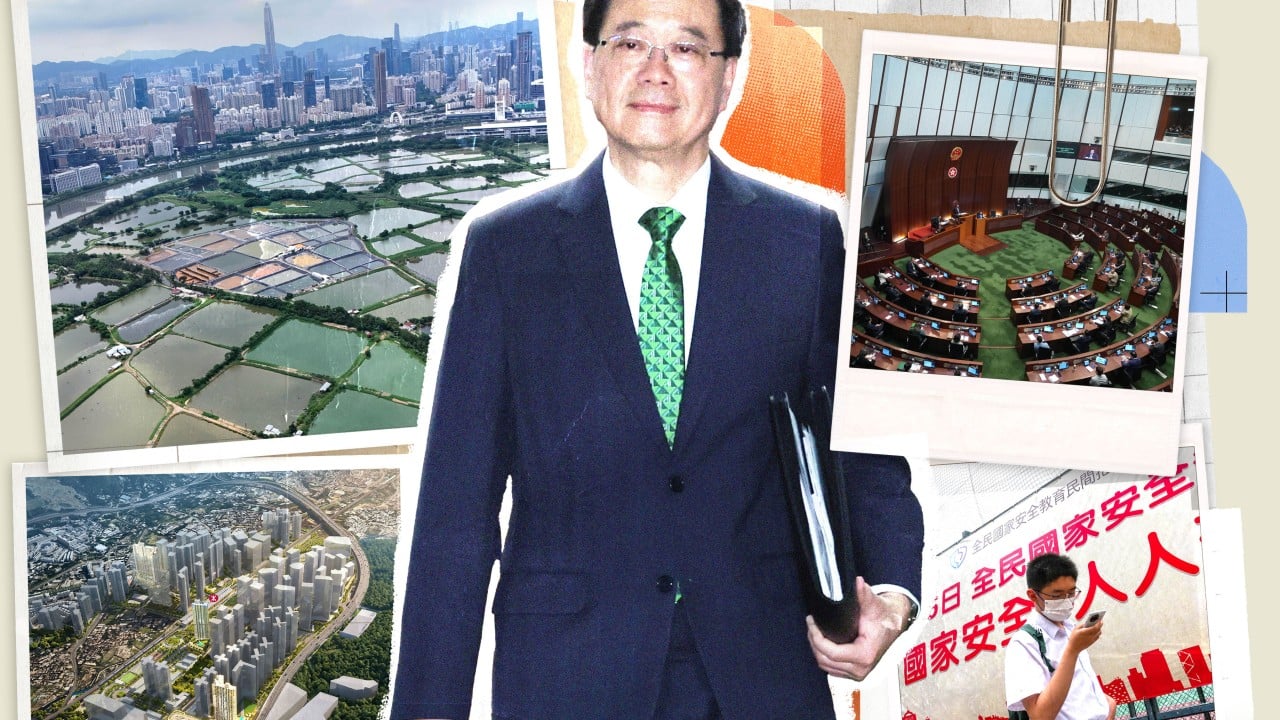
People often assume that economic blueprints leave room for compromise. They are wrong. When Chief Executive John Lee introduced Hong Kong's inaugural five-year plan, some observers wondered if the city would pivot toward purely livelihood-driven goals. That assumption misunderstands the current political reality. National security isn't just a separate box to check. It serves as the bedrock for every single policy decision moving forward.
The Reality Behind the Blueprint
For decades, Hong Kong operated as a pure financial playground governed largely by market forces. That era shifted dramatically following the 2019 social unrest and the subsequent implementation of the National Security Law. Now, long-term strategic planning mirrors mainland China's governance model. You cannot separate economic growth from defensive readiness. Security is the foundation that allows commerce to happen safely.
Think about how other global hubs manage risk. When stability feels fragile, foreign investment hesitates. By embedding security into its 2026-2030 development goals, the administration signals predictability. Investors want clarity, and absolute legal certainty provides that framework, even if critics argue it comes at the expense of traditional freedoms.
Economic Goals Meet Political Boundaries
The new strategic roadmap addresses massive livelihood challenges. An aging population, widening wealth inequality, and a lagging artificial intelligence race against regional competitors like Singapore demand immediate action. You see ambitious plans for the Northern Metropolis and cross-border integration within the Greater Bay Area.
Yet, every high-tech cooperation zone and talent-flow initiative must pass strict compliance checks. Cross-border capital, personnel, and data sharing face careful monitoring. Officials won't risk letting economic enthusiasm override precautionary guardrails.
- Security underpins technological expansion.
- Financial integration goes hand in hand with regulatory compliance.
- Social welfare improvements depend on a stable, risk-free political climate.
What to Expect Next
If you are looking at Hong Kong's future trajectory, stop waiting for a softer stance on political compliance. It's not happening. The dual-track approach—combining strict security protocols with aggressive economic problem-solving—is here to stay. Success in this environment requires understanding that the rules of engagement have permanently changed. You adapt to the framework, or you get left behind.
Hong Kong After the National Security Law: What's Next?
This panel discussion provides deep context on how national security laws have reshaped Hong Kong's political and economic landscape.
http://googleusercontent.com/youtube_content/1