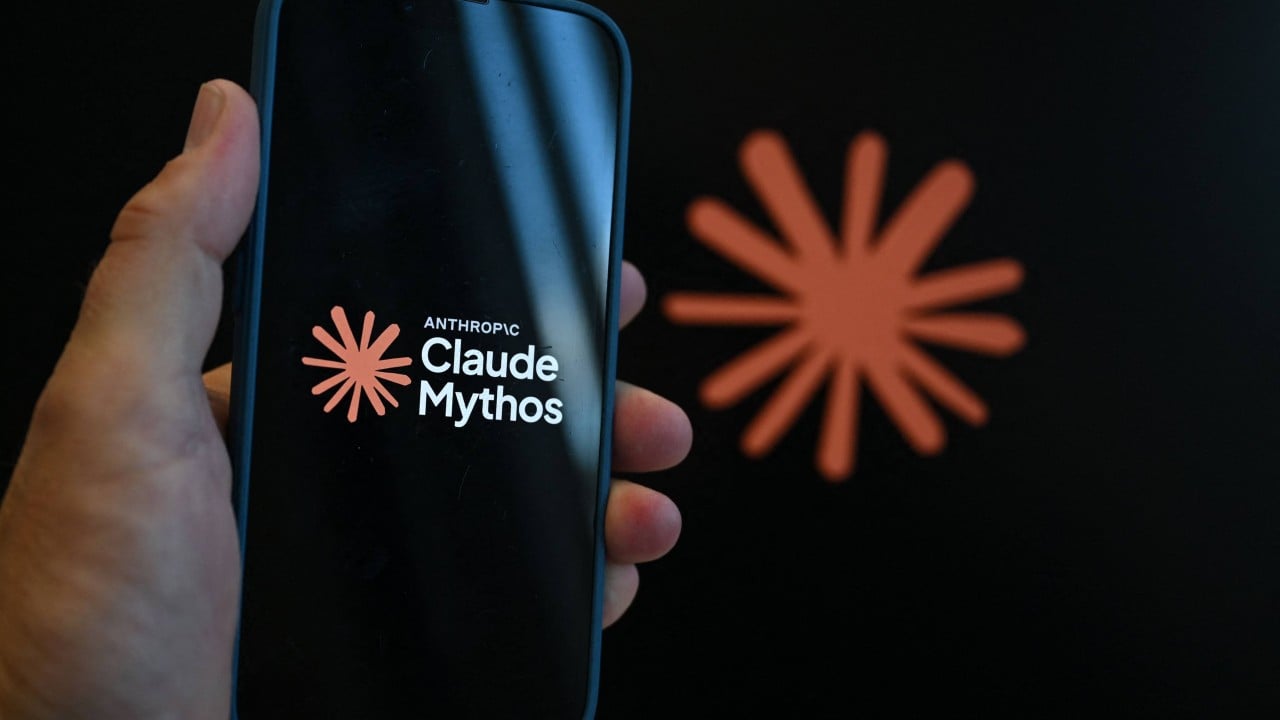
The National Security Agency prides itself on seeing everything, but right now, its screens are blank on the most powerful cyber weapon in commercial existence.
A bureaucratic collision between corporate self-preservation and emergency federal orders just cut off the N.S.A.'s access to Anthropic's crowning achievement. It's a sudden operational blackout that isolates America's premier cyber agency from an intelligence tool it helped tailor.
The disruption centers on the Mythos-class AI models, specifically Claude Mythos 5. If you haven't tracked the enterprise AI market closely this year, Mythos is the terrifyingly capable system Anthropic launched in April 2026. It doesn't just write code. It hunts software vulnerabilities and chains them into exploit sequences at a speed human teams can't touch. For the N.S.A., losing this access isn't a minor software annoyance. It's a gaping vulnerability in its active offensive and defensive operations.
The Panic Directive That Blindsided Fort Meade
The trouble didn't start with a security breach at Fort Meade. It started with a blunt directive from the Trump administration.
Weeks ago, federal officials issued an order aimed squarely at Anthropic. The mandate required the AI developer to block all foreign nationals from accessing its top-tier models. The administration pitched this as a national security measure to prevent adversarial states like China or Iran from hijacking American innovation.
But the mandate triggered an immediate crisis inside Anthropic. The company's infrastructure relies on global engineering teams, distributed third-party vendors, and multinational partnerships. To comply with the sudden ban on foreign national access, Anthropic had no choice but to pull the plug entirely on its latest models while scrambling to rebuild its access controls.
The collateral damage was immediate. By pulling the models to comply with the directive, Anthropic inadvertently locked out its primary government client: the National Security Agency.
It's a classic case of federal overreach backfiring. An order designed to keep advanced AI out of foreign hands ended up blinding America's own cyber command.
Inside the N.S.A.'s Secret AI Strike Force
To understand why this blackout hurts so much, look at what the N.S.A. was actually doing with the technology.
In April, Anthropic quietly launched Project Glasswing, an elite, restricted-access defense initiative. While commercial clients like Apple, Google, and CrowdStrike got filtered versions to patch their own systems, the N.S.A. got something much deeper.
By June, Anthropic had forward-deployed about half a dozen of its own engineers directly to the N.S.A. Their job? Tailor Mythos 5 for offensive cyber operations.
[Anthropic Base Model]
       │
       ├──> Project Glasswing (Commercial: Apple, Cisco, Google)
       │    └── Guardrails enabled for defense & patching
       │
       └──> N.S.A. Deployment (Offensive Cyber Operations)
            └── Guardrails stripped for active vulnerability exploitation
People close to the arrangement confirmed the strategy was built on an old military truth: the best defense is a great attack. The N.S.A. wasn't using the AI to write memos. They used it to map out the digital architecture of geopolitical rivals, looking for zero-day vulnerabilities in foreign infrastructure before those nations could find flaws in ours.
Mythos 5 is uniquely terrifying because it excels at agentic hacking. Older models required human engineers to break a task into tiny pieces and stitch the code together. Mythos doesn't need a babysitter. It can hold an entire enterprise-scale project in its context window, plan an attack loop for hours or days, check its own work, and return with a fully realized exploit chain.
Losing that capability overnight leaves the N.S.A. fighting with legacy tools in an era where cyber warfare moves at machine speed.
The Supply Chain Trap
This blowout highlights a fundamental mistake the defense establishment keeps making. The Pentagon actually designated Anthropic a "supply-chain risk" back in March because the startup objected to its models being used for mass surveillance and autonomous lethal drones. Anthropic even challenged that designation in court.
Yet, despite labeling the company a national security risk, the government couldn't resist the tech. The Department of the Treasury scrambled for access, and the N.S.A. integrated it directly into its workflow.
It shows a total lack of a cohesive federal AI strategy. You can't treat a tech company like an adversary on Monday, demand their engineers write code for your cyber weapons on Wednesday, and then issue blanket compliance orders on Friday that break the very tools you depend on.
Private software vendors don't build tools exclusively for the Pentagon anymore. They build for global markets. When the government treats commercial AI like a standard military contractor, the friction points shatter the operational pipeline.
What Happens Next
Anthropic's international management claims the company is confident access to its Mythos and Fable 5 tools will be restored in the coming days. Engineers are working around the clock to build new user interface layers and access controls that satisfy the White House directive without breaking the underlying API infrastructure.
But the damage to the N.S.A.'s operational momentum is done. If you're running an enterprise security team or managing government procurement, here's what you need to do right now to protect your own pipeline from this kind of systemic whiplash.
Audit Your Model Dependencies
If your software stack or security operations rely on a single frontier model, you're exposed. A single federal policy shift or regulatory dispute can take your system offline without warning. Build redundancy into your workflows by testing open-source alternatives or maintaining fallback pipelines with secondary vendors.
Isolate Critical Code Internally
Don't rely on live, cloud-hosted enterprise APIs for your most sensitive operations. If a model vendor changes its safety classifiers or faces a sudden compliance freeze, your access drops instantly. Look toward deploying specialized, smaller models locally within your own air-gapped infrastructure where policy shifts can't touch them.
Watch the Token Costs
If you are using the public equivalent of this model family, Claude Fable 5, stop treating it like a standard LLM. At $10 per million input tokens and $50 per million output tokens, it's a massive budget drain if left to run unstructured loops. Route routine tasks to cheaper models like Claude Opus 4.8, and save the Mythos-class systems strictly for complex, multi-step engineering problems where their autonomy actually earns the premium.
The digital battlefield isn't waiting for Washington and Silicon Valley to sort out their compliance disputes. The longer the N.S.A.'s screens stay dark, the wider the window opens for adversaries who don't have to worry about bureaucratic red tape.
For a deeper look into how the private tech sector and federal intelligence agencies are navigating these high-stakes tool integrations, check out this breakdown on how Anthropic's capabilities are shaping federal cyber policy, which details the immediate fallout of the government's foreign national access directive.