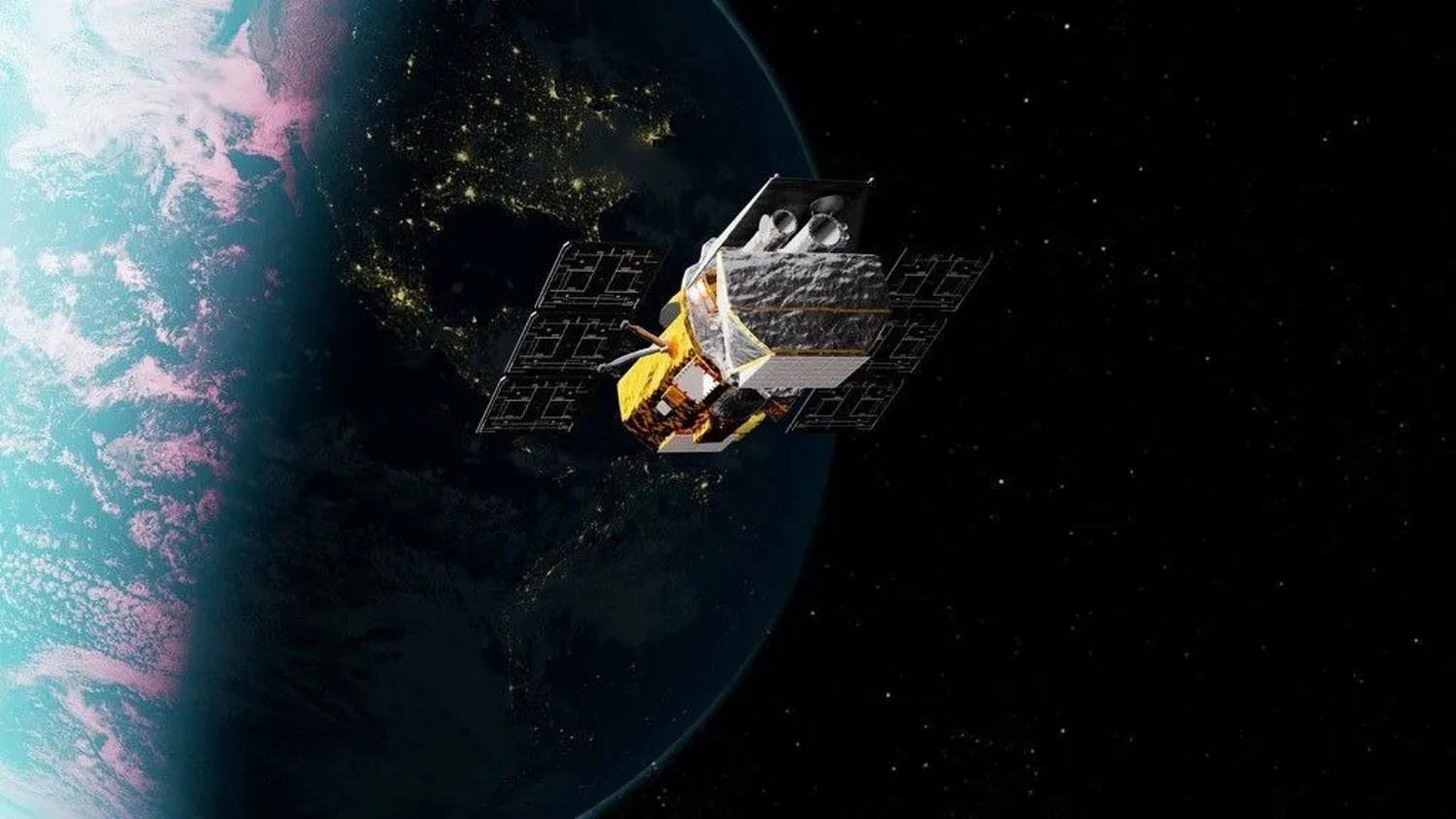
The ambitious plan to save the Neil Gehrels Swift Observatory from a fiery death has officially hit a wall. NASA and its commercial partner, Katalyst Space Technologies, confirmed today that the rescue mission—designed to boost the aging telescope into a higher, safer orbit—will no longer include a capture and orbit-raising attempt.
The Swift space telescope, a workhorse that has spent over two decades tracking the most violent explosions in the cosmos, is now set to re-enter Earth's atmosphere later this year.
Why the mission failed
When you try to perform a high-stakes robotic maneuver in low-Earth orbit, you need absolute control. The rescue vehicle, known as LINK, was launched in early July with a clear, albeit difficult, task: rendezvous with Swift, grapple it, and tug it upward to a more stable altitude of about 600 kilometers.
Things went sideways shortly after launch. The LINK spacecraft began to spin uncontrollably. While flight controllers did manage to upload new software that slowed the rotation, they couldn't stabilize the craft enough to perform the delicate task of docking with a target satellite. Two of its three reaction wheels failed, and the thruster system was compromised.
In this business, if you can’t point your spacecraft exactly where it needs to be, you can't dock. Trying to force a connection between two machines moving at thousands of miles per hour while one is tumbling is a recipe for a catastrophic collision. It's a hard lesson in the realities of orbital mechanics.
The high cost of aging assets
Swift wasn't always supposed to be in this position. Launched in 2004, it was designed for a two-year mission. It lasted more than twenty. That’s a testament to the quality of the engineering, but physics eventually catches up to everyone.
Recent intense solar activity caused the upper atmosphere to swell, creating more drag on satellites in low-Earth orbit. This increased drag pulled the telescope down toward Earth faster than anticipated. NASA had a choice: let it burn or try a $30 million experimental "rescue."
They chose to try. While the outcome isn't what anyone wanted, the willingness to take a risk on a smaller, agile company like Katalyst signals a shift in how agencies handle end-of-life logistics for orbital assets.
What happens now
The mission isn't technically a total loss, even if the rescue is off. NASA and Katalyst are still keeping the LINK spacecraft in orbit near Swift. The team plans to use this proximity to practice maneuvering and test other robotic servicing capabilities. It’s a "consolation prize" that provides valuable engineering data for future missions.
If this were a perfect world, we’d have a fleet of fuel-efficient, reliable tugs ready to push satellites back into orbit whenever they dipped too low. We aren't there yet.
The real question now is what this means for other aging observatories, like the Hubble Space Telescope. Hubble is 36 years old and currently fighting the same atmospheric drag that doomed Swift. The industry is watching the aftermath of this mission closely to understand whether we are actually ready for commercial satellite servicing at scale.
For now, the Swift observatory will continue its descent. It remains a legendary instrument, having mapped gamma-ray bursts that taught us more about the birth of black holes and the death of stars than perhaps any other single mission.
Looking ahead
We don't need to overcomplicate the takeaway here. Space is unforgiving. Developing a robotic tug in less than a year for $30 million was an incredibly aggressive timeline. The fact that the hardware reached orbit at all is a feat.
If you're following the industry, watch how the commercial sector adapts these "lessons learned" into their next generation of docking systems. The next mission won't be as lucky, and the technical requirements to prevent the next tumble will be much more stringent. For NASA, the focus shifts to data recovery and preparing for the next generation of observatories while the final weeks of Swift’s life play out.
The telescope has done its job. It’s earned its retirement, even if the ending is a little more abrupt than we hoped.