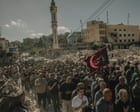
You can’t understand the modern Middle East without looking at Nabatieh right now. The streets are mostly empty. Entire blocks are flattened. Yet, a small, stubborn crowd of about 200 people gathered yesterday in this southern Lebanese city to mark Ashura, the Shia commemoration of the martyrdom of Imam Hussein. They walked right past mounds of fresh rubble while the thud of artillery echoed from the nearby hills.
For the people here, the ancient battle of Karbala isn't a historical footnote. It's their daily reality. Nabatieh bore the absolute brunt of the recent 100-day war between Israel and Hezbollah, which claimed over 3,900 lives in Lebanon. Almost all of the city's 80,000 residents fled during the intense bombing campaign and forced evacuation orders.
The immediate question for anyone watching this tragedy unfold is simple: will the newly inked peace deal hold? A ceasefire brokered between the US and Iran was supposed to halt the violence. It stopped the advancing Israeli forces just as they reached the edge of the city. But on the ground, that peace feels like a illusion.
The Grim Reality of a Paper Truce
The transition from frontline war to a fragile diplomatic pause happened fast. Two days ago, civil defence crews and medical volunteers dropped their trauma kits. They grabbed brooms instead. They rushed to sweep debris out of Nabatieh's central mosque and draped massive black mourning banners over walls torn open by airstrikes.
Usually, the city spends a month preparing for Ashura. This time, they had 48 hours.
The tragedy is that the violence never truly stopped. While political leaders talk about agreements, the reality in the southern security zone is chaotic. On Friday morning, everything shattered again. Hezbollah engaged Israeli troops near the city, killing four soldiers. Israel responded immediately with a fierce wave of airstrikes directly hitting Nabatieh and the surrounding villages, killing 18 people and wounding dozens more.
You can see the exhaustion on the faces of the locals who risked returning. This isn't like previous ceasefires where residents flooded back to rebuild their shops immediately. People are smart. They know when a truce is hollow. A few families drove in, checked if their homes were still standing, and immediately turned their cars back around.
The Weight of the Martyrs
Walk past the Harouf roundabout at the entrance of the neighbouring village, and the scale of the loss hits you. A massive three-metre billboard displays the faces of 50 young men. All of them were killed from that single village alone during the 100 days of fighting.
Locals like 50-year-old Ismail Yaghi don't hide their pain, but they don't show defeat either. He stood among the ruins wearing a T-shirt printed with the face of a lost relative, explaining that they've lived the tragedy of Karbala every single day of this war. There is a deep, complex mix of crushing grief and fierce communal pride.
While the living try to process the trauma, rescue workers are facing a grimmer task. They are using this brief window of reduced fighting to dig into collapsed structures that were completely inaccessible during the height of the bombardment. They aren't looking for survivors anymore. They are looking for remains.
What Happens Next
If you are tracking the situation in southern Lebanon, don't rely on optimistic political statements from distant capitals. Watch the ground actions instead. The high-level talks scheduled in Switzerland were abruptly called off following Friday's surge in casualties, showing just how easily localized skirmishes can derail international diplomacy.
The immediate survival strategy for residents involves three clear steps:
- Stay clear of the border zone: The Lebanese army has actively blocked access to the upper tier of the city and perimeter villages because of active, unpredictable shelling.
- Monitor local civil defence updates: Turn to local emergency networks rather than mainstream political broadcasts to verify which roads are clear of unexploded ordnance.
- Keep evacuation routes open: Families currently inside Nabatieh are keeping their vehicles packed and ready to move north of the Zahrani River at a moment's notice.
The conflict has left Nabatieh structurally ruined and politically volatile. The physical reconstruction of the south can't even begin while artillery fire continues to punch holes through fresh mourning banners.