You can't negotiate with a tectonic plate. When a massive 7.8 magnitude earthquake ripped through the southern Philippines off Sarangani province on a Monday morning, it didn't wait for permission. It caught communities at the absolute worst time—7:37 a.m., right as the first day of school after summer break was kicking off.
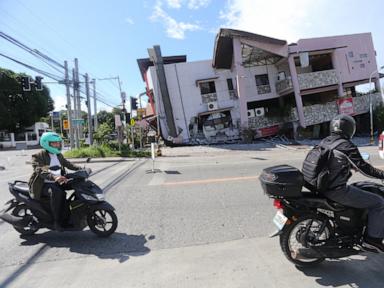
A half-century record-breaker like that should have caused an unimaginable bloodbath. Houses crumpled, tin roofs flattened, and the ground rolled like ocean waves. Yet, the death toll stood at 55 people. While every single life lost is a tragedy, a seismic event this violent usually claims thousands.
Why didn't it? It wasn't luck. It was muscle memory.
For years, the country has hammered away at relentless, mandatory Nationwide Simultaneous Earthquake Drills. Critics often dismissed them as bureaucratic box-checking or an excuse for kids to get out of class. But when the real thing hit, those repetitive exercises saved thousands from being crushed in stampedes or buried under falling concrete.
The Chaos That Didn't Turn Into a Stampede
When the shaking started, social media flooded with terrifying videos. One viral clip from a grade school in Malita, Davao Occidental, shows dozens of young kids sitting on a tree-ringed schoolyard. The earth moved so violently you can actually see the kids swaying from side to side on the grass. Suddenly, a nearby tin roof shed collapsed with a deafening thud.
Panic spiked. Kids screamed and started to bolt.
In a typical disaster scenario, this is the exact moment a deadly crowd crush happens. People trip, others trample them, and the exit becomes a death trap. But watch the video closely, and you see something remarkable. The teachers didn't run. They stood their ground, shouting instructions to calm down, telling the kids to stay seated or drop and protect their heads. The kids listened. They returned to their spots.
Nobody at that school was injured.
Ednar Dayanghirang, the regional director for the Office of Civil Defense, pointed directly to intensive preparation as the savior. Local authorities didn't just tell people to prepare; they forced school principals to take intense incident management courses. Those principals then built dedicated disaster-response teams among teachers. When the soil rolled, the system worked because the training was baked into their subconscious.
Duck Cover and Hold Isn't a Cliché
We joke about the simplicity of emergency drills. Drop to your knees, get under a desk, hold on. It feels primitive. But Teresito Bacolcol, director of the Philippine Institute of Volcanology and Seismology, noted that knowing exactly what to expect braces the human mind against freezing.
When an earthquake hits, your brain's fear center takes over. You lose the ability to make complex decisions. If you haven't practiced an escape plan, you run blindly. Running inside a collapsing building is usually what kills you.
The timing of the Sarangani quake was a massive stroke of luck because classes hadn't fully moved indoors yet. But the human reaction to that luck was entirely manufactured through years of practice. People didn't crowd the doors. They moved to open spaces, protected their skulls, and waited it out.
The Elephant in the Room: Enforcement Beats Education
While the human element succeeded, the structural element failed miserably. This is where we need to stop celebrating and look at the ugly truth.
Bacolcol pointed out a massive issue after assessing the aftermath. Multiple buildings collapsed that absolutely should have remained standing. The Philippines has a strict National Building Code. If engineers and contractors actually followed it, a 7.8 magnitude offshore quake shouldn't reduce local structures to matchsticks.
It's great that citizens know how to dodge falling debris, but they shouldn't have to dodge an entire falling building. Local government units frequently cut corners, skip rigorous inspections, or allow substandard cement to be used in construction. Education saved lives this time, but structural integrity is what stops the next disaster.
Survival Secrets from the Front Lines
Living on the Pacific Ring of Fire means seismic activity isn't a matter of if, it's a matter of when. If you think a drill at your workplace or school is a waste of time, you're dead wrong. Here is what disaster managers actually want you to do based on what worked in the southern Philippines:
- Forget the "Triangle of Life": Some old internet myths claim you should lay next to a sofa or bed instead of under a table. Total nonsense. Modern structural collapses show that getting under a sturdy object protects you from flying glass and falling ceiling tiles, which cause the vast majority of non-fatal injuries.
- Map out open zones: The kids in Davao Occidental survived because they had an open, tree-ringed courtyard to gather in. Identify areas near your home or office completely free of power lines, glass windows, and brick facades.
- Establish a non-digital communication plan: Cell towers instantly jam or lose power during major tremors. Don't rely on a text message to find your family. Pick a physical meeting spot beforehand.
The real lesson from the Sarangani earthquake is simple. You will not rise to the occasion when disaster strikes. You will sink to the level of your training. Stop treating emergency drills like a chore. They're the only thing standing between you and a pile of rubble.