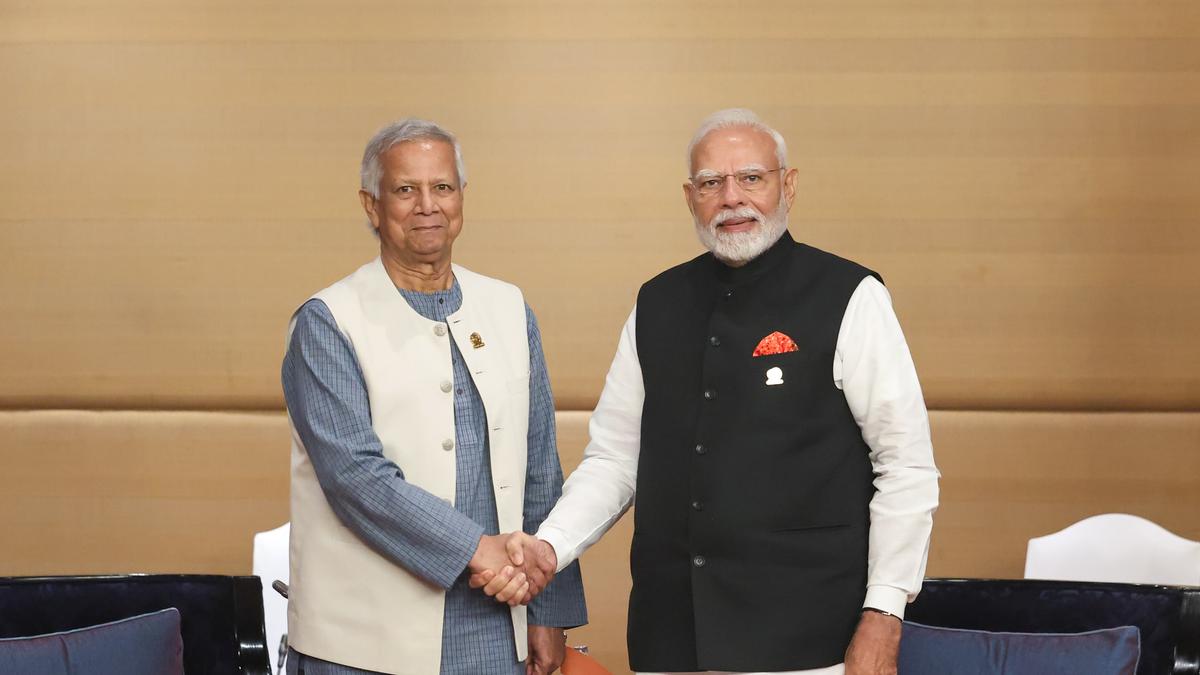
Foreign policy rarely moves at the speed of a breaking news alert. When Prime Minister Narendra Modi and Bangladesh’s Chief Advisor Muhammad Yunus sat down for forty minutes in Bangkok on the sidelines of the BIMSTEC summit, diplomatic watchers expected a total thaw. They wanted a headline about restored trust and open borders. What they actually got was a masterclass in realistic statecraft where two leaders acknowledged deep fractures without pretending they didn't exist.
Geopolitics doesn't care about polite optics when major strategic security is on the line. Since the sudden regime change in Dhaka in August 2024, New Delhi and Bangladesh's interim administration have engaged in a quiet, high-stakes standoff. Border tensions, the safety of Hindu minorities, and the contentious status of former Prime Minister Sheikh Hasina loom large over every bilateral conversation. Meeting face-to-face in Thailand didn't magically erase months of diplomatic friction, but it kept communication lines alive when cutting them off would have been disastrous for both nations.
The Core Disagreements Nobody is Talking Around
You can't understand modern India-Bangladesh relations by looking at joint photo-ops alone. The friction points are specific, messy, and deeply emotional for domestic audiences on both sides of the border.
New Delhi walked into the room with one primary demand centered on accountability. Foreign Secretary Vikram Misri made it clear that India expects the interim government in Dhaka to thoroughly investigate and prosecute attacks targeting Hindu minorities. When a government changes hands violently, vulnerable populations often pay the immediate price. India’s position isn't just about rhetoric; it's about basic regional stability and the protection of cross-border kinships.
On the other side of the table, Dhaka brought its own heavy baggage. Muhammad Yunus's camp pressed hard on two major fronts: the extradition of Sheikh Hasina to face trial in Bangladesh, and a formal request for New Delhi to muzzle her public statements. Dhaka wants her back, and they want her to stop talking. Furthermore, Yunus raised concerns over ongoing border incidents involving Indian security forces.
Neither leader backed down from their core positions. Modi urged Yunus to drop the hostile rhetoric that poisons the bilateral atmosphere, while Yunus pressed for action on Hasina's legal status. This wasn't a breakthrough summit. It was a reality check.
Why Neighboring Diplomacy is Getting Messier
If you look broader than just Dhaka, Modi's schedule in Bangkok revealed a bigger regional headache for Indian foreign policy. Alongside Yunus, the Indian Prime Minister met with Myanmar junta commander General Min Aung Hlaing and Nepal's Prime Minister K.P. Sharma Oli.
Notice a common thread? All three neighboring figures have faced major domestic legitimacy crises, and all three have maintained open doors to Beijing while New Delhi watches closely. Myanmar's junta is fighting an intense civil war against the National Unity Government. Nepal's political shifts keep pushing tricky domestic maneuvers. Bangladesh is navigating a fragile post-revolutionary transition.
India's strategy here is defensive and pragmatic. You don't get to pick your neighbors, and ignoring them only pushes them further into rival camps. Offering economic bridges like linking UPI payment systems across BIMSTEC nations or talking energy corridors is how New Delhi tries to maintain gravitational pull in its own backyard.
What Actually Happens Next
The biggest takeaway from the Bangkok meeting is that institutional ties must outlast specific political regimes. Dhaka's foreign affairs advisors have rightly argued that India-Bangladesh ties shouldn't be tied to any single individual or government. Yet, public sentiment in both countries remains hyper-sensitive.
If you're tracking where this relationship goes through the rest of 2026, ignore the diplomatic fluff about warm handshakes. Watch the border fencing updates, monitor whether minority protection cases actually go to trial in Bangladeshi courts, and see if bilateral trade talks on power grids and transit move forward without sudden political blockades.
Real diplomacy happens in the friction, not the photo finish. Both nations need each other too much to let the bridge collapse completely, but rebuilding trust will take years of consistent, quiet work rather than a single afternoon in Bangkok.
.jpg?itok=hg_o2L0E)