Mitch McConnell just broke his silence, and it's about time. After nearly a month of complete secrecy that triggered a wave of wild internet conspiracy theories, the 84-year-old Kentucky senator finally told us what put him in the hospital on June 14. He took a bad fall, ended up briefly unconscious, and then caught a case of pneumonia. He's not dead, and he's not in a vegetative state, despite what far-right influencers spent weeks screaming on social media.
But if you think this is just a standard health update about an aging politician, you're missing the bigger picture. McConnell's extended absence has paralyzed a deeply divided Senate, jammed up crucial government spending bills, and exposed a massive vulnerability in how our government handles aging leaders. When a single senator's health can grind the gears of Washington to a halt, it isn't just a personal medical issue. It's a national governance problem.
What Really Happened on June 14
The official story from McConnell's team was painfully vague for weeks. They simply said he was receiving excellent care and recovering. That lack of transparency backfired completely. It created a massive information vacuum that right-wing activists rushed to fill with unverified claims, with some alleging he was brain dead.
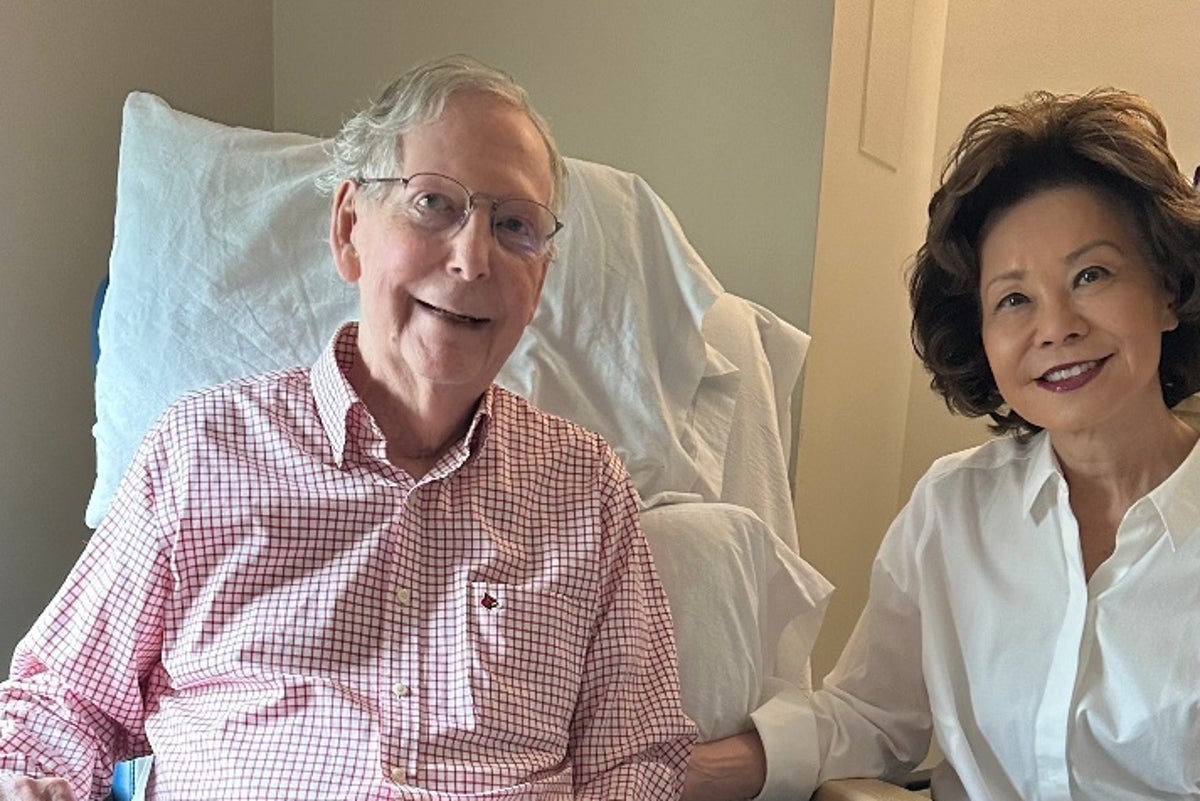
The reality came to light on July 12 when McConnell released a detailed statement alongside a photo of himself smiling next to his wife, Elaine Chao. He held a recent newspaper to prove he was alert. McConnell admitted that he took a severe fall at his home, which knocked him out.
His doctors ran a battery of tests to rule out the worst-case scenarios. He didn't have a stroke. He didn't have a heart attack. There were no brain hemorrhages or tumors discovered. However, during his lengthy stay in the hospital, he developed a mild case of pneumonia, which dragged his recovery out even further.
McConnell explained his weeks of silence by pointing to a generational trait. He noted that people of his age group naturally hesitate to show the vulnerability that comes with getting older. He admitted that even after decades in the public eye, that instinct to hide weakness remains incredibly strong.
Right now, he's moved out of the main hospital and into a rehabilitation center to rebuild his physical strength. He isn't healthy enough to walk back onto the Senate floor yet, and his medical team hasn't cleared him to vote. He claims he's working closely with his staff from his rehab bed, but his physical presence in the Capitol is nowhere in sight.
The Reality of Post Polio Syndrome and a Pattern of Falls
This isn't an isolated incident, and pretending it's a sudden string of bad luck is ignoring reality. McConnell survived polio as a young child. That battle left him with lifelong physical hurdles, particularly a well-documented difficulty with climbing stairs and maintaining perfect balance.
As he's aged, those challenges have intensified dramatically. The Office of the Attending Physician in Congress openly stated that the senator has experienced multiple falls throughout the past year specifically linked to his post-polio condition.
Look at the timeline. In March 2023, he suffered a concussion and fractured ribs after tripping at a Washington hotel, which kept him away from the Senate for six weeks. Later that summer, he terrified onlookers by freezing up mid-sentence during two separate televised press conferences, staring blankly into space until aides escorted him away.
The pattern kept repeating. In late 2024, he sprained his wrist in a trip. By early 2025, he fell on the steps right outside the Senate chamber and began relying heavily on a wheelchair to get around the Capitol complex. Another fall followed in October 2025, and just this past February, he spent over a week hospitalized with severe flu-like symptoms.
This latest June 14 emergency was severe enough to trigger an emergency medical dispatch call to his residence, where paramedics initially reported dealing with an unconscious patient. While he didn't suffer a heart attack, the physical toll of a brief blackout and subsequent pneumonia on an 84-year-old body is immense.
The Senate Gridlock Nobody Wants to Talk About
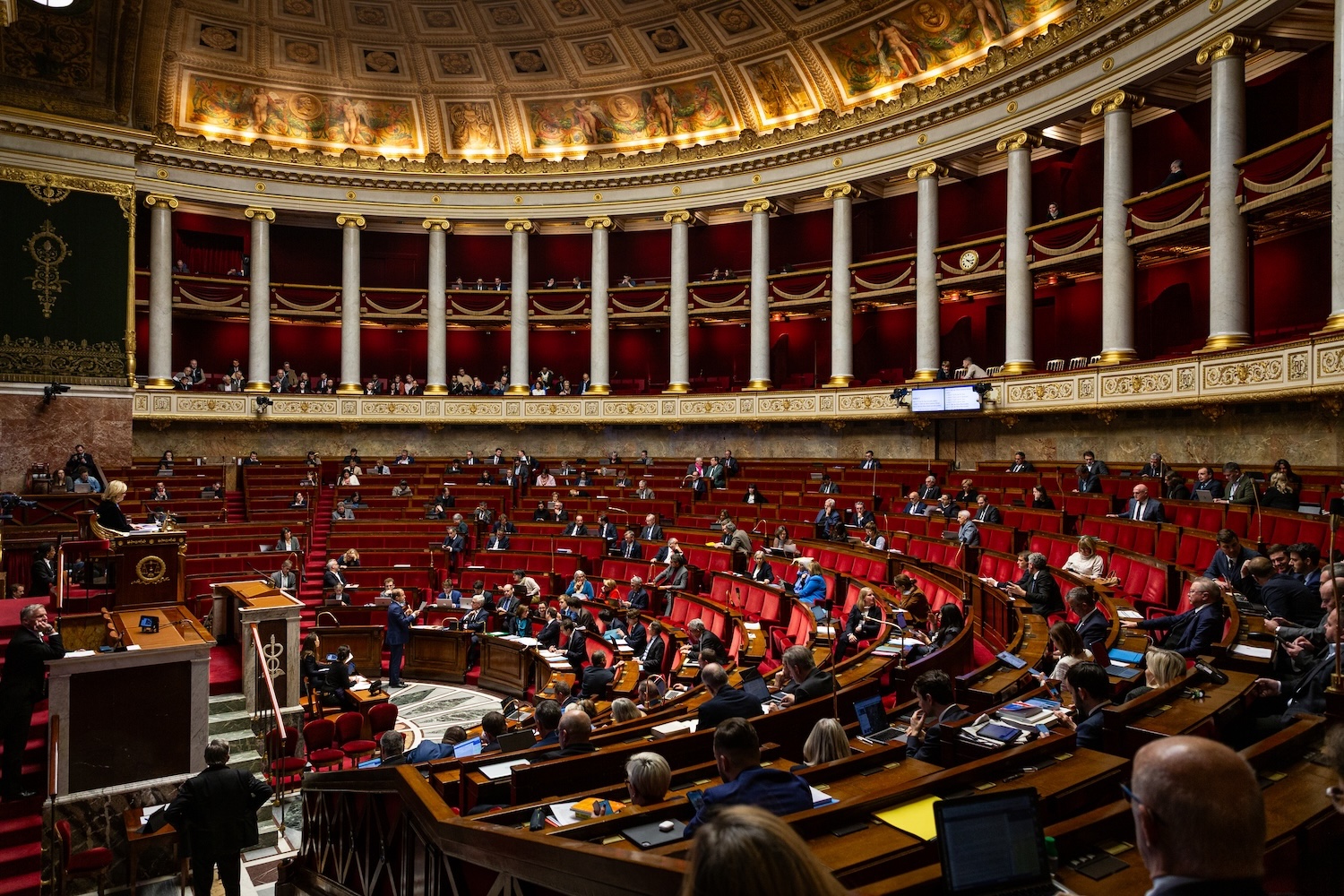
Washington doesn't pause for physical therapy. McConnell's absence has created a massive headache for Senate leadership. Republicans are currently protecting a razor-thin majority. When you take McConnell out of the equation, that majority shrinks to a fragile margin, giving them very little room to maneuver on tight votes.
The real damage is happening behind closed doors in the Senate Appropriations Committee. McConnell's empty seat means the committee is now deadlocked in an even split between Democrats and Republicans. Because committee rules dictate that a tie vote fails to advance legislation, the entire process for approving government funding has ground to a halt.
The committee is already running way behind schedule on drafting spending bills for the 2027 fiscal year. The primary sticking point is a massive disagreement over national defense funding. Republicans want to push through their own spending priorities, but without McConnell there to break the tie and rally his colleagues, they can't get anything out of committee.
They've already had to postpone multiple scheduled bill markups because they simply don't have the numbers. It shows how much power a single seat holds in a hyper-partisan Congress.
The Toxic Rumor Mill and the Chao Trip
Because McConnell’s office chose absolute secrecy for the first three weeks of his stay, the internet did what it always does. It invented a conspiracy. Far-right political actors used the silence to claim that Republican leaders were executing a massive cover-up regarding the senator's actual cognitive state.
The fire grew hotter when critics pointed out that his wife, former Transportation Secretary Elaine Chao, traveled to Beijing, China, just three days after her husband was rushed to the hospital. Conspiracy theorists claimed this proved McConnell was beyond saving or that his family had abandoned him.
Chao’s team had to issue a public statement clarifying that the trip was a long-planned philanthropic effort for her family’s foundation. They stated plainly that the senator’s medical condition at the time didn't require her to cancel her travel, and she has since returned to his side.
GOP leaders like Senate Majority Leader John Thune and Senator John Barrasso tried to calm the waters by telling reporters they spoke with McConnell on the phone. They insisted he sounded sharp and was deeply engaged in policy discussions, particularly regarding national security. Still, without photographic or video proof, the public skepticism lingered until the July 12 statement finally dropped.
The Institutional Problem with Aging Leaders
This situation highlights a massive gap in how the United States Senate operates. Unlike the executive branch, which has clear constitutional guidelines under the 25th Amendment to temporarily transfer power if a president becomes incapacitated, the Senate has no such mechanism.
If a senator is hospitalized or unconscious, their seat sits empty. They cannot vote by proxy from a hospital bed. They cannot temporarily delegate their voting power to a colleague. Their constituents simply lose their voice in federal legislation until the senator recovers or chooses to resign.
McConnell already stepped down from his long-held post as the Republican leader last year, choosing to finish out his current term as a rank-and-file senator. That term officially ends in January, and he has already announced he won't seek reelection. He's trying to cross the finish line of a 40-year Senate career that began in 1984, but his body is giving out before the clock runs out.
When lawmakers refuse to step aside despite severe, recurring medical crises, it isn't just an act of personal grit. It has tangible consequences for the country's ability to govern itself.
Tracking the Next Critical Steps
We need to look past the reassurances and watch the actual data points over the coming weeks to understand where this ends.
First, keep a close eye on the Senate Appropriations Committee schedule. If Republicans continue to delay spending bill markups, it means McConnell’s recovery is stalling and he can't get back to Washington. If they try to force a vote without him, watch for partisan deadlocks that could signal an impending government shutdown fight later this year.
Second, watch for visual confirmation. A single staged photograph with a newspaper doesn't equal the physical stamina required to navigate the Capitol, even in a wheelchair. The real test comes when the Senate returns from its current recess. If McConnell remains confined to a rehab facility into late July, pressure from within his own party will mount quietly.
Third, monitor the Kentucky political landscape. While McConnell intends to serve until January, any sign that his rehab is failing could force an early vacancy conversation. Kentucky law dictates how a replacement is selected, and with a narrow federal majority, national Republicans can't afford a prolonged vacancy.
Stop looking at this as a simple story about a politician getting over a cold. It's a high-stakes waiting game with federal budgets and judicial confirmations hanging in the balance.