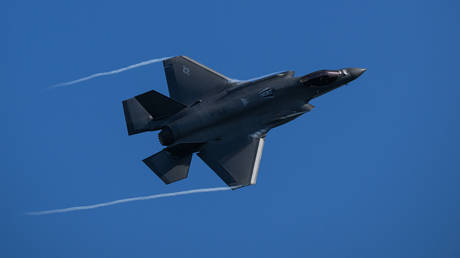
A crate holding critical F-35 stealth components shouldn't just wander off. Yet that is precisely what happened when a shipment traveling from Australia to the United States was mysteriously rerouted to Hong Kong, sparking urgent congressional briefings and a frantic Pentagon probe.
The cargo in question wasn't a box of routine nuts and bolts. It contained a cockpit canopy and a weapons-bay door originating from a Royal Australian Air Force F-35 Lightning II. These components were headed back to the US via a commercial freight forwarder managed through Lockheed Martin's sprawling global logistics chain. Instead of arriving at an American maintenance depot, the shipment ended up in Hong Kong—a special administrative region under Beijing's strict control.
Why a Cockpit Canopy Keeps Military Planners Up at Night
If you think a fighter jet's canopy is just a transparent glass bubble, you're missing the entire point of modern stealth engineering. The F-35 canopy consists of an acrylic shell coated with a micro-thin layer of specialized radar-absorbent material. This proprietary chemical treatment deflects enemy radar waves, preserving the jet's low-observable footprint.
When these coatings degrade due to ultraviolet exposure and atmospheric wear, the parts must be shipped out for specialized treatment or replacement. Because Australian depots lack the specific infrastructure to overhaul canopies, the hardware was sent across the Pacific.
Having an actual physical component changes the game for foreign intelligence. Military aviation analysts point out that even if adversaries like China possess digital blueprints or stolen design data, holding the real hardware lets engineers verify chemical compositions, study bonding techniques, and test reverse-engineering pathways. It bridges the gap between theoretical knowledge and practical replication.
The Fragility of Global Defense Supply Chains
The incident exposes glaring vulnerabilities in how the world's most expensive weapons platform moves its spare parts. The F-35 relies on an interconnected global spares pool shared by over a dozen allied nations, including the UK, Norway, Italy, and Australia. Prime contractor Lockheed Martin coordinates these movements through commercial freight carriers and regional warehouses, such as the logistics hub near Newcastle, Australia.
Transparency and tracking have long been thornier issues than policymakers care to admit. A previous US Government Accountability Office report noted massive tracking gaps across the entire programme, showing that millions of spare parts had vanished from paper accountability systems over a multi-year window without rigorous tracking.
When a commercial flight carrying restricted military hardware stops in South Korea and subsequently diverts to Hong Kong, it highlights severe oversight failures. Australian Defence Minister Richard Marles initially attempted to downplay the severity, asserting that the shipment did not involve sensitive equipment. But American lawmakers and defense committees saw it differently, launching immediate bipartisan inquiries behind closed doors.
What Happens Next
As of now, public documentation hasn't confirmed whether Chinese authorities physically opened the container or retained permanent possession, though reports indicate local authorities took custody of the stray cargo. The immediate fallout involves a frantic scramble by the Pentagon's Joint Program Office to plug security loopholes, trace intermediary handlers, and revamp logistics protocols.
Supply chain security is no longer an administrative afterthought. If military contractors cannot guarantee that a multi-million-dollar stealth component will travel safely from an ally's base to an American repair facility, the entire architecture of international defense logistics needs an aggressive overhaul.