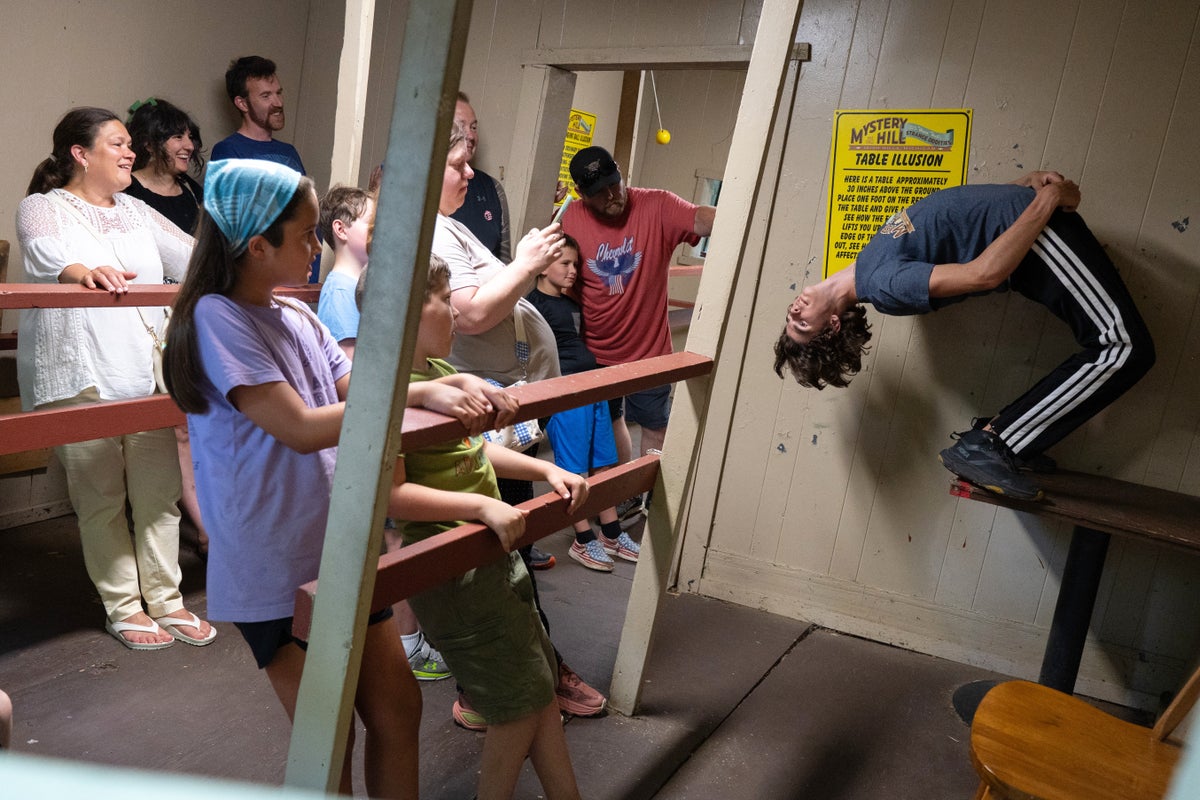
Most classic roadside attractions have turned into vacant lots or overgrown ruins. They couldn't survive the shift to modern superhighways and endless smartphone screens. Yet, a quirky slice of mid-century Americana in Michigan's Irish Hills refuses to die.
Mystery Hill, a staple of U.S. 12 since the 1950s, just caught a second wind. Nathan Wakefield, a professional sideshow performer with a deep-seated childhood connection to the area, bought the property. Instead of letting another piece of regional history bulldozed for development, he's doubling down on physical, tactile entertainment.
If you think roadside oddities are just cheesy relics of the past, you're missing the entire point of why they are making a comeback.
The Rise and Fall of Michigan’s Vacation Land
Decades ago, the Irish Hills region along US 12 served as the ultimate playground for families driving between Detroit and Chicago. Kids didn't stare at tablets in the back seat. They craned their necks to spot massive fiberglass dinosaurs, western-themed stunt towns, and gravity-defying trick houses.
Places like Frontier City and Stagecoach Stop pulled in massive crowds. They offered a specific kind of magic that screen-based entertainment can't replicate. Then came Interstate 94. Traffic patterns shifted, modern theme parks expanded, and one by one, these landmarks closed their doors. Prehistoric Forest shut down in 2002, leaving behind ghost stories and decaying dinosaur statues.
Mystery Hill stands as a stubborn exception.
What Makes Mystery Hill Different
Survival in this niche requires low overhead and high novelty. Cambridge Township historian Michelle McLemore notes that surviving attractions generally share one trait: they provide full-body, tangible experiences. You can't experience optical illusions and physical balance-distortion virtually.
Mystery Hill works because it forces your brain to question basic physics. Visitors walk into a slanted building where water appears to run uphill and balls refuse to roll downward. It's weird, it's fast, and it takes about thirty minutes to experience.
When previous owner Dirk Dole purchased the three-acre property in 2022, he didn't tear it down. He added Ward Hall's Strange Oddities Museum and gemstone mining experiences to keep foot traffic moving. That fix-and-flip preservation model bought the landmark enough time for someone truly passionate to take the reins.
Enter the Sideshow Performer
Nathan Wakefield spent fifteen years lying on beds of nails, juggling, and eating fire as a professional sideshow artist. Buying a gravity house might seem like an unusual career pivot, but it fits his background perfectly.
Growing up roughly twenty miles south of the Irish Hills, Wakefield visited these exact spots as a kid. When he toured Mystery Hill last year, he found it remarkably well-preserved. Instead of letting California investors flip it away from local hands, he stepped up to run it himself.
He wants to spark "generational nostalgia." Walk around the grounds on any given weekend, and you'll hear parents telling their kids about the exact same trick room they visited decades prior. That emotional loop keeps people coming back.
How to Experience It Yourself
Planning a trip to see Mystery Hill takes minimal effort, but you should know what to expect before you drive out to Onsted, Michigan.
- Check the Season: The attraction operates seasonally, generally running daily from Memorial Day through Labor Day.
- Combo Packages: Tickets run around $15.95 for adults and $9.95 for children, which covers both the gravity house tour and the strange oddities exhibition.
- Extra Activities: You can pay a bit extra to pan for fossils and gemstones at the mining sluice, where kids are guaranteed to find artifacts to take home.
Support independent roadside oddities before digital fatigue forces the rest of them out of business. Plan a weekend trip down US 12, step inside the tilt house, and see if your own balance holds up.