Imagine getting yanked out of your car at gunpoint by masked men on a quiet road in Mexico. It sounds like a scene straight out of a grim true-crime documentary, or the tragic reality thousands of families face daily across the country. But what if the entire thing was a multi-million-dollar performance put on by the victim themselves.
That is exactly what authorities in the State of Mexico say happened to Nancy Napoles, the municipal president of Tenancingo. Also making news in this space: What Most People Get Wrong About Trumps No Limits Power Claim.
Local prosecutors dropped a bombshell announcement that turned a supposed cartel kidnapping into a massive, bizarre fraud investigation. Napoles allegedly faked her own violent abduction to extract 40 million pesos from her own city's public treasury. At the current exchange rate, that is roughly 2.3 million dollars. The money was meant to be disguised as emergency ransom. Further insights regarding the matter are explored by The Guardian.
Instead, investigators claim it was a desperate cover-up for money that had already vanished.
The story sounds wild because it is. It exposes the massive holes in local government accountability. It also shows the absurd lengths to which corrupt officials will go when the audit team starts closing in.
Inside the Anatomy of a Staged Abduction
The plot started out like a typical high-stakes kidnapping. Armed men stopped the mayor's vehicle on a highway outside Mexico City. They forced her into another car at gunpoint. Shortly after, the demands rolled in.
The captors claimed they would kill Napoles and her entire family if they did not get 40 million pesos immediately.
But the kidnappers added a strange twist during negotiations. They explicitly suggested that if the family could not raise the cash privately, they should take the resources directly from the local municipal government budget.
That right there was the fatal mistake. Cartels do not usually offer financial administrative advice to local municipal councils on how to balance their books for ransom payments.
The entire scheme fell apart because of an ordinary bystander. A witness saw the mayor being forced into the vehicle and immediately called the police. Law enforcement launched an emergency search operation. The heat got so intense so fast that the co-conspirators had to abandon the plan.
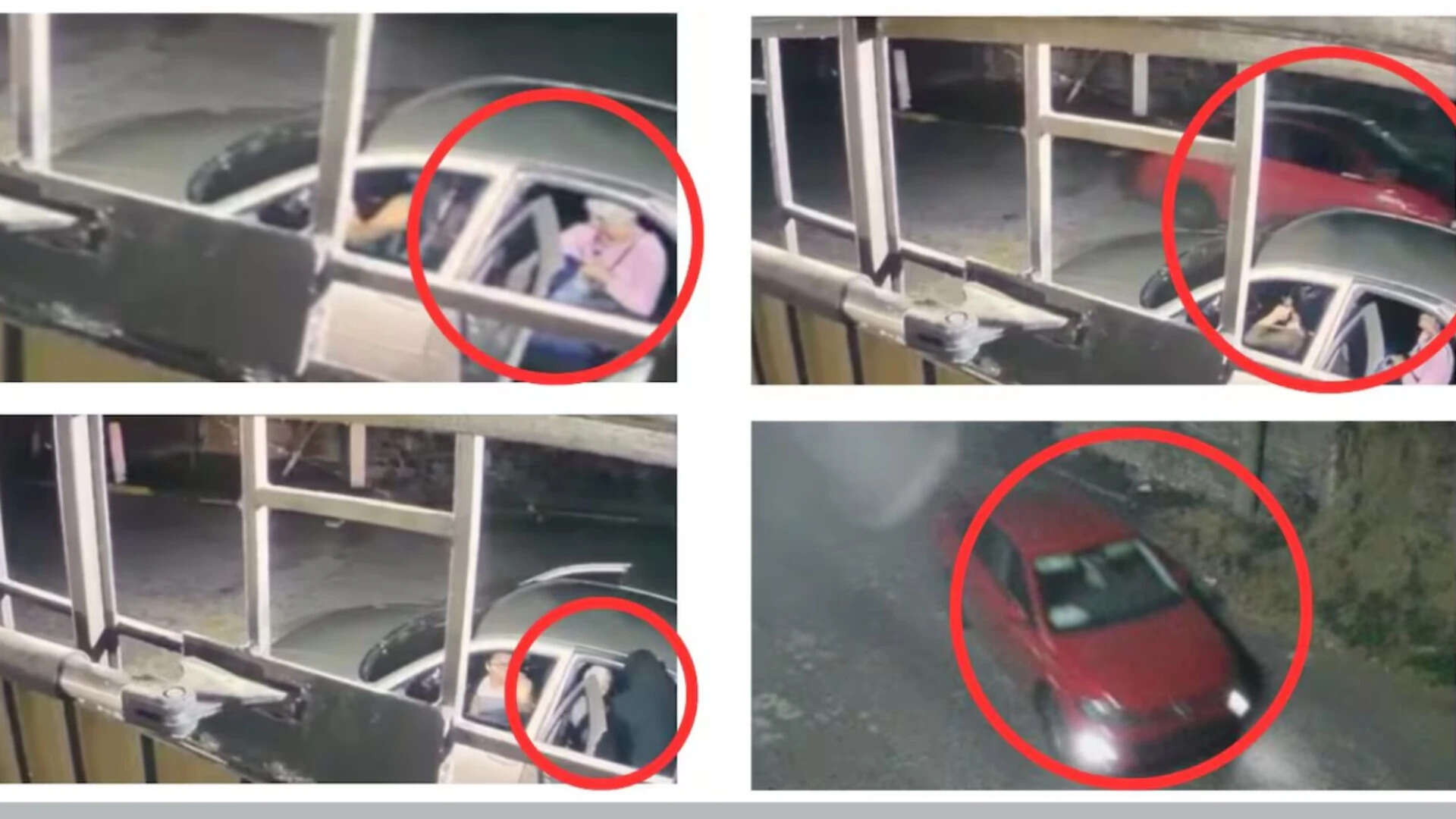
When investigators started interviewing everyone involved, the story crumbled. The timelines did not match. The physical evidence did not make sense. Prosecutors eventually released surveillance images showing what they described as a coordinated simulation rather than an actual hostile ambush.
A Family Affair Run by the Inner Circle
State prosecutors from the Fiscalia Edomex have already locked up three suspects. They are identified under Mexican privacy laws as Karla Valeria N, Victor Manuel N, and Christian N. Their confessions and statements provided the bedrock for the state's case.
The real masterminds behind the logistics were not seasoned gang members. Authorities point directly to the mayor's husband and her brother-in-law.
The two men allegedly structured the entire fake abduction to bail themselves out of a massive fiscal hole. According to the prosecution, the municipal administration had already bled millions of pesos from local budgets through embezzlement. They needed a massive financial transaction to balance the ledger. A state-funded ransom payment seemed like the perfect way to wipe the slate clean. It would explain away the missing millions as an unfortunate casualty of Mexico's security crisis.
Right now, the husband and brother-in-law are on the run with active arrest warrants over their heads.
Napoles remains free for now, but her political career is essentially over. Investigators scheduled an official hearing to formulate formal charges against her. She has taken to Facebook to proclaim her innocence. In a video message, she looked directly at the camera and claimed the entire case was politicized and driven by her enemies. She stated she is fully prepared to cooperate to ensure the guilty actors are punished.
The defense strategy is clear. Blame political rivals and claim she was a genuine victim. The sheer volume of matching testimonies from the arrested accomplices makes that an incredibly tough sell.
The Massive Political Headache for the Ruling Party
This scandal hits far harder than a typical small-town embezzlement case. Napoles belongs to the ruling Morena party. This is the same party founded by former President Andres Manuel Lopez Obrador and currently led by President Claudia Sheinbaum.
Sheinbaum won the presidency on an explicit promise to root out deep-seated corruption across all levels of Mexican governance.
When local mayors from your own party are accused of staging Hollywood-style kidnappings to rob their own towns, it completely undermines that narrative. Tenancingo is not a massive global metropolis, but it represents the exact kind of working-class municipality that forms the backbone of Morena's voter base.
The federal government faces massive pressure to make an example out of Napoles to prove that party affiliation does not grant immunity.
This is part of a much larger, uglier trend of local Mexican officials stepping far over the legal line. Just months ago, federal prosecutors hit the governor of Sinaloa and nine other officials with massive drug trafficking charges. Last year, another mayor in western Mexico was taken out in handcuffs during an investigation into a cartel training camp. Local power in Mexico often operates like an autonomous kingdom, far away from the watchful eyes of federal regulators.
The Real Cost of Municipal Fraud
When a local government loses two million dollars, the impact is immediate and devastating. We are talking about a town where that money represents clean drinking water initiatives, public safety equipment, road repairs, and basic medical clinics.
Corrupt officials frequently use the very real tragedy of Mexico's insecurity as a shield for financial crimes.
By framing the missing funds as a cartel extortion or ransom issue, bad actors try to exploit the general public's willingness to believe that criminal organizations control everything. It is a cynical strategy that weaponizes real trauma to hide paper trails.
The state's aggressive push to prosecute this case shows that the financial tracking systems are actually working better than they used to. You cannot just move millions out of a municipal account without triggering banking alerts, even if you claim an armed gang made you do it.
How to Protect Local Budgets Going Forward
Citizens cannot just sit back and watch their local taxes vanish into fake ransom schemes. Preventing this level of municipal fraud requires real structural changes and active local oversight.
If you want to keep your local officials honest, look at the concrete steps that actually change the dynamic.
- Demand real-time digital registries. Every municipality should host a public ledger where every single contract, expenditure, and budget transfer over fifty thousand pesos is logged within twenty-four hours. Hidden spreadsheets are where embezzlement thrives.
- Enforce independent state-level audits. Local municipal auditors are often appointed by the mayor themselves. That is a massive conflict of interest. Audits must be handled by external state or federal entities with zero local political ties.
- Create anonymous whistleblower channels for municipal workers. The three suspects who blew the whistle in Tenancingo were part of the logistical chain. Lower-level administrative staff almost always see the weird transactions first. They need ironclad legal protection to report anomalies without fearing for their jobs or their safety.
- Track the asset growth of public servant families. The quickest way to spot embezzlement is looking at the sudden real estate purchases or luxury acquisitions made by relatives, husbands, or brothers-in-law who do not have the legitimate income to match.
The Tenancingo scandal is a bizarre reminder of how wild local corruption can get when left unchecked. It proves that transparency is not just a political buzzword. It is the only thing standing between public funds and a poorly written kidnapping script.