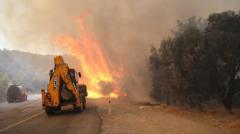
Flames don't care about tourist seasons or historical olive groves. When tinder-dry timber meets fierce seasonal winds, entire landscapes turn to ash in hours.
Southern Europe is burning again. Wildfires are tearing through parts of the region, and the human cost is climbing. Recent reports confirm that two firefighters have died responding to an intense blaze on the southern Greek island of Crete. This disaster highlights a brutal reality. Summer across the Mediterranean has transformed into a high-stakes endurance test for emergency crews and local residents alike.
You might wonder why these fires spread with such terrifying speed. It isn't just bad luck. It's a combination of extreme heatwaves, prolonged dry spells, and strong winds that turn small brush fires into walls of flame. When temperatures climb past 40 degrees Celsius, vegetation dries out completely. It becomes kindling waiting for a spark.
The Growing Crisis Across Southern Europe
Greece isn't the only place feeling the heat. Countries across southern Europe face similar threats year after year. Spain, Portugal, and Italy regularly deploy thousands of firefighters to contain rapidly moving blazes.
Local authorities often issue mandatory evacuations for thousands of residents and tourists. In places like Crete and parts of the Peloponnese, fires frequently threaten coastal resort towns and rural villages. People are forced to flee with whatever they can carry. Some even escape toward the sea, waiting for rescue boats while smoke chokes the horizon.
"Extreme heat is now one of the defining public health challenges of a warming world."
Emergency services face impossible choices. They must protect populated areas, save homes, and try to stop the fires from jumping containment lines. Yet, shifting winds often render ground crews and water-dropping aircraft temporarily helpless.
Why Firefighting Efforts Face Massive Hurdles
Battling a Mediterranean wildfire is exhausting work. Crews deal with brutal terrain, steep hills, and thick brush that make vehicle access nearly impossible.
- High Winds: Gales fan the flames, blowing embers across firebreaks and starting new blazes miles ahead of the main front.
- Limited Water Access: Remote areas often lack infrastructure, forcing planes to scoop water continuously from the sea.
- Extreme Heat: Firefighters wear heavy protective gear in temperatures that push the human body to its absolute limit.
What Needs to Change
Throwing water at active fires is only a temporary fix. Experts argue that prevention requires serious funding shifts. Governments must invest heavily in controlled burns, clearing underbrush during cooler months, and upgrading early-warning sensor networks.
If you live in or travel to high-risk areas during the summer months, stay informed. Monitor local emergency alerts, know your evacuation routes, and never ignore fire ban warnings. The landscape is changing, and ignoring the risk is no longer an option.