The air raid sirens didn't wail until after the buildings started shaking.
Think about that for a second. For years, civilians in Kyiv relied on early warning systems to give them those precious, terrifying minutes to run to a subway station or a basement. But shortly after midnight on July 8, 2026, the system failed them. The explosions came first. The sirens came second. It's a terrifying development in a war that has dragging on for over four years, showing a brutal reality of evolving missile tech.
When you read mainstream headlines stating that Russian attacks kill 3 across Ukraine, it's easy to look at the low casualty number and think it was a minor night of fighting. It wasn't. The numbers hide a massive shift in how this war is being fought in the skies. Russia launched one of its largest coordinated drone and missile salvos in months, testing Ukraine's air defenses to their absolute limits. At the exact same time, Kyiv didn't just sit back and take it. They launched an aggressive, deep-penetration drone campaign hitting Russia's economic lifeline, targeting oil tankers and gas pipelines deep inside Russian territory.
This isn't just another day of trading blows. It's a high-stakes chess match where both sides are running out of pieces, changing their rules, and striking where it hurts most.
The Terror of the Unwarned Strike in Kyiv
Kyiv faced an intense aerial assault as Russian forces hit the capital for a second consecutive night. What made this raid uniquely horrifying for residents was the total lack of warning. Usually, radar picks up incoming threats over the border or coming down from Belarus, triggering city-wide alarms. This time, the thunder of explosions woke people up before the smartphone alerts even flashed.
The city administration reported that the overnight strike killed one woman and injured two others. The physical damage tells a story of an attack aimed at crippling the city's internal logistics. Debris and direct hits damaged several administrative buildings, warehouses, a garage complex, and several municipal trams. It paralyzed parts of the local transit system and left rescue workers sorting through smoldering metal in the dark.
Russia's Defense Ministry quickly released a statement to justify the strike. They claimed their forces hit military industrial assets, specifically pointing to a plant that manufactures components for Ukraine's Flamingo cruise missiles, alongside a facility used for assembling mid-range and long-range strike drones. Whether those targets were actually hit or if civilian infrastructure took the brunt of the damage remains part of the usual information war. The strategic takeaway is clear. Moscow wants to starve Ukraine of its domestic missile-making capabilities.
Breaking Down the Math of Air Defense Failure
To understand why the missiles got through, you have to look at the raw numbers provided by Ukraine's Air Force. Russia didn't just send a few high-tech weapons. They tried to overwhelm the system through sheer volume.
The attack consisted of 169 long-range strike drones and seven missiles. Five of those missiles were ballistic. The air defense teams worked through the night, managed to shoot down or electronically jam 139 of the drones, and forced two anti-radar missiles off course.
The defense failed against the heavy armor. All five ballistic missiles and 20 of the explosive drones broke through the defensive shield. They successfully struck targets across 15 different locations in the country.
This highlights a massive issue that military experts have warned about for a long time. Ballistic missiles move too fast and strike too vertically for standard anti-aircraft systems to handle without specialized interceptors like the Patriot system. When a swarm of 169 drones fills the radar screens, it creates blinding noise. The defense forces have to choose what to shoot at. While they are busy swatting down cheap, slow-moving Shahed drones, the ballistic missiles slip through the net. Ukraine simply doesn't have enough sophisticated air defense batteries to protect every major city simultaneously. Russia knows this, and they're exploiting the gap.
Kharkiv and Zaporizhzhia Face Continuous Destruction
While Kyiv deals with high-altitude missile threats, cities closer to the border are getting pulverized by shorter-range weapons. In Kharkiv, the reality is bleak. Overnight strikes killed two people and injured 20 others. Mayor Ihor Terekhov stated that the city was hit by a rapid series of strikes that gave residents zero time to react.
Kharkiv is so close to the Russian border that missiles fired from Belgorod can hit the city center in under a minute. Lately, Russia has relied heavily on guided aerial bombs, known as KABs. These are old, heavy Soviet gravity bombs fitted with cheap satellite guidance wings. They are incredibly destructive, cheap to make, and almost impossible to intercept once dropped from a plane.
Further south in Zaporizhzhia, the story is the same. Regional head Ivan Fedorov confirmed that a Russian guided bomb tore through a residential area, injuring an elderly man and a woman. These aren't precise military operations. They are structural demolition tactics used to make frontline Ukrainian cities unlivable, forcing civilians to flee and draining the state's economic resources to deal with constant emergency responses.
Ukraine Retaliation Hits the Shadow Fleet
If Moscow thought they could strike Kyiv with impunity, they got a rude awakening. Kyiv didn't play defense. They launched an incredibly aggressive long-range counter-offensive deep into the Russian federation. President Volodymyr Zelenskyy confirmed that Ukrainian long-range strike drones flew hundreds of miles past the border, reaching the Saratov, Tatarstan, Bashkortostan, and Voronezh regions.
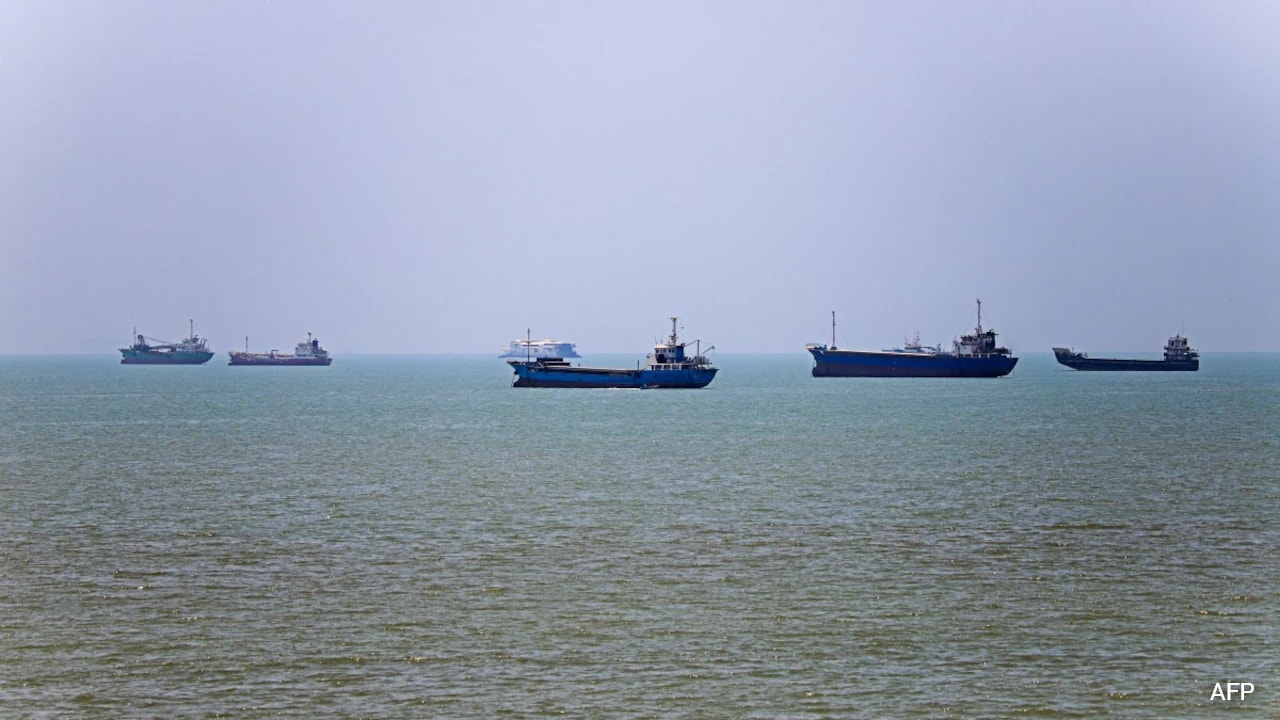
The most fascinating part of this counter-strike happened in the waters of Taganrog Bay in the Sea of Azov. Ukrainian Unmanned Systems Forces, specifically the Kairos drone unit, conducted a massive operation against Russia's maritime trade. They targeted the "shadow fleet"—the fleet of aging, uninsured tankers Russia uses to smuggle its oil past Western sanctions to keep its war machine funded.
Rostov regional Governor Yuri Slyusar admitted that Ukrainian drones hit and severely damaged two oil tankers in the bay. The strike was violent enough that the crew of one vessel had to be completely evacuated. Two crew members were injured. Slyusar tried to downplay the economic impact by pointing out that there was no oil spill because the tankers were heading toward the port of Rostov-on-Don completely empty.
But empty tankers are actually a bigger win for Ukraine's strategy. By hitting the ships before they load up, Ukraine avoids creating an environmental disaster in its own backyard while successfully removing the vessels from the shipping rotation. According to reports from drone unit commanders, Ukrainian forces have struck 19 shadow fleet tankers, a cargo ship, and a ferry in the Kerch region over a single 72-hour window. This is a massive blow to Russia's black-market logistics.
Target Gazprom and the Pipeline to Turkey
The economic warfare didn't stop at the sea. Ukrainian drones flew deep into the Krasnodar region to hit Russia's state-controlled gas giant, Gazprom. The target was the Krasnodarskaya compressor station. This isn't just any local utility company. It is the primary engine serving the Blue Stream natural gas pipeline, which pumps Russian gas directly across the Black Sea to Turkey.
Gazprom officials confirmed the drone strike but claimed it failed to disrupt the actual flow of gas. Kremlin spokesman Dmitry Peskov was furious, calling the strike a dangerous assault on critical international energy systems. He publicly called on Turkey and other international buyers to pressure Kyiv into stopping these operations.
This tells us a lot about Ukraine's updated war strategy. They aren't just trying to win trenches in the Donbas anymore. They are actively trying to shut off the financial valves that pay for Russia's military. By hitting the infrastructure that connects Russia to its remaining economic allies like Turkey, Kyiv is forcing those neutral countries to realize that doing business with Moscow comes with a physical risk to their own energy security.
Political Friction on the Sidelines of NATO
All of this violence exploded exactly as President Zelenskyy arrived in Turkey. He wasn't just there to talk about pipelines. He was there to attend the NATO summit and secure his country's long-term survival.
The real drama happened behind closed doors, where Zelenskyy met with U.S. President Donald Trump. The relationship between the two leaders has always been complicated. Trump has repeatedly claimed he could end the war in 24 hours, often hinting at forcing territorial compromises. Zelenskyy used this face-to-face meeting to show Trump the physical evidence of what Russia is doing, arguing that giving up land won't stop the ballistic missiles from falling on Kyiv.
Ukraine is in a race against time. They need immediate commitments for more air defense systems, more interceptor missiles, and permission to use Western-supplied weapons to hit missile launchers deep inside Russia before they can fire. The fact that Russia launched such a devastating strike while Zelenskyy was actively negotiating with Western leaders was no coincidence. It was a blunt message from Vladimir Putin to the international community, showing that Russia doesn't care about diplomatic summits.
Moving Past the Headlines
When you see the news reporting that Russian attacks kill 3 across Ukraine, don't let the simplicity of the statement trick you. The war is changing shape. The front lines on the ground might look stagnant, but the strategic conflict in the air and on the water is accelerating at a terrifying pace.
Ukraine is suffering from a severe deficit in advanced air defenses, making its civilian centers vulnerable to sophisticated ballistic missile tactics. Yet, they have managed to build a massive, independent drone program that is currently dismantling Russia's shadow fleet and threatening its international gas pipelines.
If you want to support the tracking of these events or keep an eye on how these strategic resource shifts affect global energy prices, your next step should be monitoring the official updates from independent maritime tracking groups and the Institute for the Study of War. They provide the raw data on ship movements and air defense success rates that corporate media outlets routinely ignore. Watch the shipping lanes in the Sea of Azov over the next few weeks. That is where the real economic damage is being measured.