Pakistan-occupied Kashmir is slipping from Islamabad's grasp. For decades, the military establishment maintained a tight grip on the region through a carefully manufactured narrative and sheer force. That illusion has shattered. Mass demonstrations, shutter-down strikes, and violent clashes have transformed the territory into a geopolitical pressure cooker. The Joint Awami Action Committee, a grassroots movement born out of sheer economic desperation, has mobilized thousands of citizens. They are demanding cheap flour, fair electricity rates, and an end to the elite privileges enjoyed by ruling bureaucrats.
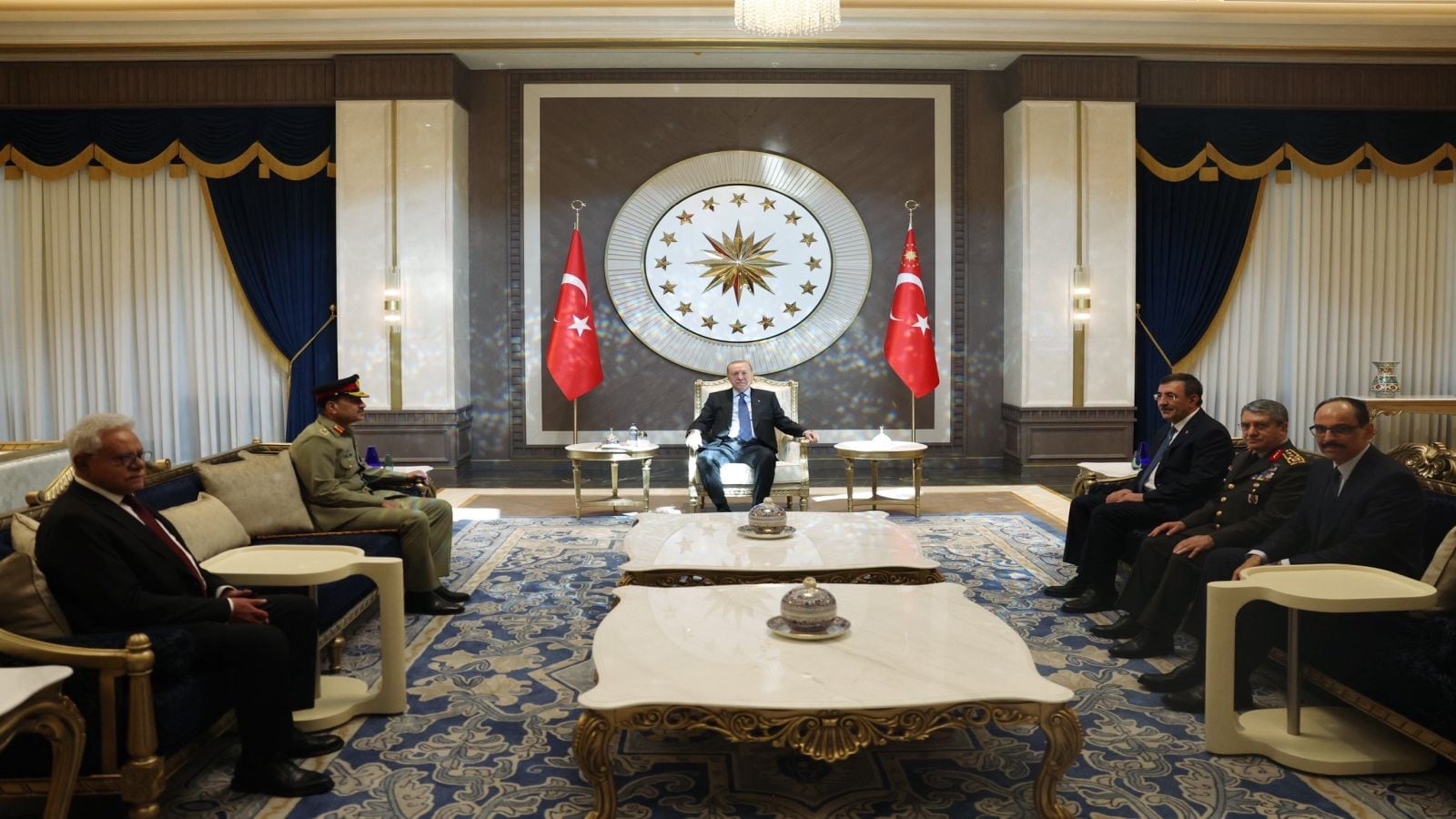
While the territory burned and security forces opened fire on civilians, Pakistan Army Chief General Asim Munir took off for an official visit to Türkiye. The optics were terrible. It exposed a deep, systemic disconnect between a military elite chasing international validation and a local populace pushed past the brink of survival. The crisis is not just a passing phase of civil unrest. It is a fundamental rejection of Islamabad’s exploitative economic policies and heavy-handed governance.
The Breaking Point of Economic Exploitation
The underlying anger has been building for decades. Residents are furious because their region generates immense hydroelectric power, yet they face skyrocketing electricity bills and crippling blackouts. The Mangla Dam, one of the largest water reservoirs in the world, sits right in their backyard. The local population watches the electricity generated from their rivers flow straight into the industrial grids of Punjab and Sindh, while they are left in the dark, paying inflated tariffs loaded with arbitrary taxes.
Subsidized wheat flour, a lifeline for millions of low-income families, became another flashpoint. The Pakistani government slashed these vital subsidies as part of its desperate attempts to satisfy International Monetary Fund austerity mandates. When the price of basic bread skyrockets while the local elite continues to drive luxury government vehicles on state-funded fuel, a popular uprising becomes inevitable. People stopped asking nicely. They organized, formed committees, and shut down entire cities.
The Security Apparatus Blunder
The military establishment responded with its traditional playbook. They used brute force. The state banned the Joint Awami Action Committee under anti-terror laws, thinking it would scare people back into their homes. It had the opposite effect. Activists, traders, and everyday citizens flooded the streets of Muzaffarabad, Rawalakot, and Mirpur.
Paramilitary forces and local police deployed tear gas and live ammunition to crush the dissent. Dozens of civilians lost their lives in the chaos, and hundreds more suffered severe injuries. The state tried to cut off the flow of information. They imposed complete communication blackouts, shutting down mobile internet networks and blocking local news channels.
In the digital era, total information censorship is incredibly difficult to sustain. Videos of police brutality leaked out anyway, shared via satellite connections and border-area networks. The diaspora in the United Kingdom and Europe immediately picked up the footage. Within days, massive demonstrations erupted outside Pakistani consulates in British cities like Bradford and London. Dozens of British parliamentarians formally questioned their foreign secretary about the state-sponsored violence. The harsh crackdown did not silence the territory. It turned a domestic economic grievance into a glaring international human rights scandal.
Asim Munir Travels Abroad While the Region Burns
The timing of General Asim Munir's diplomatic excursion to Ankara added fuel to the fire. As the supreme commander of the most powerful institution in Pakistan, his primary focus should have been de-escalating a localized rebellion. Instead, he chose to fly out for high-level military meetings with Turkish defense officials. The visit aimed to secure defense procurement deals and project an image of regional stability.
Back home, the narrative fell apart completely. Protesters explicitly targeted the army, chanting slogans demanding the removal of Pakistani security forces from the region. This represents a massive shift in local dynamics. Historically, dissent was carefully channeled against civilian puppet governments. Now, the anger is directed straight at the Rawalpindi military headquarters.
The military high command completely miscalculated the resolve of the Joint Awami Action Committee. They assumed the movement would fizzle out once the top leadership was thrown into detention cells. They failed to realize that the movement is completely decentralized. When one coordinator gets dragged away by intelligence operatives, three more step up to take their place. The traditional strategy of using intimidation simply stopped working because the population has nothing left to lose.
The Geopolitical Fallout
Islamabad is terrified of the shifting sentiment. For seventy years, Pakistan used the territory as a central pillar of its foreign policy, presenting it as a region eager for Pakistani governance. The sight of thousands of local residents fighting Pakistani rangers in the streets destroys that narrative on the global stage.
The Indian Ministry of External Affairs took notice immediately. New Delhi issued sharp statements urging the international community to hold Pakistan accountable for systematic human rights violations and rampant police brutality. The geopolitical tables have turned. Pakistan can no longer easily claim the moral high ground on the broader Kashmir dispute when its own administered territories are actively trying to cast off its control.
The financial math also exposes the absolute bankruptcy of the current administrative system. The federal government eventually scrambled together a multi-billion rupee relief package to artificially lower the prices of flour and electricity. It was too little, too late. The package functioned as a temporary band-aid on a deep, infected wound. The money had to be diverted from other cash-strapped public sectors, further destabilizing an already fragile national economy. The state cannot afford to keep subsidizing a rebellious populace, yet it cannot afford the geopolitical cost of letting the protests continue indefinitely.
The Looming Institutional Collapse
The core problem goes far beyond bread and electricity meters. The people are explicitly rejecting the political structure imposed upon them. The region features a legislative assembly that is largely perceived as a rubber-stamp body controlled entirely by the Ministry of Kashmir Affairs in Islamabad. Local politicians are viewed as corrupt administrators whose primary job is to pocket federal funds while letting local infrastructure crumble.
Compounding this political alienation is the controversial reservation of seats in the local legislature for refugees living in other parts of Pakistan. Local activists argue these seats are used to rig regional elections and ensure that whoever rules Islamabad can easily install a submissive local prime minister. The local supreme court ruled that these seats are protected under the existing framework, meaning any change requires a complex constitutional amendment. This legal deadlock guarantees that political resentment will keep festering.
The military thought they could manage the region through a combination of engineered elections and intelligence oversight. Instead, they have created a population that views the Pakistani state not as a protector, but as an occupying economic vampire. Every time a ranger pulls a trigger against a local protester, the foundational myths of the state die a little more.
What Happens From Here
The old status quo is gone for good. If you want to understand where this crisis goes next, look at the concrete shifts happening on the ground right now.
First, keep a close watch on the decentralized strike networks. The Joint Awami Action Committee is transitioning from street rallies to long-term economic non-cooperation. They are organizing mass tax strikes and refusing to pay utility bills en masse. The state cannot arrest every single homeowner who refuses to pay an inflated electricity invoice.
Second, watch the political alignment of the regional civil service and local police forces. During the height of the recent crackdowns, severe friction emerged between local police officers and the federal paramilitary forces sent to enforce order. Local cops do not want to shoot their own neighbors to protect a policy made in Islamabad. If the local administrative machinery stops cooperating with federal directives, the military's control over the territory will completely evaporate.
The Pakistani military establishment faces a brutal choice. They can either grant genuine regional autonomy and give up their economic extraction policies, or they can continue using violence and watch the territory break away entirely. General Asim Munir can take as many foreign trips as he wants, but the real fire is burning at home, and it is running out of oxygen to contain.


