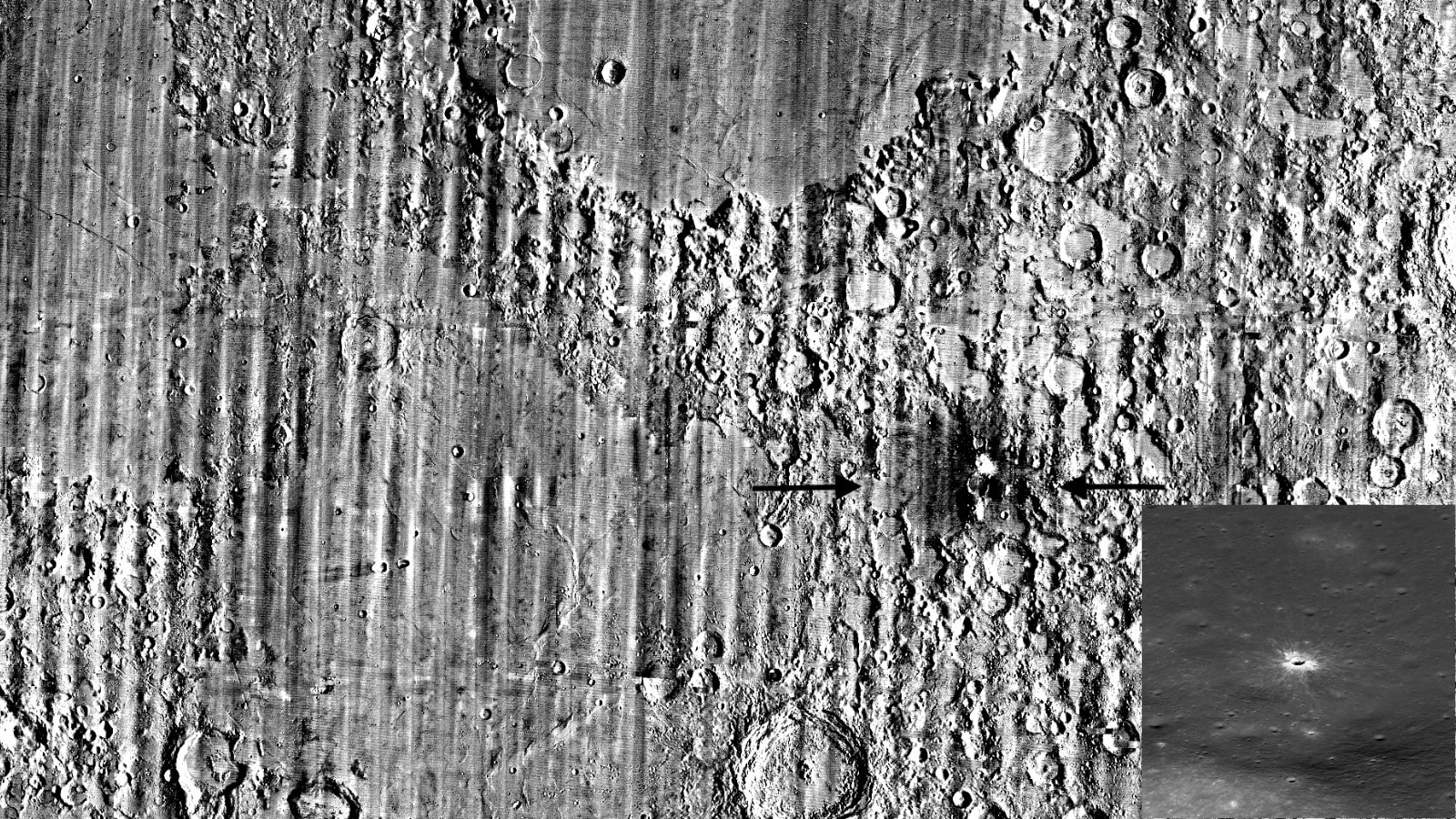
A building-sized space rock smashed into the Moon in early 2024, and nobody noticed for over a year.
When NASA researchers finally spotted the aftermath during a routine data-quality check, they realized they were looking at a statistical anomaly: the largest newly formed impact crater ever discovered in our solar system. Officially named McGetchin after pioneering lunar geologist Tom McGetchin, the crater spans a staggering 728 feet across and plunges 141 feet deep. That puts it larger than Rome's Colosseum.
If you think space rocks only hit the Moon in science fiction or ancient history, look closer. This event proves the lunar surface is actively, violently changing right now.
Catching a Ghost Impact in Real Time
Finding a crater this large on Earth or Mars makes sense because atmospheres alter surfaces or erosion hides tracks. But the Moon has virtually no atmosphere to slow down incoming debris. Comets and asteroids strike it regularly. What makes McGetchin special is its sheer scale combined with the fact that scientists caught its birth certificate.
Robert Wagner, an image-processing specialist working with data from NASA's Lunar Reconnaissance Orbiter Camera (LROC), noticed an unusual bright spot circled by a dark halo while comparing global lunar maps.
"It was by far the most obvious impact debris pattern I've ever seen in one of these images," Wagner said in a NASA statement. "I just stopped, dropped everything, and started looking into what that spot was."
By comparing before-and-after imagery, the research team pinned down the exact window of destruction: the asteroid or comet hit the Moon's eastern edge sometime between April 11 and May 22, 2024. Crater production models indicate an impact of this exact magnitude occurs only once every 132 years. It is a rare, once-in-a-generation front-row seat to planetary geology.
The Mystery of the Four-Mile Cold Spot
Finding the hole in the ground was only half the surprise. When scientists turned the Lunar Reconnaissance Orbiter's thermal instrument, Diviner, toward the site, they uncovered a bizarre thermal anomaly.
A sprawling four-mile-wide region surrounding McGetchin registers about 16 degrees Fahrenheit cooler at night than the surrounding lunar terrain.
Why does a cosmic explosion leave a freezing footprint?
The impact violently churned and "fluffed up" the lunar regolith—the loose soil and rock covering the surface. This pulverized material is less dense than tightly packed moon rock, meaning it cannot retain heat effectively during the brutal two-week lunar night. Researchers cross-compared other recent craters and found this chilling effect happens consistently, proving that major impacts alter the lunar landscape far beyond the physical rim of the crater itself.
Why This Matters for Future Moon Bases
You might wonder why a giant hole on the eastern edge of the Moon matters to anyone living on Earth.
Space agencies like NASA and China's national space program are actively planning crewed surface missions, long-term habitats, and permanent lunar bases. Knowing how dynamic and violent the modern lunar environment is changes mission safety parameters.
If a three-to-six-story building-sized space rock can crash into the Moon completely unannounced and carve out a crater the length of two football fields, future astronauts and equipment face real, unshielded risks. Furthermore, the fluffy, low-density regolith found miles outside these fresh craters changes how mechanical rover wheels and heavy landers will interact with the terrain.
Track orbital changes, keep an eye on fresh debris mapping, and factor impact mechanics into structural safety models before sending permanent crews into the lunar dust.


