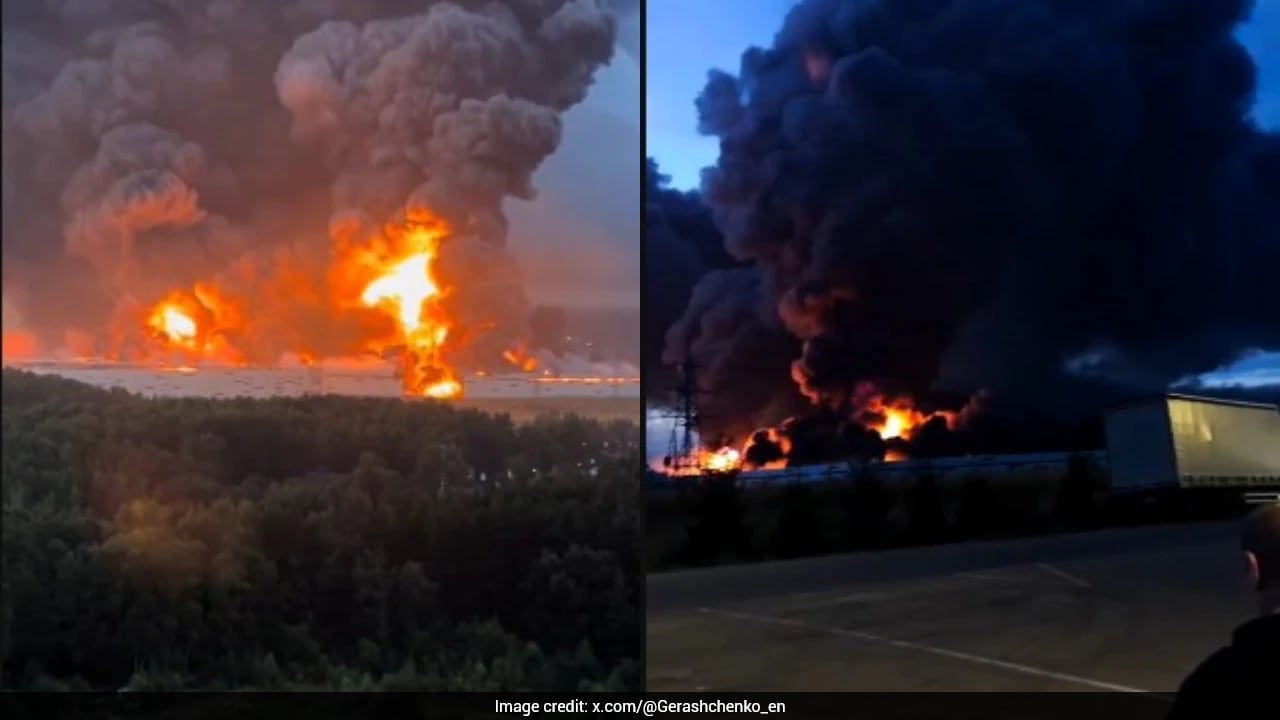
Air defense metrics don't usually capture headlines unless the numbers cross into absurdity. When Moscow authorities reported that hundreds of drones swarmed Russian airspace in a single night, it signaled a fundamental evolution in modern long-range warfare.
You aren't looking at isolated tactical strikes anymore. Kyiv's strategy has scaled into industrial-level drone saturation designed to exhaust radar grids, drain interceptor stocks, and hit critical logistics far beyond the front lines. Let's break down what actually happened during these massive overnight barrages, why the numbers matter, and what both sides are trying to achieve.
The Scale of the Swarm
When the Russian Ministry of Defence claims nearly 600 to 800 fixed-wing drones were intercepted across multiple oblasts and the Moscow region, the sheer volume tells a story of domestic Ukrainian production scaling up rapidly. Long-range platforms like the FP-1 or Liutyi models aren't prototype novelties anymore. They're manufactured in high volume, purpose-built to navigate hundreds of kilometers of electronic interference.
Targeting logistics hubs, fuel depots, and regional distribution centers alters the economic calculus of the conflict. For instance, recent strikes impacting major commercial infrastructure like warehouses near Moscow show that economic nodes inside Russia are no longer sanctuary zones.
What the Official Numbers Miss
Governments love totals because totals hide context. When officials announce hundreds of downed UAVs, they rarely specify:
- How many units actually reached their programmed coordinates.
- The financial cost disparity between cheap composite airframes and expensive surface-to-air missiles.
- The secondary damage caused by falling debris over populated suburbs.
An 83-year-old man dying in a Moscow suburb because intercepted debris struck a residential building proves that air defense success still carries a heavy local toll. Interception doesn't mean zero impact.
The Strategic Logic Behind Mass Drone Saturation
Why launch hundreds of drones at once? Simple mathematics. Air defense systems operate on radar tracks, fire-control channels, and missile inventories. If you throw a massive wave of low-cost platforms at a target area, you force defenders into a terrible choice. Do you fire a multi-million-dollar interceptor at a decoy, or do you save it and risk a direct hit on a power substation?
Ukraine's focus on economic and logistics targets—such as facilities linked to dual-use components or large retail distribution networks—aims to squeeze Russian state finances. It's asymmetrical warfare at scale. While Russia retains the capacity to launch heavy missile and drone volleys back at urban centers like Kyiv and Kryvyi Rih, the constant buzzing of air raid sirens over Moscow normalizes the war for Russian citizens in a way state television tries hard to avoid.
The Wear and Tear on Both Sides
Don't assume either military has an infinite runway for this style of conflict. Ukraine burns through thousands of strike components monthly, relying heavily on international supply chains and localized clandestine workshops. Meanwhile, Russia's vast territorial depth forces them to stretch air defense assets across thousands of miles, leaving gaps that clever route-planning can exploit.
The human cost continues to tick upward on both sides of the border, with regional governors reporting casualties from falling scrap metal, direct impacts, and secondary fires. Until production lines slow down or a credible diplomatic off-ramp materializes, expect more nights where the sky above western Russia fills with the angry buzz of hundreds of small engines.
Watch the manufacturing output reports and component supply chains rather than getting distracted by daily casualty claims. That's where the real trajectory of this air war is being decided.
Massive Ukrainian drone attack on Russia kills at least six, says Moscow
This video provides an on-the-ground look at the scale of large-scale drone strikes hitting Russian logistics and the resulting regional fallout.
http://googleusercontent.com/youtube_content/1