Justice moves slow. Sometimes it feels like it isn't moving at all. For sixteen years, the families of three bank workers killed in central Athens carried a heavy, silent burden. The culprits who threw petrol bombs into a packed bank during the height of the anti-austerity riots in 2010 walked free. That changed when Greek police arrested 2 people over 2010 fatal arson attack on Athens bank, signaling a massive breakthrough in a cold case that fundamentally reshaped Greek politics.
The Directorate for Combating Organized Crime spearheaded the operation. Two 42-year-old men are now in custody in Athens. Meanwhile, a 46-year-old woman is being hunted in the United Kingdom under an international arrest warrant. Investigators spent months re-examining old case files, matching photographs, and comparing surveillance footage across dozens of protests. The result is the sudden cracking open of a file many thought was buried forever.
This isn't just another crime story. The Marfin Bank firebombing is a core trauma for modern Greece. It marked the exact moment the anti-austerity protest movement lost its moral high ground and fractured under the weight of political violence.
The Tragedy on Stadiou Street
It happened on May 5, 2010. Athens was a powder keg. Over 200,000 people filled the streets to protest the country's first international bailout. The socialist government had just signed an agreement for billions in emergency funds from the European Commission, the European Central Bank, and the IMF. The terms were harsh. Regular people faced brutal budget cuts, pension slashes, and tax hikes.
As the massive march crawled up Stadiou Street toward Syntagma Square, chaos erupted. Masked youths clashed violently with riot police. Tear gas filled the air.
Then came the flashpoint at number 23 Stadiou Street. A branch of the Marfin-Egnatia Bank stood right along the protest route. A small group of hooded individuals approached the building. They smashed the front glass windows. They didn't just smash them to loot. They poured fuel inside and hurled multiple Molotov cocktails into the building.
Thick, black smoke filled the ground floor instantly. Inside, twenty-five to thirty employees were working. They were trapped.
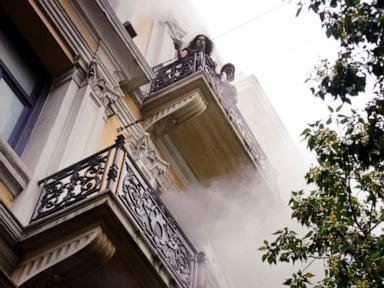
Most workers panicked. Some managed to smash open a skylight leading to the roof, crawling through a mesh opening and leaping onto an adjacent building to survive. Others crowded onto narrow first-floor balconies, coughing and pleading for help. But three people never made it out.
Angeliki Papathanassopoulou was 32 years old and four months pregnant. Epameinondas Tsakalis was 36. Paraskevi Zoulia was 35. They ran upstairs to the third floor to escape the flames. The move proved fatal. The smoke overtook them almost immediately.
The forensic report paints a horrifying picture. Toxic gases from burning plastics and stationery filled the upper floors. The victims lost consciousness within seconds and died from suffocation. When rescuers finally reached them, their faces were blackened by soot.
Outside, the scene turned even uglier. Parts of the crowd actually cheered as the building burned. Some extremists shouted at the trapped workers, telling them they deserved it for working during a general strike. It was a dark, chilling low point for civil unrest in Europe.
The Corporate Negligence and Failed Early Trials
The immediate aftermath brought deep anger, but the subsequent judicial process left a bitter taste in everyone's mouth. For years, the actual bombers remained ghosts. Nobody could identify the masked figures who threw the petrol bombs.
Instead, the legal system focused on the bank's management. It turned out the branch lacked basic safety features. There was no emergency exit. The windows weren't fire-resistant. The staff was forced to work despite a major nationwide strike because they feared losing their jobs in an economy that was already tanking.
A Greek court later sentenced three bank executives to heavy prison terms for manslaughter by negligence. Two executives received 22-year sentences, while the branch manager received five years. The courts also ordered massive compensation payouts to the families of the victims and survivors, totaling millions of euros.
Yet, the physical killers remained free. One suspect went to trial years ago but walked away acquitted due to a total lack of reliable evidence. The anarchist and anti-authoritarian groups blamed for the attack denied involvement, with some calling the deaths tragic collateral damage. The investigation went cold. The files went into deep storage.
How Investigators Finally Cracked the Case
The breakthrough didn't happen by accident. It is the result of a targeted re-evaluation by the newly formed organized crime unit. The Greek Ministry of Citizen Protection ordered the file reopened after receiving specific tips and recognizing that modern digital forensic tools could yield new results from old visual data.
Detectives systematically cross-referenced every single piece of photo and video evidence from May 5, 2010. They compared the facial structures, clothing choices, and physical statics of the masked individuals with data collected from separate anarchist protests over the subsequent decade.
The suspects didn't just disappear after 2010. They stayed active within the local anti-authoritarian scene. Over sixteen years, they left digital footprints and physical markers at other events.
The two 42-year-old men arrested in Athens allegedly played a direct, physical role in executing the arson. The 46-year-old woman, who fled Greece six or seven years ago to live permanently in the UK, is believed to have played a secondary, supporting role. British police are now working with Greek authorities to execute the international warrant and send her back to Athens to face a magistrate.
The Deep Political Scar That Never Healed
You can't overstate how much this specific event changed Greece. Before the Marfin fire, public support for the anti-austerity movement was massive. Millions of ordinary citizens stood shoulder-to-shoulder with radical activists.
The smoke from Stadiou Street ruined that unity. Regular people saw that the protests weren't just about fighting economic injustice anymore. They were turning deadly. Participation in anti-bailout strikes dropped significantly in the months following the tragedy. The broader activist movement faced intense public backlash and isolation.
The arrests bring a sense of closure, but they also arrive at a tense moment. Just hours before these Marfin arrests, anti-terror police in Thessaloniki and Crete arrested three people over a separate, recent string of bombings that killed a woman in a car explosion. Political violence is creeping back into the Greek landscape, making these cold case arrests a clear message from the state: we don't forget.
What Happens Next
The two arrested men are currently being held in Athens, waiting to testify before the 3rd Regular Investigating Magistrate. The legal process will move forward swiftly as prosecutors prepare formal indictments for multiple counts of intentional homicide and causing an explosion resulting in death.
If you are following this case, watch the extradition process in the United Kingdom. The speed at which British authorities hand over the female suspect will show how smoothly international counter-terrorism cooperation is working post-Brexit. The coming weeks will reveal if the state's evidence is strong enough to secure a conviction where previous investigators failed, finally closing the book on one of the darkest days in modern Greek history.