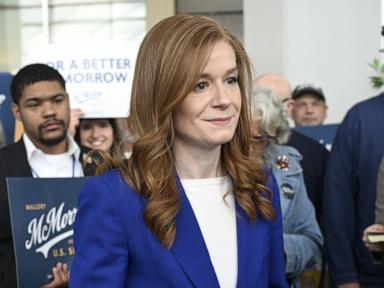
The Democratic primary for Michigan’s open U.S. Senate seat just experienced a massive shakeup. State Senator Mallory McMorrow officially suspended her campaign on Sunday, July 5, 2026. Her exit leaves the race just one month before the August 4 primary election.
This choice turns a crowded, messy primary into a direct, two-person battle. Mainstream moderate Representative Haley Stevens will face off against surging progressive former health official Abdul El-Sayed. McMorrow was once seen as a rising star with massive national potential. Her departure proves just how brutal and expensive the fight for control of the Senate has become. Expanding on this idea, you can also read: Why Taiwan Just Brought Back Cold War Style Anti Communist Classes.
If you're wondering why she left now, the answer boils down to money and political math.
The Real Reason McMorrow Walked Away
On paper, McMorrow had a compelling narrative. She gained national fame in 2022 after a viral floor speech defending herself against baseless accusations of "grooming." She used that momentum to help flip the Michigan State Senate for Democrats for the first time in nearly forty years. Observers at The New York Times have shared their thoughts on this matter.
But national viral moments don't automatically pay for television ads in a state with multiple expensive media markets like Detroit, Grand Rapids, and Flint.
McMorrow ran a campaign that refused corporate PAC money. That stance looks great on a progressive resume, but it left her exposed when outside groups decided to drop a financial hammer on the race.
The primary driver behind her exit was a historic influx of outside cash. The United Democracy Project, a super PAC connected to the pro-Israel group AIPAC, dumped over $20 million into television advertising to support Haley Stevens and attack Abdul El-Sayed. Two other allied PACs added another $15.5 million to boost Stevens.
Faced with a $35 million establishment war chest, McMorrow found her campaign completely drowned out on the airwaves. She occupied a narrow ideological lane between Stevens and El-Sayed. As the race polarized into a bitter fight between the party establishment and the progressive left, her path to victory vanished. Rather than burn through remaining donor cash in a race she couldn't win, she chose to step aside.
A Brutal Two Person Showdown
McMorrow's exit sets up an immediate ideological collision. Voters now face a crystal-clear choice regarding the future direction of the Democratic Party in swing states.
On one side is Haley Stevens. She has the full backing of national Democratic leaders and local heavyweights. Right after McMorrow dropped out, Michigan Attorney General Dana Nessel immediately announced her endorsement of Stevens. The establishment argument is pure pragmatism: Stevens is a proven vote-getter in moderate suburban areas, making her the safest bet to defeat Republican nominee Mike Rogers in November.
On the other side is Abdul El-Sayed. He has caught fire with the progressive base, recently landing a major endorsement from Representative Alexandria Ocasio-Cortez. Following McMorrow's announcement, El-Sayed didn't waste time. He immediately made a play for her voters while taking a direct shot at the party establishment. On social media, he argued that the same party insiders who tried to bully McMorrow have spent millions trying to drown out his movement.
The remaining candidates face their first direct test on Tuesday during a televised debate. With McMorrow out of the picture, expect a fierce debate over the role of big money in politics and what kind of candidate can actually win a general election in Michigan.
Why the Michigan Senate Seat Matters to Everyone
Don't view this as just a local political story. The stakes in Michigan are massive for the entire country.
Republicans currently hold a 53-seat majority in the U.S. Senate. If Democrats want any hope of winning back control of the upper chamber, holding the seat being vacated by retiring Democratic Senator Gary Peters isn't optional. It's a mandatory requirement.
The Cook Political Report rates the Michigan Senate race as a complete toss-up. Michigan has a track record of flipping back and forth between parties. The eventual Democratic nominee will face Republican Mike Rogers, a formidable former congressman who narrowly lost a Senate bid to Elissa Slotkin in the previous cycle. Rogers is resting, waiting, and building up resources while the Democrats tear each other apart in a primary that keeps getting nastier.
What Happens Next
If you're tracking this race or trying to figure out how to direct your own political energy, keep your eyes on three specific developments over the next few days.
First, look at where McMorrow’s endorsements go. While she stated that she will fully support whoever wins the August 4 primary, she hasn't endorsed Stevens or El-Sayed yet. If she picks a side before the primary, it could shift a significant block of undecided suburban voters.
Second, watch the mailboxes. Absentee ballots have already been sent out to Michigan voters. McMorrow’s name will still appear on the physical ballot. The big question is how many early voters already marked her name down, and how quickly her campaign can inform voters that a vote for her is now a wasted vote.
Finally, keep an eye on the money trail. Look to see if the super PACs backing Stevens slow down their spending now that the moderate field has consolidated, or if they double down to completely crush El-Sayed's progressive challenge before August.
.jpg)


