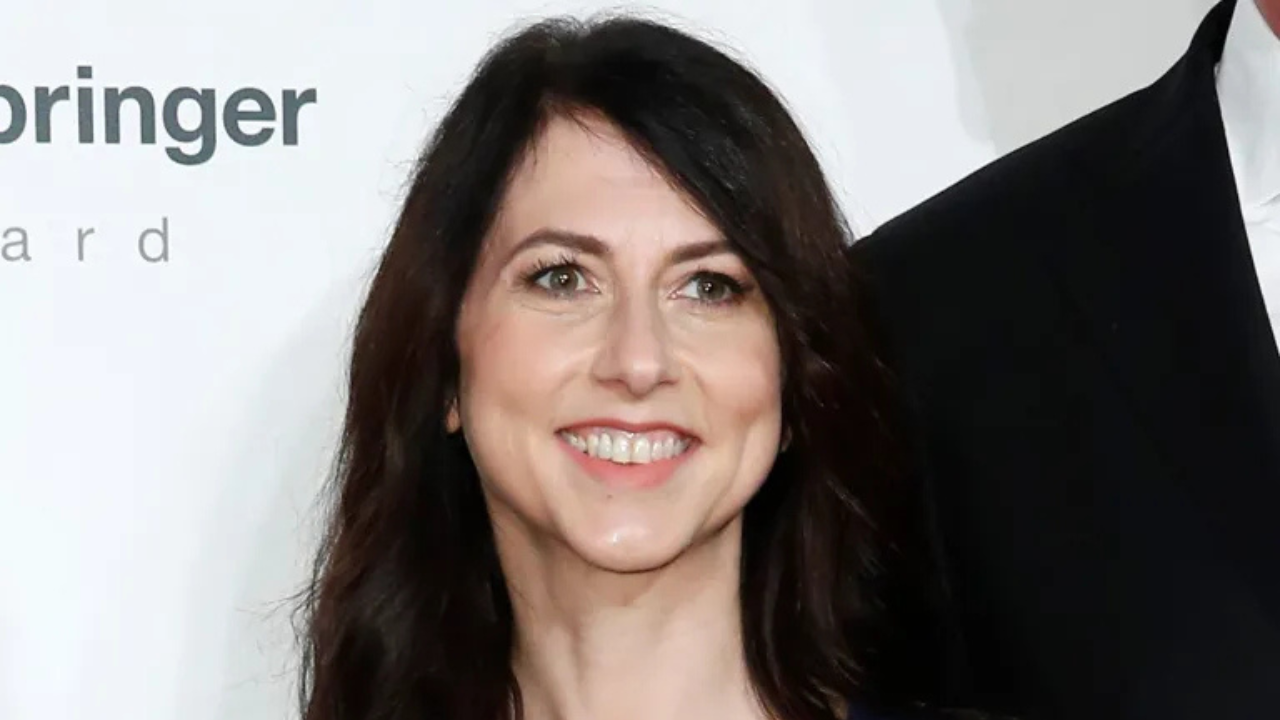
Billionaires usually give away their money with enough strings attached to tie an anchor down. They want their names plastered on buildings, regular updates on exactly where every cent goes, and strict rules that keep charity leaders jumping through endless administrative hoops.
MacKenzie Scott just wrote a textbook on how to obliterate that entire system.
By hitting an eye-popping $26.4 billion in lifetime donations, the novelist and Amazon co-founder landed a prominent spot on the Forbes Iconoclast 50 list. Forbes didn't hand out this honor just because she’s phenomenally wealthy. They did it because she’s moving money faster and more aggressively than anyone in history. In 2025 alone, Scott dropped $7.2 billion into the nonprofit sector. It's the highest annual total ever tracked by Forbes since they started monitoring individual charitable giving back in 2012.
If you want to know what real disruption looks like, look past Silicon Valley tech firms. Look at how Scott is quietly redistributing one of the biggest fortunes on earth without a traditional foundation, a public relations army, or a single press conference.
The multi billion dollar trust fall
The real magic of Scott's strategy isn't the sheer dollar amount. It's the trust.
Most ultra-wealthy donors hand out restricted grants. They decide what a charity needs, whether it's a new gym or a specific research program. Scott uses an approach called trust-based philanthropy. She basically wires millions of dollars to an organization, tells them she believes in their mission, and tells them to spend it however they see fit.
It's completely unrestricted cash.
For decades, nonprofit executives have complained that they spend half their time writing reports for wealthy donors instead of running their organizations. Scott’s model assumes that the people closest to the ground actually know what they’re doing. They don't need a tech billionaire’s permission to fix their own community.
Reshaping American higher education from the margins
Nowhere is this shift more obvious than her targeted support for Historically Black Colleges and Universities (HBCUs). These institutions have been systematically underfunded for generations compared to wealthier, predominantly white universities. They’ve done incredible work with tiny endowments and tight budgets.
Scott’s giving to HBCUs has comfortably cleared the billion-dollar mark. She isn't just sending small token checks either. Look at the numbers:
- Howard University: Received an $80 million unrestricted gift from Scott.
- Prairie View A&M University: Snagged a $63 million check, pushing her total investment in the Texas school to $113 million.
- Bowie State University: Landed a $50 million donation.
- Elizabeth City State University: Received a record $42 million influx.
These schools aren't using this cash to merely patch holes in the roof. Unrestricted funding gives university presidents the financial muscle to build permanent student scholarships, expand cutting-edge research, recruit top-tier faculty, and supercharge their institutional endowments. It builds a permanent floor of financial security that these campuses have historically been denied.
The problem with giving money away too fast
You might think that emptying a multibillion-dollar bank account is easy. It's actually a massive logistical headache.
When Scott walked away from her 2019 divorce from Jeff Bezos, she secured a 4% stake in Amazon, worth roughly $36 billion at the time. She immediately signed the Giving Pledge, promising to give away at least half her wealth during her lifetime.
But then Amazon stock boomed.
Despite giving away billions of dollars in rapid-fire succession through her platform, Yield Giving, her net worth has frequently hovered above the $30 billion mark because the market kept pushing her asset values up. She’s literally trapped in a cycle where her money makes money faster than she can give it away.
Critics in traditional economic circles sometimes argue that this hyper-fast giving is reckless. They think billionaires should store their wealth in massive private foundations, let it compound over fifty years, and hand it out via tiny 5% annual distributions. That's the Warren Buffett and Bill Gates method.
But Scott’s philosophy is built on urgency. A dollar deployed today to fight systemic poverty, educational inequality, or racial disparity is worth far more than a dollar sitting in a hedge fund for three decades waiting for a rainy day. The rain is already happening.
How to apply the trust model to your own life
You don't need a 10-figure net worth to take a page out of MacKenzie Scott’s playbook. The core principles of trust-based giving work at any scale. If you support local causes or manage a team, you can pivot your approach immediately.
Stop micromanaging your favorite local charities. When you donate to a food bank or an animal shelter, don't demand that your money only go toward buying dog food or canned soup. Mark your donation as unrestricted. Let the staff use it to pay their electricity bill, give their overworked team a raise, or upgrade their clunky IT systems. Trust that they know where the shoe pinches.
Find the underfunded outliers. Traditional charity often favors the biggest, loudest organizations with the slickest marketing campaigns. Scott intentionally hunts for groups operating in communities with low access to philanthropic capital. Look for grassroots operations in your own city that are doing heavy lifting without any spotlight.
Give without demanding a spotlight. Scott doesn’t do victory laps. She runs a stealth operation, lists her grants on her Yield Giving website after the fact, and stays out of the news cycle. Real impact doesn't require a plaque with your name on it.