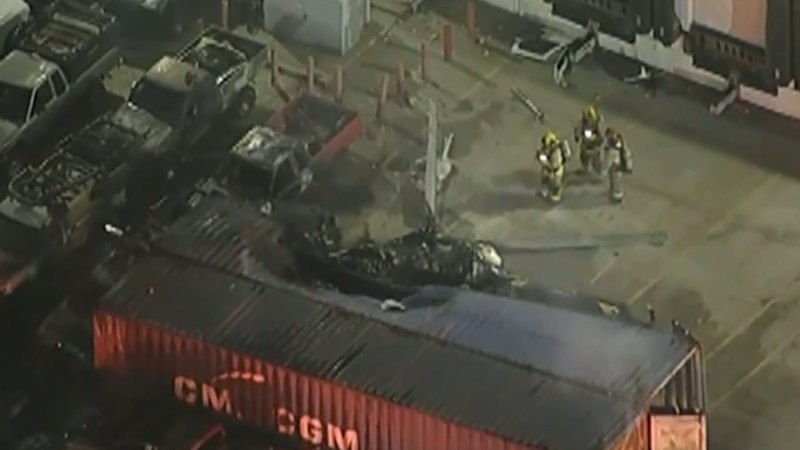
When a news helicopter tracking a routine highway tragedy spirals out of the sky, it forces an uncomfortable reckoning with how we gather local news. On a Tuesday evening in the Chatsworth neighborhood of Los Angeles, a Eurocopter AS350 operated on behalf of NBC4 and Telemundo 52 went down during live coverage, ending three lives and plunging a newsroom into a broadcast that no anchor ever wants to anchor.
The disaster didn't happen in a vacuum. Hours earlier, an SUV slammed into a city bus on Nordhoff Street, killing two people. Like clockwork, local news stations scrambled their birds to capture the wreckage from above. But the resulting crash claimed the lives of pilot George Marciniw, veteran aerial journalist Eliana Moreno, and Edy Gutiérrez Mejia, a bystander on the ground. For another view, check out: this related article.
If you watch local news in Southern California, you know the sound. The constant, thrumming chop of blades overhead is part of the ambient noise of the city. Stations treat choppers like fancy tripods, parking them over traffic jams, police pursuits, and breaking incidents for hours at a time. This tragedy lays bare the immense, often ignored human cost behind those live shots.
The Anatomy of a Mid-Air Nightmare
Details emerging from the National Transportation Safety Board and the Federal Aviation Administration point toward a catastrophic failure. Audio recordings recovered from the flight captured frantic moments before impact, including questions about why the aircraft couldn't pull up. Aviation experts reviewing the footage noted auditory warnings, pointing toward potential mechanical issues and the tight window pilots have to react when things go sideways. Further insight on the subject has been shared by TIME.
Aerial reporting in a congested metropolitan area requires walking a permanent tightrope. Pilots must manage low-altitude airspace packed with competing media craft, police helicopters, and commercial traffic, all while focusing on ground events. When an engine stutters or rotor RPM drops over a dense neighborhood like the San Fernando Valley, options vanish in seconds. Marciniw and Moreno didn't just crash; they fell victim to a high-pressure news cycle that demands constant, eyes-in-the-sky coverage regardless of the inherent airspace dangers.
Why Are We Still Risking Lives for Aerial Shots?
The incident has triggered an immediate wave of public backlash and tough questions across digital platforms. Why roll a multi-million-dollar helicopter and risk human lives when high-definition drones exist?
Honestly, the answer comes down to legacy broadcast habits and regulatory lag. While drones have evolved rapidly, television networks still rely on manned aircraft for long-range endurance, heavy transmission gear, and established live-feed workflows. Yet, this crash serves as a grim turning point. When a routine traffic collision spawns a secondary catastrophe that kills people on the ground and in the air, the risk-reward calculation breaks down completely.
Los Angeles Mayor Karen Bass called the loss of multiple community members devastating, while newsroom colleagues fought back tears on live television trying to process the loss of their own. Grieving families are left to navigate complex legal and safety questions while federal investigators comb through the charred storage facility site in Chatsworth where the chopper finally came to rest.
Expect tighter scrutiny on local media fleets, heavier restrictions on low-altitude hovering over urban areas, and a serious push toward automated alternatives. No breaking story is worth burying the people who report it.