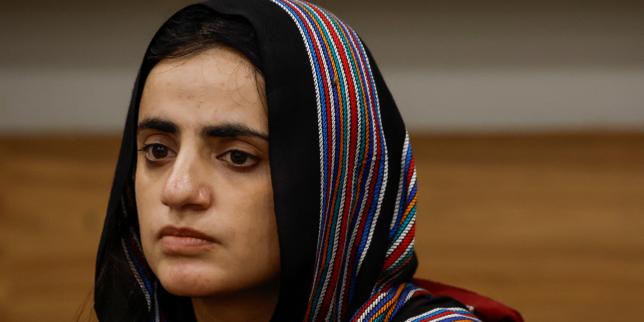
Pakistan just closed the final door on peaceful political dialogue in its most volatile province. On June 22, 2026, an anti-terrorism court in Quetta handed down two concurrent life sentences to Dr. Mahrang Baloch, the 33-year-old medical doctor who has become the unmistakable face of Baloch civil resistance. Along with fellow activist Sibghatullah Shahji, she was convicted of murder, sedition, and terrorism-related offenses. The charges stem from the death of a Frontier Corps paramilitary soldier during a massive protest in the coastal city of Gwadar back in July 2024.
This verdict isn't just a severe judicial overreach. It's a calculated message. By using anti-terrorism laws to lock away a globally recognized champion of non-violent dissent, the Pakistani state is telling an entire generation of young Baloch people that the constitution won't protect them. When you criminalize the people who believe in courts, marches, and speeches, you leave an aggrieved population with very few peaceful alternatives.
The entire trial process lacked even the thin veneer of judicial integrity.
The Farce of the Hudda Jail Trial
The conviction didn't happen in an open, public courtroom where journalists and observers could weigh the evidence. Instead, the anti-terrorism court conducted the proceedings inside the high-security walls of Hudda Jail in Quetta. Dr. Mahrang Baloch and her co-accused have been held in state custody since March 2025, subjected to a prolonged legal battle designed to drain their resources and break their spirits.
The Balochistan Bar Council and independent legal observers immediately flagged the trial as a total mockery of due process. The state demanded that the defendants participate via a video link from their cells. Recognizing that the entire exercise was pre-determined, Baloch and Shahji boycotted the hearings entirely. The court rushed to issue its final verdict without the defense team or the accused even being present in the room.
The prosecution argued that Baloch used provocative speeches during the July 2024 Baloch Raji Muchi or Baloch National Gathering to incite a mob, which allegedly led to the death of Sepoy Shabbir Baloch. They claimed to have eyewitness testimony and medical records linking the activist directly to the violence.
But anyone who has watched the Balochistan conflict unfold knows how easy it is for state prosecutors to procure convenient eyewitnesses. The reality is that the Baloch Yakjehti Committee, the advocacy group Baloch leads, has consistently anchored its entire movement on strict non-violence. They organize sit-ins. They march across provinces. They chant slogans and wave banners. Equating these actions with active militancy is a dangerous game that the Human Rights Commission of Pakistan has heavily condemned. The state is deliberately blurring the line between a civilian holding a microphone and an insurgent holding an assault rifle.
The Real Crime Was Exposing the Shadow State
To understand why the military establishment is so terrified of a young female doctor, you have to look at what she represents. For decades, the narrative surrounding Balochistan was neatly controlled by state television and tightly censored newspapers. The region was painted purely as a battleground between the military and remote, tribal separatists sabotaging Pakistan's economic progress.
Mahrang Baloch completely shattered that narrative. Born in 1993 in the small town of Mangocher, her political awakening came through intense personal tragedy. In 2009, when she was just sixteen, her father, Abdul Gaffar Langove, a local political activist, was swept up by state security forces. Two years later, his severely tortured body was found dumped in a desolate field. In 2017, her brother suffered a similar fate, though he was eventually released alive.
Instead of retreating into fear, Baloch went to medical school, earned her degree, and began organizing the families of the missing. Under the banner of the Baloch Yakjehti Committee, she gave a megaphone to thousands of mothers, sisters, and daughters whose male relatives had vanished into the network of secret state detention centers.
Her breakthrough moment came during the historic 2023 Baloch Long March. She led hundreds of women and children on a grueling 1,600-kilometer trek from Turbat all the way to the capital city of Islamabad. They marched through freezing weather, braved police blockades, survived water cannons, and ignored systemic harassment by the capital police.
When they arrived in Islamabad, they didn't bring weapons. They brought framed photographs of their missing brothers and fathers.
By centering the movement around women and peaceful constitutional demands, Baloch stripped the state of its favorite excuse. She wasn't an operative funded by foreign intelligence agencies hiding in the mountains. She was a Pakistani citizen standing in front of the press club, holding the constitution in one hand and a list of illegal state abductions in the other. That made her infinitely more dangerous to the status quo than any armed rebel group.
Geopolitics and the Gwadar Flashpoint
The specific event that triggered this life sentence was the July 2024 protest in Gwadar. This coastal town isn't just any regular port city. It is the glittering centerpiece of the China-Pakistan Economic Corridor, a multi-billion dollar infrastructure mega-project meant to connect western China straight to the Arabian Sea.
But while Beijing and Islamabad see Gwadar as a future global trade hub, the local Baloch population sees it as a colonial corporate enclosure. The local fishermen have been blocked from their traditional fishing grounds to make way for massive deep-sea port developments. Security checkpoints ring the city, requiring locals to show internal transit passes just to move around their own neighborhoods. Meanwhile, basic necessities like clean drinking water and reliable electricity remain luxury items for the residents living in the shadows of pristine new corporate complexes.
When the Baloch Yakjehti Committee called for the Baloch National Gathering in Gwadar in July 2024, tens of thousands of people tried to flood the city. The state responded with a total lockdown. They cut off internet access, blocked main highways with shipping containers, and used live ammunition to disperse caravans of peaceful protesters.
In the ensuing chaos and clashes provoked by the heavy-handed state response, a soldier lost his life. The government immediately blamed Baloch, using the tragedy as the perfect legal pretext to take her off the board permanently. Chief Minister Sarfaraz Bugti praised the court's recent life sentence, asserting that anyone who uses the guise of peaceful protest to promote violence is a facilitator of terrorism.
This argument is incredibly hypocritical. The state refuses to investigate the thousands of extrajudicial killings and illegal enforced disappearances documented by human rights groups in Balochistan over the last twenty years. Yet, it wields the full, terrifying weight of anti-terrorism legislation against a civil rights leader because she gave a speech at a protest that the state itself escalated into violence.
Shitting the Door on a Political Solution
The long-term consequences of this verdict are bound to be disastrous for the stability of Pakistan. For years, seasoned political analysts, human rights defenders, and even a few retired diplomats have warned that Islamabad's heavy-handed military strategy in Balochistan is actively counterproductive.
Prominent figures like former senator Afrasiab Khattak noted that this life sentence reflects a deeply short-sighted, colonial mindset. He pointed out the staggering irony of the current Pakistani establishment, which has historically shown a willingness to negotiate and sign peace deals with violent religious extremists like the Pakistani Taliban, while completely refusing to sit down with peaceful, constitutional activists from Balochistan.
When you lock up leaders like Mahrang Baloch, you don't kill the desire for rights and dignity. You just change how that desire is expressed. For decades, the state's main challenge was a localized, fragmented tribal insurgency. By crushing the peaceful, civil alternative, the government is handing a massive recruitment victory to the armed separatist factions.
Young Baloch students who watched Dr. Mahrang Baloch follow every single rule of peaceful protest, only to end up with a double life sentence in a closed jail trial, are drawing a dark conclusion. They are realizing that the state doesn't care about peaceful resistance. As BYC organizer Lala Abdul Baloch warned shortly after the verdict, this faceless trial will only push more youth away from political activism and toward active, armed resistance.
What Happens Next
The legal battle is far from over, but the path ahead is incredibly steep. Dr. Mahrang Baloch's legal team has already confirmed they will launch an immediate appeal against the anti-terrorism court's decision in the Balochistan High Court. However, given the immense pressure the security apparatus exerts over the provincial judiciary, a fair hearing at the local level is highly unlikely.
True leverage will have to come from sustained, targeted international pressure and domestic mobilization. If you want to push back against this judicial overreach, here are the concrete steps that international human rights organizations, diaspora groups, and global citizens need to take right now.
- Demand Transparency in the Appeal Process: International legal bodies like the International Commission of Jurists must officially demand observer status for the upcoming appeal hearings in the Balochistan High Court to ensure it doesn't become another closed-door rubber-stamping exercise.
- Link International Aid to Human Rights Benchmarks: Western nations and international financial entities currently stabilizing Pakistan's economy must explicitly tie future financial packages and trade benefits to the immediate cessation of the weaponization of the Anti-Terrorism Act against civil society leaders.
- Amplify the Local Strike Mobilization: Support the Baloch Yakjehti Committee's call for a province-wide strike and peaceful shutter-down protests by keeping the digital spotlight on the region, preventing the state from conducting a quiet, violent crackdown under an internet blackout.
The conviction of Mahrang Baloch is a clear sign of a state operating out of pure panic. They thought that putting a courageous doctor behind bars would silence the Baloch movement once and for all. Instead, they have turned an activist into an enduring martyr for civil rights, and they may have just guaranteed that the conflict in Balochistan enters its most dangerous, uncontrollable phase yet.